


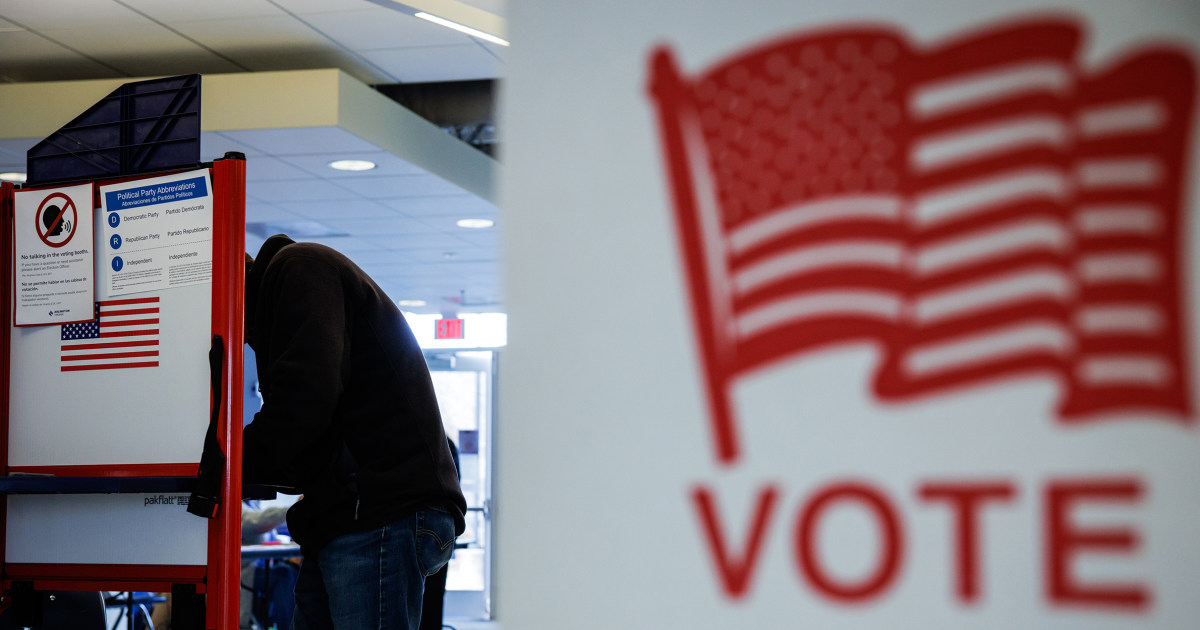
Virginia Democrats Face Challenges in Congressional Redistricting
Some Virginia Democrats are expressing concern about their ability to pass an ambitious redrawing of the state’s congressional maps, particularly as a special election looms just a month away.
Momentum Shifts as Election Approaches
Entering 2026, Virginia Democrats were riding high after flipping the governorship in last fall’s elections and strengthening their majority in the state House. They are now gearing up for the April special election with a substantial advantage in fundraising and advertising.
Election Landscape Complicates Strategy
However, as the election date approaches, it has become clear that this will not be a straightforward campaign. Virginia’s political landscape is not as overwhelmingly Democratic as that of California, where voters recently supported similar redistricting efforts.
Voter Sentiment and Participation Concerns
Supporters of the Virginia referendum recognize the challenges in convincing voters to endorse gerrymandered maps. Democrats, who previously championed a bipartisan redistricting commission, now find themselves in a position of defending tactics they once criticized Republicans for employing.
Unpredictable Voter Turnout
Turnout remains particularly unpredictable, as Virginians are not accustomed to voting in April, the month chosen for the special election. Compounding this uncertainty, recent opinion polls are showing diverse sentiments regarding the referendum, with early voting trends appearing to favor Republicans, heightening concerns among Democratic strategists.
Redistricting Implications for Midterm Elections
If the proposed map is adopted, Democrats could potentially gain control of four out of the five congressional seats currently held by Republicans in the upcoming midterm elections, a crucial moment for the evenly divided House of Representatives. By contrast, in deep blue California, Democrats hope to secure five of eight Republican-held seats with their newly drawn boundaries.
Complex Redistricting Process
The process in Virginia has been particularly intricate, requiring lawmakers to pass a constitutional amendment that temporarily bypasses the state’s redistricting commission. This amendment had to be ratified in two consecutive legislative sessions before being presented to voters. Nevertheless, even if a decision is reached, the Virginia Supreme Court has reserved the right to rule on the legality of the measure after the election.
Financial Disparities in Campaign Efforts
Despite challenges, the proponents of the redistricting initiative, organized under Virginians for Fair Elections, have gained a financial edge, spending or reserving $17.2 million in advertising between January 1 and April 21. In comparison, their chief opposition, Virginians for Fair Maps, has spent only $1 million during the same timeframe.
