


The use of Video Assistant Referees (VAR) continues to generate debate in the Premier League as fans and analysts scrutinize the accuracy and rationale behind decisions made during matches. This season, we will delve into pivotal incidents, offering clarity on the VAR processes and adhering to competitive regulations.
Former Select Group referee Andy Davies, who officiated in the Premier League and Championship for over 12 seasons, now contributes valuable insights from his experience in the VAR setup. His understanding of the intricacies of match day protocols sheds light on the decision-making process behind key incidents.
Potential Penalty and Controversy in Manchester United vs. Bournemouth


Referee: Stuart Atwell
VAR: Craig Pawson
Minute: 67
Incident: Possible penalty for Manchester United
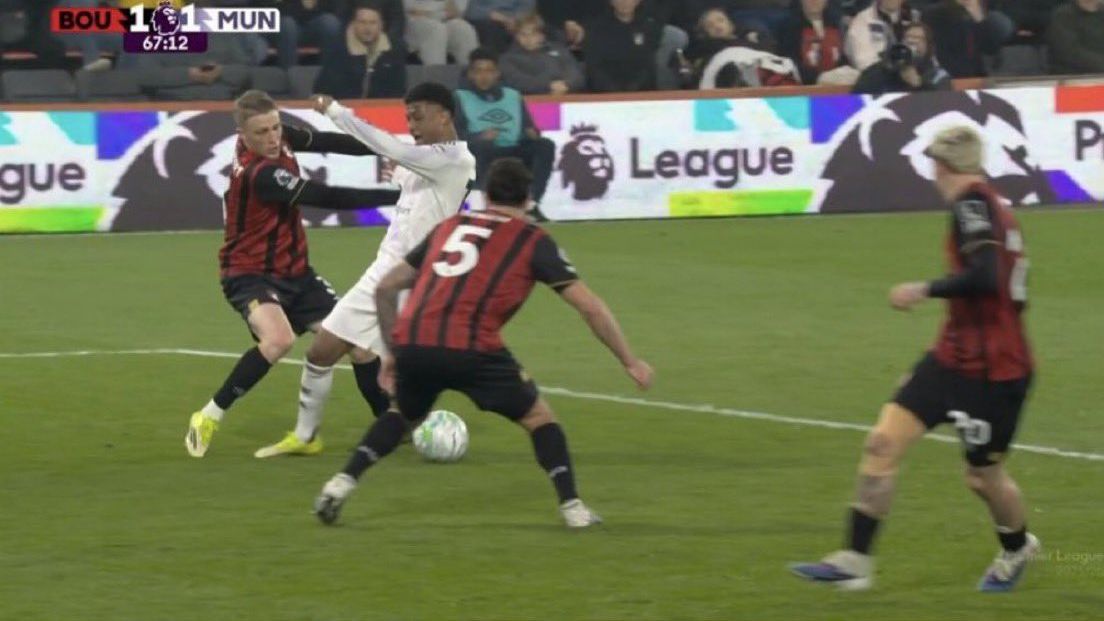
During the 67th minute, an incident occurred when Bournemouth defender Adrian Truffert made upper body contact with Manchester United attacker Amad Diallo. Diallo fell to the ground, asserting he was pulled by Truffert. The situation escalated further as Bournemouth scored an equalizing goal shortly after the no-penalty decision was made. Ultimately, the VAR assessment confirmed that the on-field ruling was accurate.
The VAR review corroborated the referee’s choice, establishing that the contact was insufficient to warrant a foul. Considering Bournemouth’s goal occurred immediately following the penalty appeal, the VAR review was treated as an official check rather than a routine assessment. By the time the ball hit the back of the net, Pawson had already initiated checks regarding Truffert’s challenge and supported Atwell’s non-call on the field.
VAR manager Pawson, upon reviewing the sequence leading to the goal, concluded that the contact did not meet the criteria for a foul. Thus, the on-field decision of no penalty was reaffirmed.
Examining the dynamics of the two players in proximity within the penalty area, referee Atwell deemed Truffert’s arm position as acceptable contact. Supportively, many agreed with this assessment. Amad’s decision to go down appeared misguided, reflecting an attempt to elicit a penalty rather than an actual foul on Truffert’s part, evidenced by the reactions of his teammates.
Penalty Awarded and Red Card for Harry Maguire
Time: 78 minutes
Incident: Penalty awarded to Bournemouth; Harry Maguire sent off for denying a clear goal-scoring opportunity (DOGSO)
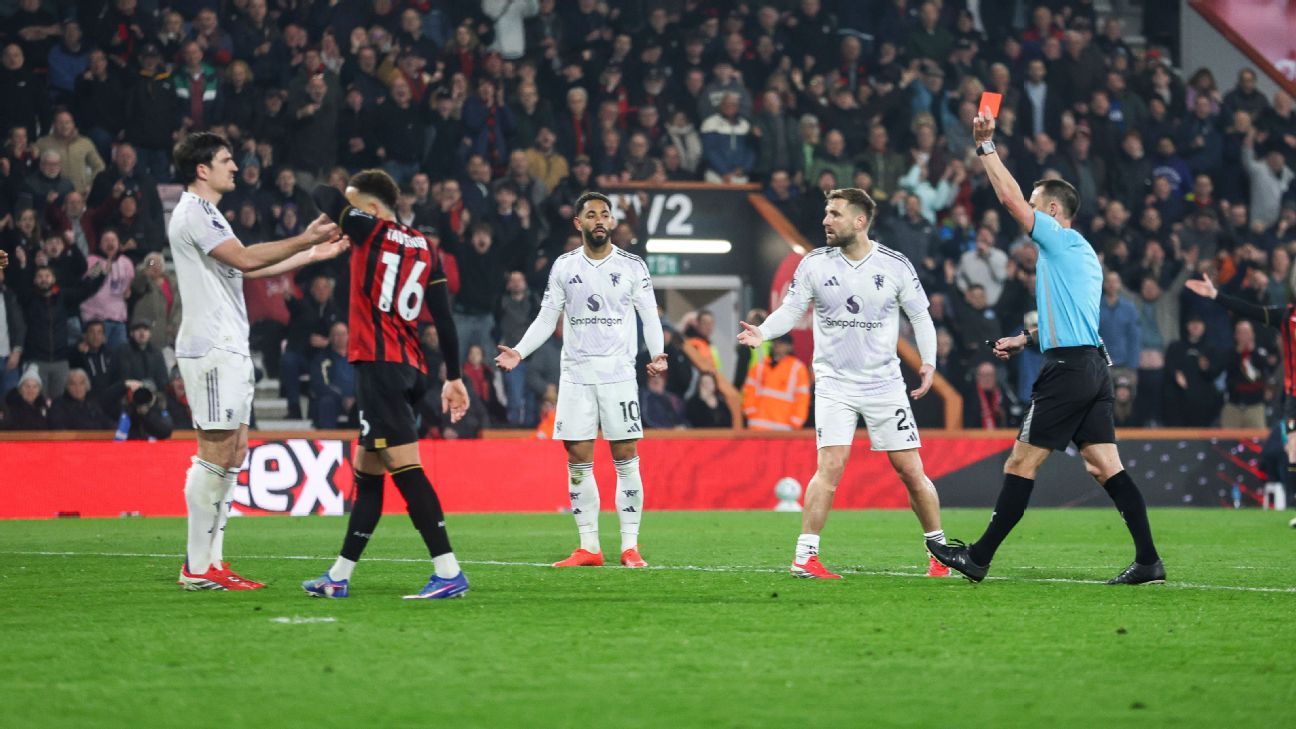
In the 78th minute, Referee Atwell awarded a penalty, further highlighting Manchester United’s frustrations, after Maguire was found to have committed a holding offense against Bournemouth’s Evanilsson, which impeded his clear path to goal. Atwell categorized Maguire’s foul as a violation of the DOGSO rule, leading to his dismissal from the match.
The VAR decision reaffirmed both the penalty and the red card, confirming that Maguire’s actions constituted a holding offense without any attempt to play the ball. Pawson’s review was straightforward, as on-field decisions are typically upheld unless there is clear evidence of an officiating error.
Atwell’s communication characterized Maguire’s actions as a blatant holding foul that effectively thwarted a significant scoring chance. The VAR review revealed no grounds to overturn the initial call, thereby validating both the penalty and red card decisions.
The decision to penalize Evanilsson and issue a red card to Maguire sparked considerable debate regarding the extent of contact and its impact on the match. A thorough analysis of the situation suggests that Maguire’s actions were deliberate and unquestionably aimed at disrupting his opponent’s scoring opportunity, without any intention of playing the ball.
While the level of contact may be open to interpretation, the evidence supports the referee’s conclusions regarding both the penalty and red card. Hence, the VAR intervention was unnecessary given the clarity of the situation.
