


The Evolution of Nairobi’s Wastewater Management
NAIROBI, March 22 (Xinhua) — When the Maasai first traversed the sun-drenched plains of East Africa, they stumbled upon a network of crystal-clear streams, naming the area Nairobi, which translates to “place of cold water.” Today, that evocative name is juxtaposed against the stark realities of a burgeoning megacity housing over 5 million inhabitants. As Nairobi expands into an industrial hub, the relentless tide of domestic and industrial waste courses through the city’s underground infrastructure.
Dandora’s Role in Waste Management
The Dandora Estate Wastewater Treatment Plant serves as an essential lifeline for the city, processing 80% of Nairobi’s wastewater. This facility functions as the vital “kidney” of the city, ensuring its health and sustainability amidst rapid urban growth.
A Sanctuary Amidst the Waste
From an outsider’s perspective, the Dandora plant may resemble a primitive wetland rather than an industrial site. Crocodiles drift through the vibrant waters, while hippos snort and submerge under the sun’s heat. Various bird species flit across the water’s surface, leaving a trail of ripples behind. According to Huang Youming, deputy restoration project manager at Jiangxi Zhongmei Engineering Group, “The water is rejuvenated through anaerobic precipitation, bacterial decomposition, and natural disinfection using intense ultraviolet light from the East African Plateau.” Yet, this beauty quickly fades as one approaches the factory’s entrance, where dark, sludge-laden waters churn with plastic and debris, marking the frontline where Nairobi’s waste meets its first line of defense.
Modernizing a Dysfunctional System
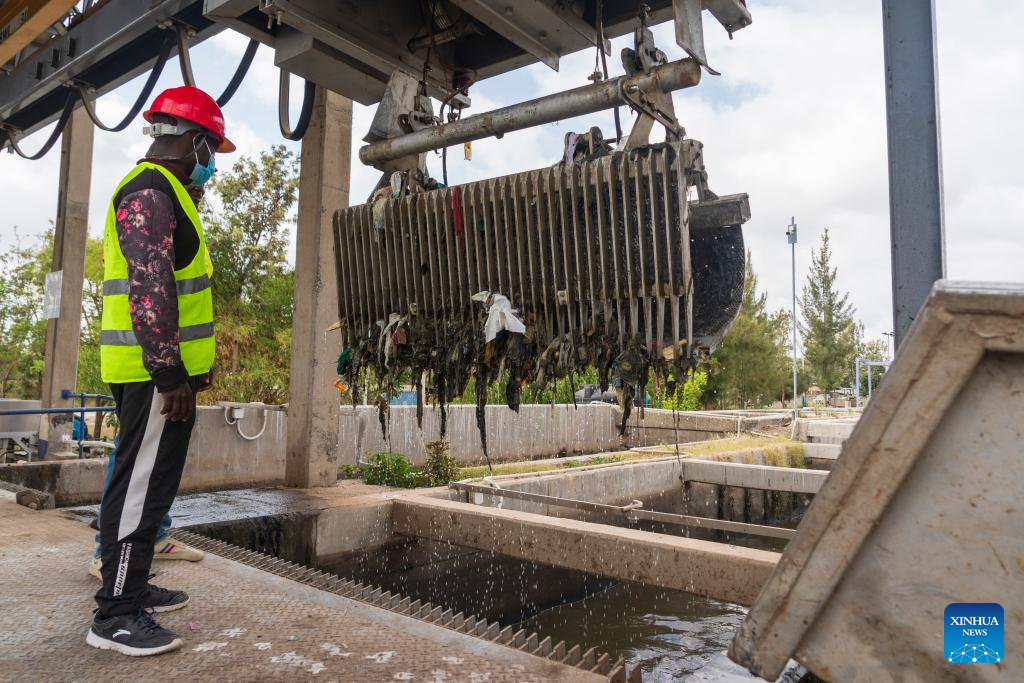
For years, this “kidney” struggled to function effectively. The outdated pretreatment systems were relics of the past, depending heavily on manual labor where workers toiled amidst noxious fumes, scraping waste from the sludge. When the city’s waste production peaked, it clogged the system like a troublesome kidney stone, threatening to incapacitate Nairobi’s drainage network. Significant improvements arose from the implementation of an automated bar screen system imported from China, where mechanical grabs and microscreens now efficiently capture 95% of solid waste and 90% of silt, preventing it from overwhelming treatment plants. Dennis Kioko, a mechanical engineer who now supervises operations from a digital control room, remarked on the transformation, highlighting how “the heartbeat of the city can now be managed with just a few clicks.”
Overcoming Challenges with Commitment
The partnership that revitalized Dandora was established under challenging conditions that would deter many corporations. The 2022 project tender was met with skepticism due to the overwhelming odor permeating the site, leading numerous international bidders to withdraw. “The smell was so intense it disrupted our sleep,” remarked Li Maou, the project’s engineering director. Against the odds, the team persisted and went beyond mere installation of pipes; they reclaimed the land, transforming areas once rife with sewage and trash into verdant lawns and lush shrubbery. James Muturi, acting director of water and sanitation development at Athi Water Development Authority, noted the project’s success: “With its completion, our water intake capacity has effectively doubled.”
Shifting Perspectives on Waste Management
This collaboration is paving the way for a future where the concept of “waste” becomes obsolete. Muturi’s recent trip to China enlightened him about advancements in water management, showcasing a significant transition from merely meeting wastewater standards to embracing resource utilization, energy recovery, and ecological integration. China’s innovative wastewater treatment projects, including the award-winning Yixing City Wastewater Resources Concept Plant, exemplify this shift by creating biogas power and organic fertilizer from sewage in a sustainable manner. Muturi reflected on the growing global adoption of these technologies, emphasizing the need for similar solutions in Kenya.
The Advantages of Chinese Solutions
The Dandora upgrade arrives at a crucial pivot. Currently, the facility relies on stabilization ponds, a low-cost method that requires extensive land use. Given skyrocketing land prices and a rapidly escalating population, this traditional approach has faced significant limitations. Presently, approximately 55% of Nairobi’s wastewater is gathered and treated, leaving a staggering 45% unmanaged. One of the paramount benefits of Chinese solutions lies in their cost-effectiveness and standardized processes, with the capital cost for establishing wastewater treatment facilities typically one-third that of comparable projects in Europe or the United States. The average cost per ton of capacity settles between $250 and $350, a stark contrast to the US market’s more than $840 per ton.
Pioneering Sustainable Development Initiatives
Chinese engineers are also actively contributing to various environmental projects across Kenya, from the ecological restoration of the Nairobi River Basin to the construction of the Mwache Dam. Such initiatives align with the vision announced during the 2024 Forum on China-Africa Cooperation (FOCAC) Summit in Beijing, which outlined ten partnership actions for modernization focused on sustainable green development in Africa. The culmination of these efforts at Dandora has led to clearer waters flowing from the treatment plant into the meandering Nairobi River, upholding the ancient promise of a “place of cold waters.” Ongoing monitoring will ensure this vital resource remains clean for future generations.
