


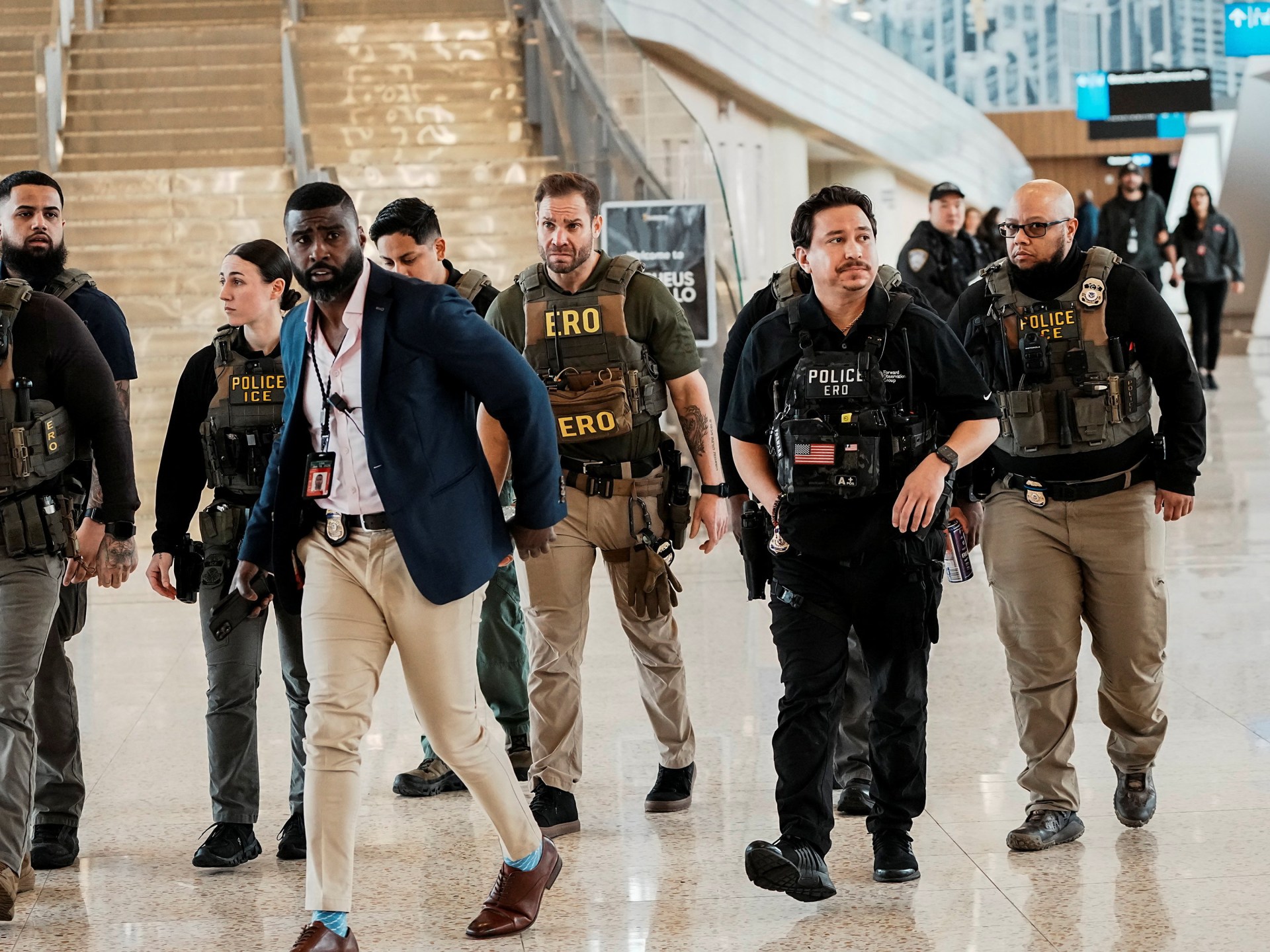
U.S. immigration officials have commenced deployments to key airports nationwide to mitigate long security lines, a consequence of many airport security personnel being absent due to government funding impasses.
The ongoing partial government shutdown affects the Department of Homeland Security (DHS), which oversees the Transportation Security Administration (TSA). As a result, numerous airport security workers are currently operating without pay, leading to heightened absenteeism, staffing shortages, and delays at security checkpoints.
Challenges Observed by Travelers
“This is insane. I mean, I’ve never experienced anything like this…I’ve never seen an airport like this,” remarked passenger Andres Campos from Arlington, Virginia, reflecting the increasing frustration among travelers during this period.
Reports indicate that Immigration and Customs Enforcement (ICE) officers have been dispatched to 14 airports, including Atlanta and New York’s JFK Airport. While the agency will provide support in airport operations, it will not be involved in passenger screening, a critical responsibility of the TSA.
This initiative comes as airports nationwide manage significant queues and staff shortages, exacerbated by unpaid TSA employees who have resorted to taking supplementary jobs to support their families while awaiting compensation.
Current Situation at Airports
Approximately 50,000 TSA employees have gone unpaid due to the partial U.S. government shutdown following Congress’s failure to pass a funding bill on February 14th. Although TSA agents are deemed essential workers and many continue to fulfill their duties, the absence of pay has resulted in a troubling absenteeism rate.
As of a recent announcement from DHS, nearly 12% of TSA personnel—over 3,450 individuals—were reported absent, marking the highest rate since the shutdown commenced. This staffing crisis has led to visible long lines and delays at several major airports, prompting the deployment of ICE officers to help manage the situation.
Stalled DHS Funding and Its Implications
The need for spending bills to fund federal agencies remains pressing. Early in February, legislators approved a $1.2 trillion spending package intended to sustain most federal operations through September. However, the funding for DHS, which encompasses agencies like TSA, ICE, and Customs and Border Protection (CBP), was not included and is subject to separate negotiations.
Democrats have expressed their unwillingness to support the DHS funding bill unless adjustments to immigration enforcement policies are made, including mandating that immigration officials identify themselves clearly and banning racial profiling.
The fallout from a federal immigration crackdown in Minneapolis—where two American citizens were tragically killed by federal agents—has further intensified these negotiations, resulting in a political deadlock that affects TSA employees and contributes to the ongoing partial government shutdown.
Continued Operations of ICE
Despite being part of DHS, ICE continues to operate without interruption, owing to separate funding already allocated through a significant spending bill passed the previous year. This provides ICE with financial resources that are not subject to the same limitations currently affecting TSA.
The legislation, famously known as President Trump’s “One Big Beautiful Bill Act,” has secured billions for both ICE and CBP, allowing them to function normally despite the ongoing funding blockade for other DHS components.
Deployment of ICE Officers at Airports
The plan to station ICE agents at airports was first announced by President Donald Trump, who indicated that he would direct resources to enhance security if budget negotiations fail. This directive reflects a contentious approach to immigration enforcement and security at airports.
While ICE officers are tasked with supporting airport operations, they are not responsible for conducting security checks, leading to mixed reactions from travelers. Some express concern regarding the potential impact on undocumented immigrants, while others view their presence as an unnecessary escalation.
Travelers’ Concerns Amidst Increased Security Measures
The visible presence of federal agents, some of whom have been observed without face coverings, continues to evoke mixed feelings among travelers. Long wait times remain prevalent, as experienced by passengers in Atlanta, where travelers have been advised to arrive at least four hours prior to their flights due to extensive security lines.
As the situation evolves, concerns persist about the psychological impact on travelers, particularly those from immigrant communities. The recent runway accident at LaGuardia Airport adds another layer of complexity to this challenging environment, affecting flight operations and traveler confidence.
Latest Developments at DHS
As the shutdown lingers, the U.S. Senate has confirmed Senator Markwayne Mullin as the new Secretary of DHS. This swiftly concluded confirmation followed a vote of 54-45 and positions Mullin, a businessman and former mixed martial arts fighter, at the helm of agencies responsible for border security, immigration enforcement, and airport safety.
While Mullin aligns with President Trump’s stringent immigration policies, he indicated during his confirmation hearing that some aggressive measures may be reconsidered, aiming to navigate the complex landscape of immigration enforcement while addressing pressing operational issues amidst the shutdown.
