


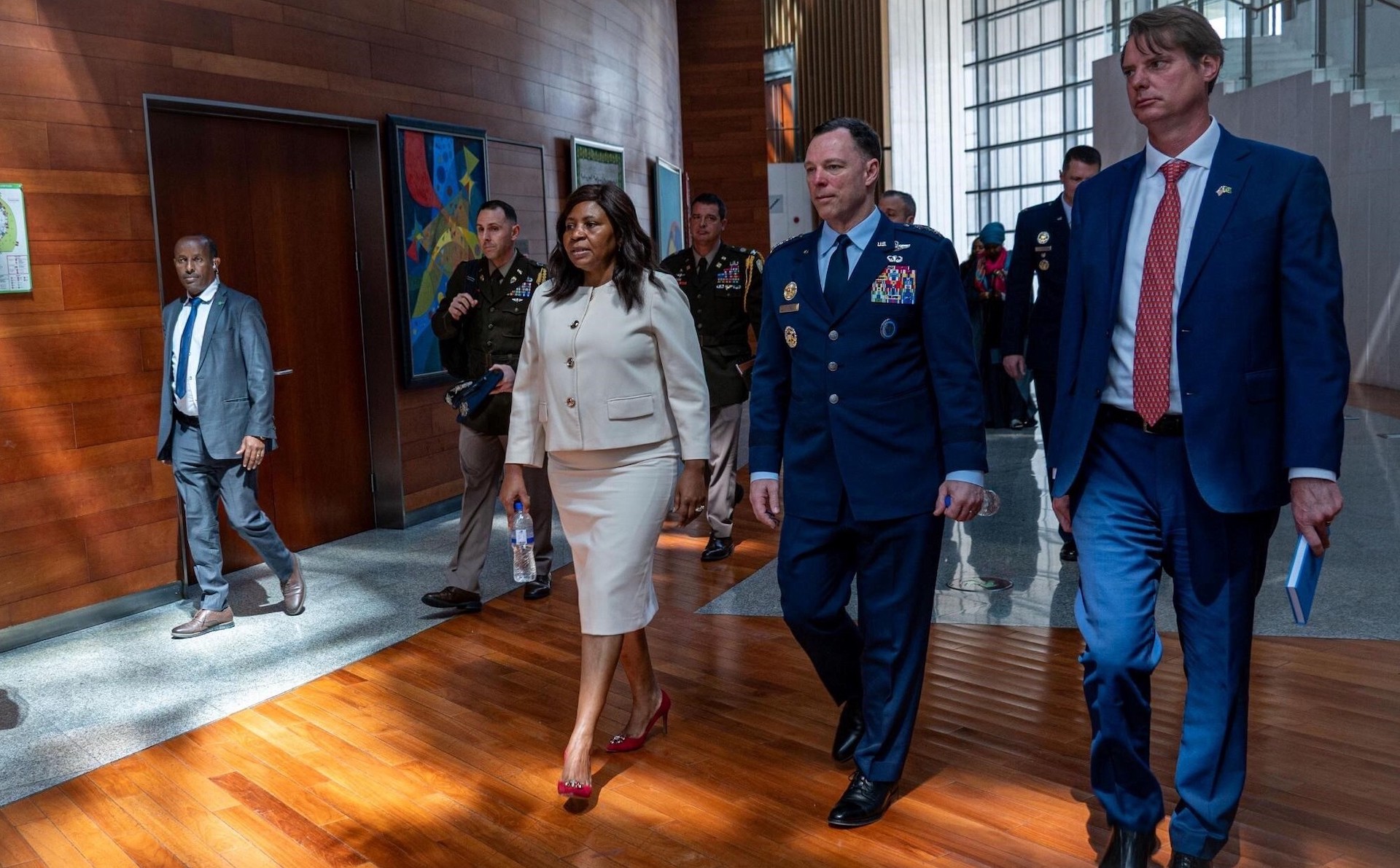
U.S. Delegation Meets in Ethiopia to Strengthen Cooperation
A high-level delegation from U.S. Africa Command (Africom) and the State Department recently visited Ethiopia, aiming to foster peace across African nations while exploring opportunities to enhance economic, diplomatic, and military relations.
Africom Leadership Engages with African Union
The new commander of Africom, Air Chief Marshal Dagvin Anderson, participated in a significant event hosted by the African Union, a key intergovernmental organization composed of African nations. Anderson emphasized the importance of the African Union in fostering multi-faceted solutions rather than solely bilateral ones. “The African Union looks at the continent holistically to identify which investments and security operations can be scaled for broader regional impact,” he noted in a discussion with DefenseScoop.
Technological Priorities in Military Strategy
This week, the commander and a spokesperson for Africom detailed their ongoing strategies and affirmed the military’s focus on upcoming technological advancements. Since taking command in August, Anderson has articulated a vision where technology serves as a facilitator of African-led security initiatives and improved decision-making in military operations.
Anderson’s Background and Experience
Commander Anderson, a seasoned pilot with over 3,400 flight hours—including 700 combat hours—previously directed joint force development at the Joint Chiefs of Staff. His diverse experience spans piloting 16 different aircraft and leading five distinct military units.
Innovative Solutions for Security Challenges
Africom has transformed since achieving full operational status in 2008, overseeing U.S. military operations across a vast region comprising over 50 countries with more than 800 ethnic groups. The command is committed to enhancing intelligence sharing and operational collaboration among partners to boost situational awareness and crisis response capabilities. “Our goal is not just to gather intelligence but to effectively integrate and act on it,” Anderson stated, emphasizing the need for modern technology and innovative practices to adapt to evolving security demands.
Strategic Engagement Amidst Regional Threats
The integration of artificial intelligence and advanced capabilities is central to Africom’s strategy to counterbalance the recent reduction of the U.S. military’s presence in Africa. Recognizing the urgency of these innovations, the command recently launched the Fighter Innovation Council, prioritizing creative solutions to enhance operational effectiveness.
U.S. Commitment to African Security Initiatives
Amid rising threats from terrorist organizations and increasing Chinese influence in Africa, the U.S. National Defense Strategy highlights the military’s goal of preventing the establishment of terrorist safe havens that could threaten the U.S. mainland. The strategy also emphasizes building partnerships to empower African nations to combat terrorism and maintain regional stability. This mission aligns closely with Africom’s commitment to engaging with the African Union, which plays a pivotal role in shaping the continent’s security and economic frameworks.
Honoring Peacekeepers and Strengthening Alliances
During the visit, the delegation participated in a wreath-laying ceremony at the African Union Memorial Wall in Addis Ababa, honoring peacekeepers who have sacrificed their lives for stability across Africa. Anderson reflected on his personal connections to many individuals commemorated at the memorial, reinforcing the bond between U.S. military efforts and African nations in the pursuit of peace and prosperity.
Collaboration on Economic and Security Development
Following the ceremony, the U.S. delegation engaged with African Union leaders in discussions focused on regional security challenges, emphasizing the importance of collaboration for sustainable solutions. Anderson expressed optimism regarding the depth of cooperation between the African Union and the U.S. in addressing security threats and advancing economic development initiatives, notably highlighting the Ribito Corridor project as a vital example of such collaboration. This infrastructure initiative aims to create a transcontinental rail connection rich in economic promise for several African nations.
