


Bipartisan Immigration Proposal Highlights Workforce Stability in Reading
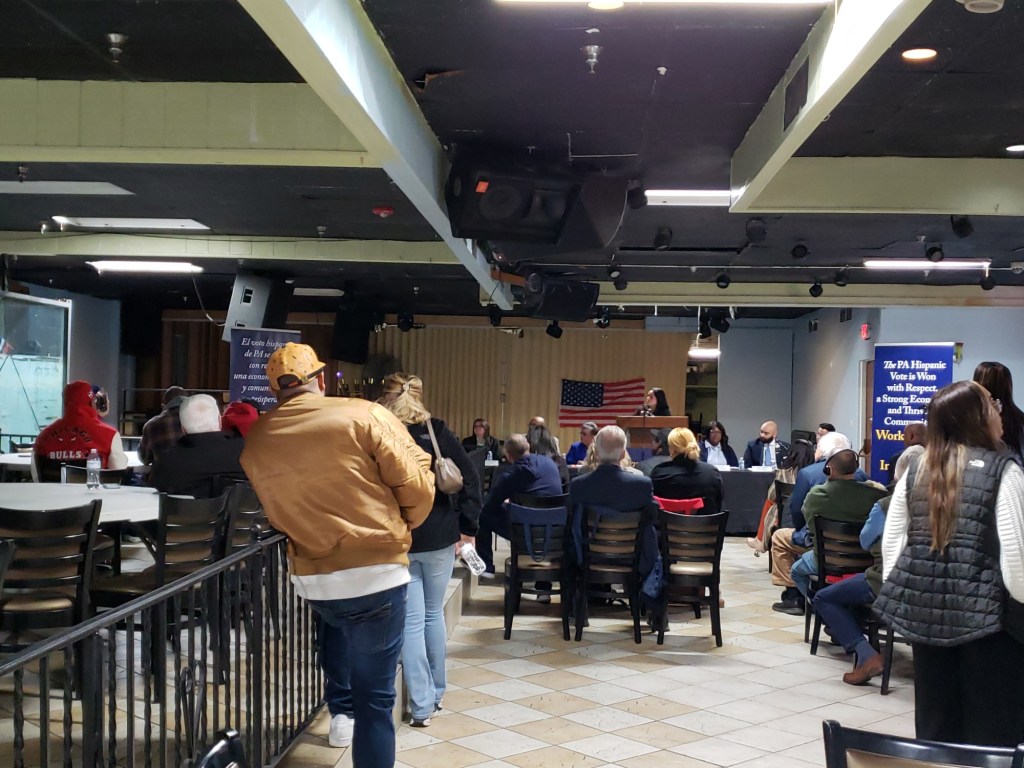
Reading’s City Hall became a focal point for a bipartisan immigration proposal recently, drawing together community leaders, elected officials, and local residents to discuss a long-awaited initiative aimed at workforce stabilization.
Jet Set City Hall, located at 118 S. Ninth St., served as the inaugural venue for a national advocacy campaign promoting the Dignity Act of 2025. This legislation, which was introduced in Congress last year by Florida Republican Rep. Maria Elvira Salazar and Texas Democratic Rep. Veronica Escobar, aims to bolster border security while providing a pathway to legal employment for certain undocumented immigrants already residing in the U.S. Those eligible will need to pass background checks, pay taxes, and meet other specified criteria, as outlined by Rep. Chrissy Houlahan’s office.
Rep. Houlahan, a Democrat from Chester County, co-sponsored the proposal alongside 19 other Democrats and 20 Republicans, a notable display of bipartisan support.
Addressing Economic Needs Through Immigration Reform
According to event organizers, the proposal addresses practical economic concerns for communities like Reading and Berks County, where vital industries, particularly agriculture, heavily depend on immigrant labor. Host Issamac Torres Figueroa emphasized the significance of immigration to local economies, stating, “Immigration is not just part of the story; they are essential to the stability and growth of our economy.”
Panelists clarified that the Dignity Act does not position itself as a sweeping pathway to citizenship; rather, it represents a methodical approach to much-needed immigration reform that has been stagnant for years. Tasha Isaac, representing Rep. Houlahan, noted that this legislation offers a much-needed route to legal status for many individuals facing limited options.
Legal Pathways for Undocumented Immigrants
The bill could create opportunities for specific immigrant groups, including Dreamers—those brought to the U.S. as children who have lived and studied here. Enrique Sanchez from the American Business Immigration Coalition explained that qualifying individuals could achieve conditional legal status leading to permanent residency. Sanchez’s personal story resonated with attendees; having entered the U.S. at age two, he was able to secure work authorization through the Deferred Action for Childhood Arrivals (DACA) program, a milestone that profoundly shaped his future.
Sanchez underlined the pressing labor shortages many industries face, pointing out that despite the presence of numerous undocumented immigrants in the local community, many employers still struggle to fill positions. He asserted the urgency of enabling these individuals to work legally, stating, “If we already have people in our community, it is very important that we provide them with the ability to work legally.”
Challenges and Concerns Surrounding the Proposal
Local business owners echoed Sanchez’s sentiments. Cesar López, who is launching a senior care facility in Reading, discussed the employment obstacles that the bill could alleviate, potentially stabilizing both businesses and families alike. Sunilda Tejada, another local entrepreneur, pointed out the broader implications: Without immigrant labor, especially in agricultural sectors, consumers might face rising food prices and supply chain disruptions.
However, the proposal drew criticisms from Democratic state Rep. Yohany Cepeda Fraitis, who questioned its effectiveness. She stated, “We all agree that the system is broken, but what I see is a system where you can be here, you can work, but you have to pay thousands of dollars, and you still might not really belong here.” Her concerns revolved around the high costs of immigration and the ambiguity surrounding the pathway to full legal status and citizenship, suggesting that the proposal risks creating a tiered system based on financial resources.
The Necessity of Work Permits in Structuring the Economy
Immigration attorney Bridget Cambria, the founder and executive director of ALDEA – The People’s Justice Center, acknowledged the imperfections in the bill but maintained its necessity. Cambria emphasized that while work permits may not offer absolute protection from deportation, they serve as critical first steps toward stability. “This act is by no means perfect,” she remarked. “But it starts a conversation.”
