


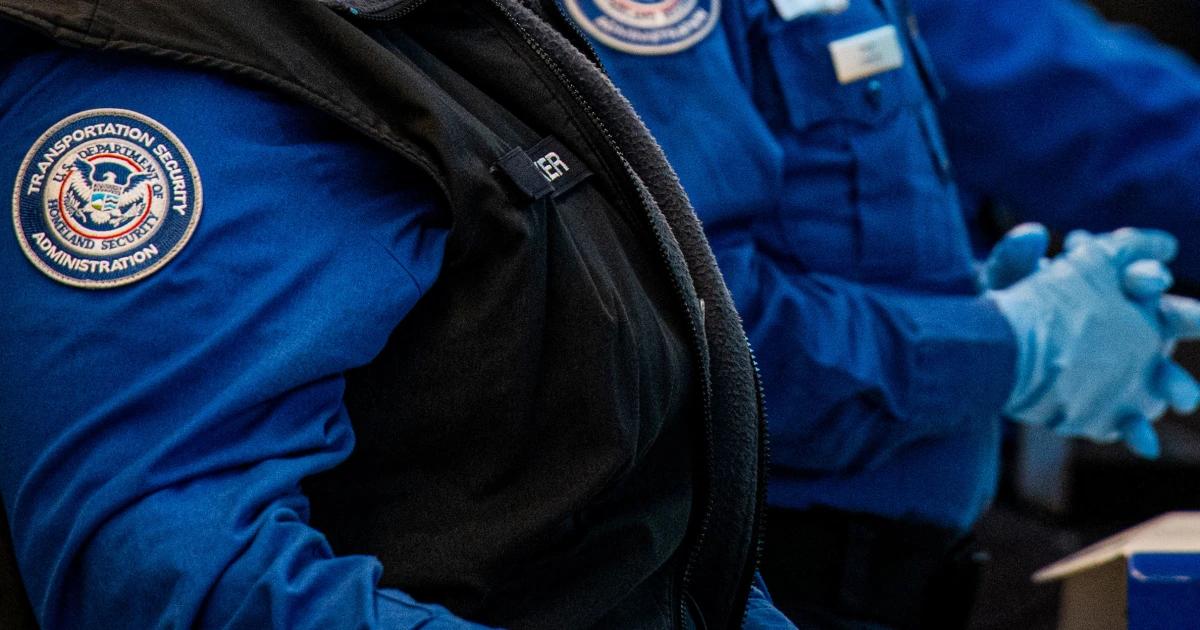
Growing Discontent Among TSA Agents Amid Government Shutdown
As financial pressures mount, many Transportation Security Administration (TSA) agents find themselves taking on extra jobs, seeking assistance from food banks, relying on family support, and even selling plasma to make ends meet. After enduring a month without pay, an increasing number of agents are considering quitting, despite their legal obligation to maintain security at airport checkpoints.
This situation is leading to extended wait times for travelers nationwide, further adding to the strain on those TSA officers who remain on duty. A California TSA official, speaking anonymously, remarked on the morale issue: “When one person quits, it sends a message to others contemplating the same choice.”
According to the latest figures from the Department of Homeland Security, around 500 TSA employees have left their positions amid the ongoing partial government shutdown, which has now spanned over a month. A TSA official from New York expressed disillusionment, stating that he had initially viewed this job as a solid career path, envisioning potential transfers to different agencies within a few years. However, the disruptions caused by this shutdown, compounded by previous shutdown experiences, have led him to rethink his future with the TSA.
On the other hand, there was a glimmer of hope as the Senate reached a consensus early Friday to restore funding for the Department of Homeland Security (DHS), which had been stalled for more than 40 days. However, for many TSA employees, the financial repercussions from last year’s shutdown have yet to be resolved, and any newly restored funding will take time to translate into a recovery of their financial stability.
One TSA employee from Indiana expressed the lingering effects of the previous shutdown, highlighting that they have yet to regain lost savings. They remarked, “I just paid off some debt, but my finances still aren’t stable.” Instead of taking on side jobs, this employee has had to rely on family for financial support, recently moving in with a sibling to cope with expenses.
The challenges are further compounded for a TSA officer’s family member, who is struggling with a newborn and financial obligations. They revealed that despite attempting to manage their household finances, basic needs, such as diapers and food, are increasingly reliant on local food banks. This overall situation has led to feelings of despair and frustration, as they feel punished for adhering to traditional societal expectations, such as pursuing education and stable employment.
Devin Rayford, president of the local American Federation of Government Employees union representing TSA workers at Memphis International Airport, noted that while creditors were more understanding during the past shutdown, the current scenario finds many TSA employees facing eviction with little empathy from their landlords. One TSA employee reported being threatened with eviction after struggling to keep up with rent and stated that some belts are tightening even without furlough notices being accepted.
Many TSA agents are resorting to side gigs with rideshare companies or finding other temporary work just to meet their financial obligations. Unfortunately, some are forced into even more drastic measures, including selling blood to cover bills. The requirement to report to work without pay has exacerbated staffing shortages at major airports, leading to record wait times of up to six hours at locations like Chicago’s O’Hare and New York’s LaGuardia.
The stalemate causing the current shutdown stems from a failure to agree on funding issues related to the DHS, particularly concerning immigration enforcement policies. The Senate did approve a temporary funding measure for DHS operations, but this was met with rejection in the House of Representatives, leaving many TSA employees in a precarious position.
Despite challenges on the job, TSA agents continue to serve travelers with professionalism. Some express understanding and sympathy from passengers, who often thank them for coming to work. Yet behind the scenes, the emotional and financial toll of the ongoing crisis is palpable, raising serious concerns about the future of TSA operations and the well-being of its employees.
