


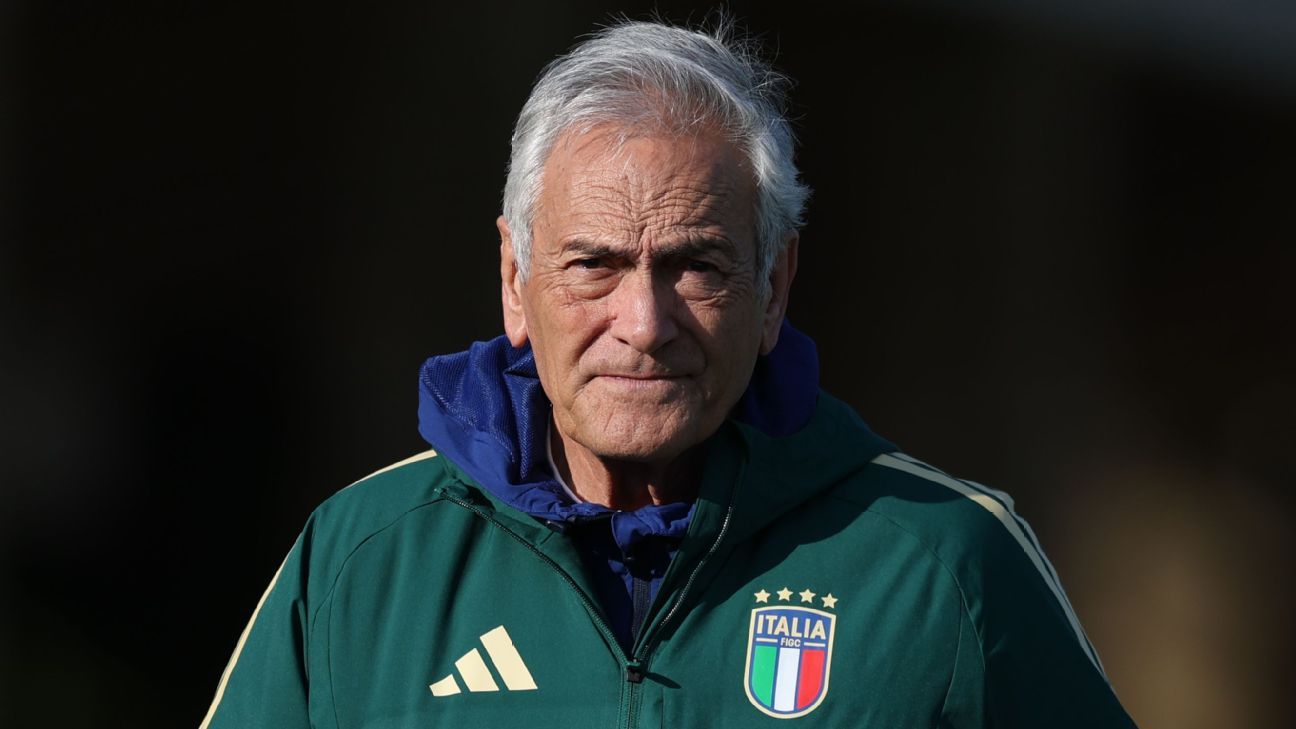
Italian Football Federation President Resigns Amid Political Pressure
Gabriele Gravina, the president of the Italian Football Federation (FIGC), resigned on Thursday following intense political pressure, just two days after the national team faced elimination from the World Cup for the third consecutive time.
Leadership Changes Expected Following Resignation
Gravina’s departure is expected to trigger significant changes within the national team, potentially including the resignation of Gianluigi Buffon from his role as head of the national team and the dismissal of head coach Gennaro Gattuso.
Call for Reforms in Italian Soccer
Italy’s sports minister, Andrea Abodi, publicly advocated for a restructuring of the country’s soccer leadership after Gravina experienced a disheartening defeat in two World Cup qualifying matches. He asserted, “It is clear that Italian football needs a comprehensive review,” underscoring the urgent need for reform during a transition in FIGC leadership.
Heartbreaking World Cup Qualification Loss
The national team, known for its illustrious history, lost in a penalty shootout to Bosnia and Herzegovina in the qualification playoffs on Tuesday, effectively eliminating any hope of competing in this year’s World Cup in North America.
Impact of Gravina’s Tenure
Gianluigi Buffon, a legendary goalkeeper who was part of the 2006 World Cup-winning team, highlighted the importance of leadership change, expressing, “It is only right that I leave the freedom of choosing my successor to those who come after me.” Buffon, Italy’s all-time record holder with 176 caps, had supported Gattuso’s appointment.
The Long Struggles of Italian Football
Gravina, who took over the FIGC in 2018, succeeded Carlo Tavecchio, who had resigned after Italy’s previous failure to qualify for the World Cup. Italy’s troubles date back to 2010 and 2014, during which it could not progress beyond the group stages. The last time the Azzurri reached the World Cup finals was in 2006, clinching the title against France in a tense penalty shootout.
Next Steps for the FIGC
An election is scheduled for June 22 to appoint a new FIGC president. Gravina will also participate in a public hearing in the Italian Parliament next Wednesday to address the current state of Italian football. Additionally, as the Supreme Vice-President of UEFA, he faces questions about his future, as UEFA rules stipulate that executive committee members must also hold senior positions within their national federations.
Preparing for Future Tournaments
Gravina’s successor will not only be responsible for revitalizing the national team but will also need to prepare Italy’s aging stadium infrastructure for the UEFA Euro 2032, which Italy will co-host with Türkiye. UEFA President Aleksander Čeferin emphasized the importance of having the necessary facilities in place, stating, “We hope that the infrastructure will be ready; otherwise, the tournament would not be held in Italy.”
