


Italian Football Faces Crisis as Leadership Changes Loom
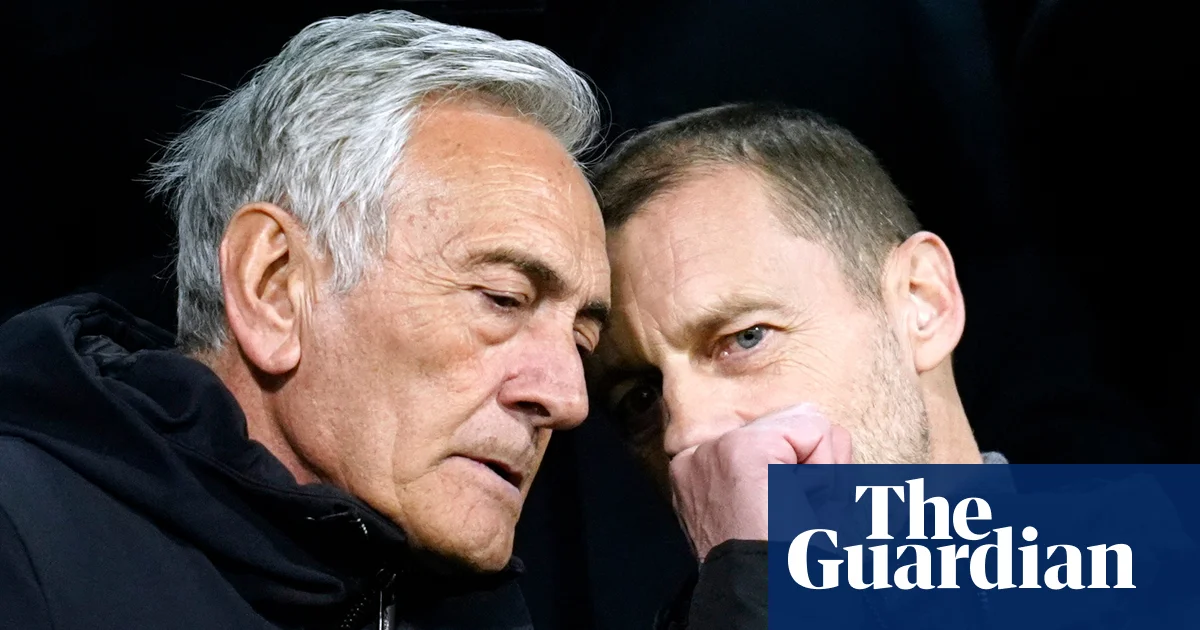
The turmoil within Italian football has intensified with the resignation of Gabriele Gravina, president of the Italian Football Federation (FIGC). This development comes alongside warnings from UEFA president Aleksandar Ceferin, who has indicated that Italy may jeopardize its co-hosting rights for Euro 2032 due to its deteriorating football infrastructure.
Gravina Resigns Amid Growing Pressure
Gravina announced his resignation during an emergency meeting of the FIGC General Assembly, just two days after Italy suffered a penalty shootout defeat to Bosnia and Herzegovina, failing to qualify for a third consecutive World Cup final. This loss has intensified scrutiny on the nation’s sports minister, Andrea Abodi, sparking demands for a comprehensive overhaul of the FIGC’s leadership.
National Team Leadership in Question
The fallout of this crisis has also led to the resignation of national team chief Gianluigi Buffon. Speculation mounts over the future of head coach Gennaro Gattuso as well. His tenure, which began in June 2025, may come to an end without fulfilling the immediate goal of securing World Cup qualification.
Impending Changes in FIGC Leadership
New leadership is set to be elected in June, tasked with addressing critical issues impacting Italy’s long-term football prospects. The country is scheduled to co-host the European Championship with Türkiye in six years; however, UEFA officials have expressed concerns about the current state of Italy’s stadiums, as highlighted by Ceferin in a recent interview with Gazzetta dello Sport. He stressed the urgency for Italy to rectify its football infrastructure.
Concerns Over Domestic Competitions
The Football Association has raised alarms that the increasing demands on elite players due to expanding UEFA competitions may jeopardize England’s future World Cup chances and undermine the value of domestic tournaments such as the FA Cup. Despite attempts to alleviate scheduling pressures, the introduction of new international club competitions poses additional risks to the integrity of national tournaments and players’ welfare.
Euro 2032 Hosting Rights at Risk
Ceferin emphasized that Euro 2032 is confirmed and will proceed, provided Italy’s infrastructure meets expectations. He noted that failure to improve could result in the tournament being relocated. He urged Italian policymakers to scrutinize the reasons behind the nation’s inadequate football facilities, which rank among the worst in Europe.
Stadium Developments Falling Behind
For the Euro 2032 tournament, Italy must designate five stadiums from a shortlist of 11 cities by October; currently, only Juventus’ Allianz Stadium is deemed up to standard. Major redevelopment projects are underway for Milan’s San Siro and Napoli’s Stadio Diego Armando Maradona, with a new stadium planned for Rome. However, time is running short, as construction on new or refurbished venues needs to commence by March 2027.
Ceferin’s Insights on the Future of Italian Football
Ceferin recently communicated with Gravina prior to his resignation, highlighting that the challenges facing Italian football extend beyond individual leadership. He noted, “The biggest loss will be FIGC,” demonstrating the significant role Gravina played in the football landscape since taking the helm in 2018. His leadership saw moments of triumph, including Italy’s Euro 2021 victory, but also notable setbacks. Gravina has acknowledged the urgency of addressing systemic issues, stating that the crisis is profound and requires a complete redesign of Italian football.
