


Nigeria Democratic Congress Emerges as New Political Player
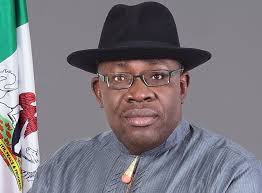
Etim Etim examines the recent establishment of the Nigeria Democratic Congress (NDC) and questions whether its founder, Senator Henry Siriake Dickson, possesses the ability to create a viable national political platform.
Senator Henry Siriake Dickson has launched the Nigeria Democratic Congress (NDC) after resigning from the People’s Democratic Party (PDP) to take on the role of national leader for this new political entity. The Independent National Electoral Commission (INEC) officially registered the party in February, and the NDC held its inaugural National Executive Council (NEC) meeting just last week. Appointed by the NEC, Senator Moses Cleopas serves as the pro-tem leader, with Mr. Barr. Ikenna Alex-Morgan Enequise as the National Secretary. Senator Dickson has outlined his vision for the NDC, emphasizing its unique ideological and governance approach. His ambition appears to be to cultivate the NDC into a significant national force, mirroring how President Bola Tinubu previously built the Alliance for Democracy (AD) into a successful party by 2015.
However, the questions remain: Can Dickson replicate Tinubu’s early success? The prospects look challenging. The factors that previously aided Tinubu’s rise and bolstered the AD have significantly changed. The AD, originally a regional party rooted in southwestern Nigeria, had the backing of a public seeking representation after the military dictatorships of the time. During its formation, even as General Abdulsalami acknowledged that the party technically did not meet registration criteria, the junta approved it to appease the Yoruba populace, significantly impacting its early victories. The AD managed to secure gubernatorial election wins across all six states in 1999, leading to a surge in both morale and financial support for the party.
In contrast, Dickson faces markedly different conditions. The NDC was formed less than a year ahead of the general elections, and skepticism looms regarding its ability to secure victories, particularly in its home state of Bayelsa. The current governor, Mr. Douye Diri, a former ally of Dickson, switched his allegiance from the PDP to the APC last year, complicating matters for the NDC ahead of the upcoming gubernatorial election. If Dickson fails to win, it could spell disaster for the NDC’s viability. Historical context reveals similar scenarios; the All Progressives Grand Alliance (APGA) was successful in Anambra State due to its early governance wins, a feat that the NDC has yet to achieve.
The political landscape today is also distinct from the period when the AD thrived. Between 2006 and 2013, the AD underwent significant growth through mergers with other political entities, eventually evolving into the APC. This transformation was facilitated by Tinubu’s strategic leadership. However, recent years have not been kind to the opposition. With the PDP in a weakened state and the ADC facing dissolution, the challenges seem daunting for the NDC. Notably, Tinubu’s administration may become the first to pursue re-election without facing a formidable opponent from a major party, prompting concerns about the political landscape’s stability.
Senator Dickson’s political influence and resources will be critical as he seeks to establish the NDC. While Tinubu’s considerable wealth allowed him to build a comprehensive network and draw members to the APC, the scope of Dickson’s resources remains unclear. Although he served two terms as governor, Dickson has focused on establishing Hensard University rather than media outlets to enhance his political presence. In contrast, the establishment of outlets like Tinubu’s television station helped elevate the APC’s profile. As such, the relationship between the university and the NDC’s political aspirations is uncertain.
The national sentiment will also shape the NDC’s trajectory. The excitement surrounding the establishment of the AD 27 years ago was fueled by hopes for democratic reforms after years of military rule. Notable figures, including Alex Ekwueme and Bola Ige, represented a burgeoning political ethos aimed at restoring civilian governance. Today, Nigerian citizens are largely disillusioned with political dynamics, leading to growing skepticism toward new party formations. With over 20 parties now in existence, many exhibit similar ideologies, raising pressing questions about what sets the NDC apart and its potential appeal to a frustrated electorate.
-Etim writes from Abuja
