


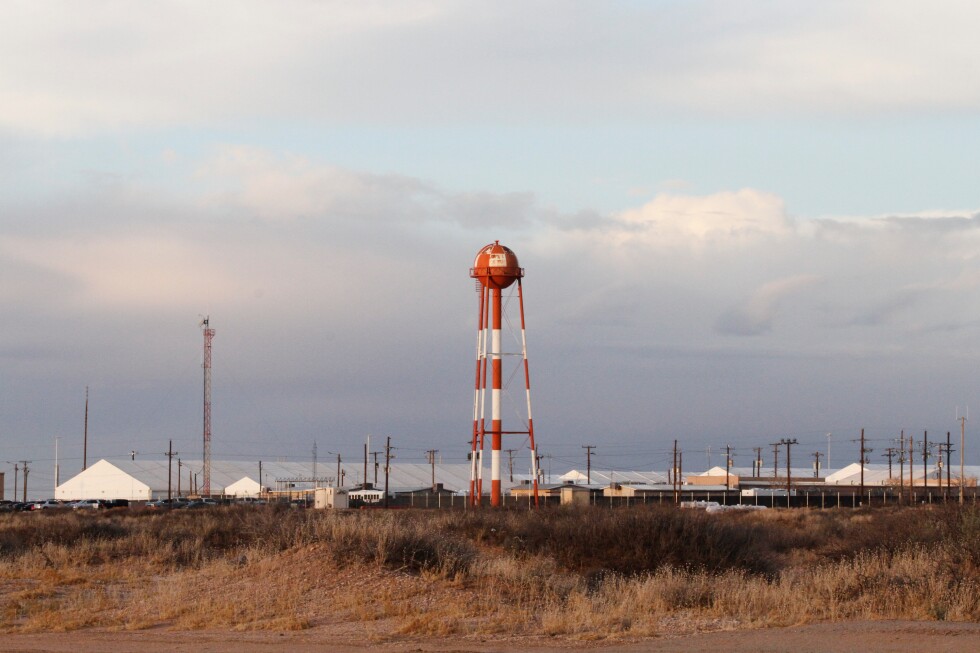
Recent inspections of the largest immigration detention facility in the U.S. have revealed numerous violations of national standards, raising significant concerns about the safety and well-being of detainees. The findings include risks of excessive force, disease transmission, and hazardous living conditions.
The Detention Oversight Bureau of the Immigration and Customs Enforcement (ICE) carried out a three-day inspection at Camp East Montana in El Paso, Texas, in February, as mandated by Congress. The report was made public this week, detailing 49 deficiencies related to various detention standards, including use of force, security protocols, and medical care. This inspection marked the first official evaluation of Camp East Montana since its rapid construction and opening last summer.
Legal Concerns Arise Over Camp Conditions
The scale of deficiencies reported at the camp is alarming. With 49 issues identified, the inspection revealed the highest number of deficiencies observed in any similar review conducted by ICE this year. Attorney Randall Kallinen, representing the family of a 36-year-old detainee who died in January—one of three fatalities reported since the facility’s inauguration—criticized the findings, stating, “This report is heartbreaking. Camp East Montana gets an F rating.” Kallinen expressed concerns that detainees face not only the threat of excessive force but also insufficient medical and psychological care, in addition to potential dangers from fellow detainees.
The report was issued by the Department of Homeland Security, ICE’s parent agency. Notably, Camp East Montana is designed to accommodate up to 7,000 migrants simultaneously and currently holds approximately 3,000 detainees daily, primarily men who have not been convicted of any crimes, according to ICE figures as of February 5.
The inspection preceded ICE’s decision to replace Acquisition Logistics LLC, the original contractor that built and managed the camp amid rising scrutiny over conditions. This firm secured contracts worth up to $1.3 billion to construct and run camps, even though it had minimal experience in the field. Attempts to reach the company’s president, Ken Wagner, for comments were unsuccessful.
Congressional Insight on ICE’s Accountability
Operations at Camp East Montana were handed over to Amentum Services, a more seasoned contractor, on March 12. Amentum’s no-bid contract, valued at approximately $453 million, encompasses detention, transportation, and medical services, running through September 30, as recorded in federal databases. Typically, detainees remain at the facility for days or weeks while awaiting deportation or transfer.
U.S. Representative Veronica Escobar, an El Paso Democrat who has visited the facility multiple times, remarked that the deficiencies highlighted in the report serve only as a fraction of the systemic issues at the facility. Detainees have frequently voiced complaints regarding medical neglect and other significant concerns. Escobar expressed skepticism about whether ICE is genuinely invested in improving conditions, suggesting that the situation might be a tactic to encourage voluntary departures from detainees.
Documented Safety Issues Raise Alarm
The inspection report outlines numerous safety failures observed during Acquisition Logistics’ management tenure. Notably, staff did not document whether appropriate measures were in place to manage the risk of self-harm and suicides, with 911 calls indicating that these incidents were prevalent. Additionally, the report revealed that Acquisition Logistics had been uncooperative in supplying staffing information to ICE, hampering efforts to assess personnel adequacy for maintaining safety. In one troubling instance, detainees managed to escape due to a lack of personnel monitoring the perimeter.
Inspectors also noted that tools and equipment were left unsecured throughout the facility, and there were discrepancies in the inventory records of ammunition. Guards frequently failed to complete required written reports when using force or restraints. Furthermore, supervisory staff did not adequately document their observations, and incidents involving the use of chemical agents or other force types were not reviewed for compliance.
Medical staff’s performance came under scrutiny as well, with failures to isolate detainees exhibiting symptoms of airborne tuberculosis, and a notable delay—ranging from six to 14 business days—in responding to over a dozen medical complaints from detainees. Despite these serious concerns, the inspection report ultimately rendered an “acceptable/adequate” rating, recommending collaborative efforts between ICE and the new contractor to address the lingering issues.
Finally, the report responded to one of the most prevalent grievances among detainees: inadequate food provisions. The meal service program, administered by the subcontractor Disaster Management Group, indicated it had obtained certification from a nutritionist, asserting that the average daily calorie offerings met federal guidelines.
