


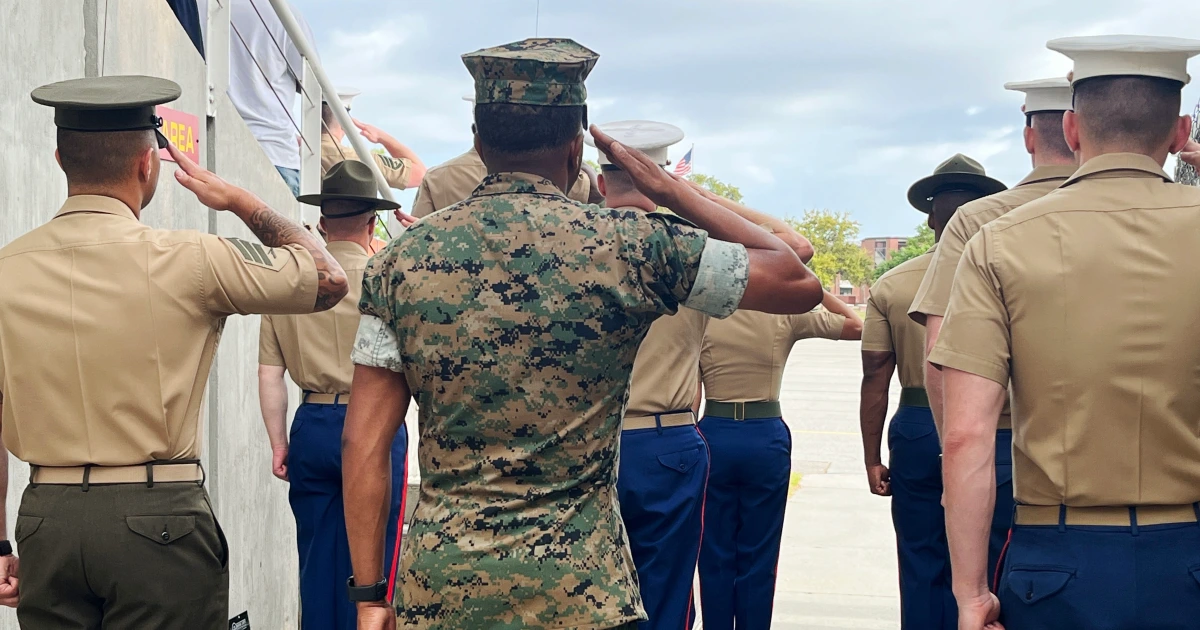
Pvt. Ramirez Garcia Reflects on His Journey at Parris Island
PARRIS ISLAND, S.C. — Pvt. Ramirez Garcia faced numerous challenges during his recruit training at the Marine Corps Depot, often contemplating giving up. However, his perseverance paid off, and he expressed gratitude for making it through the rigorous training process.
On this momentous day of graduation, not all was as it should be. Unfortunately, his parents were absent from the ceremony. Ramirez Garcia’s sister, Emily, revealed that their parents, currently in the U.S. on work visas, were deterred from attending due to fears of potential enforcement actions by Immigration and Customs Enforcement (ICE).
Emily shared, “They intended to come. Our plans included a celebration at the beach afterward. But when they learned about ICE’s possible presence, we had to cancel everything.” Despite the circumstances, she expressed immense pride in her sister’s achievement, stating, “I can’t believe she’s a Marine.”
According to NBC News, no ICE agents were visible at the graduation ceremony. Chief Warrant Officer Bobby Yarbrough, the base spokesman, stated he could not confirm the affiliation of the federal agents present for security screenings due to privacy rules but acknowledged that federal agents had helped with security at previous events.
This graduation event was initially clouded by reports that ICE would be present to check for undocumented family members, a revelation that ignited protests, including from Marine Corps veterans. Retired Marine Dale Soto, who participated in the protest, emphasized that illegal immigrants have never posed an issue at the base, calling the agents’ presence “a real slap in the face” to the Marine Corps.
Prior to the ceremony, the base announced that federal law enforcement personnel would be on-site for “enhanced screening” and checking the immigration status of attendees. Amid rising tensions over U.S. foreign relations, security measures were also heightened, requiring all visitors to present valid identification, such as a REAL ID or U.S. passport, to access the base.
A spokesperson for the Department of Homeland Security assured NBC News that ICE would not be making arrests at the ceremony, yet concerns lingered among immigrant families and advocates, leading to fears and uncertainty around the event. This hesitation is particularly impactful in a military context, considering that around 17% of active-duty service members have immigrant parents.
Despite these concerns, the ceremony proceeded with a naturalization event where 16 new American citizens celebrated their citizenship just before graduation. The day was marked by pride even amidst the uncertainties and fears surrounding immigrant families.
Family Celebrations Amidst Fears
Giovanni Castañeda Nieto, 18, attended a pre-graduation event eagerly supported by his family, although his mother had to witness the moment through a cell phone video due to concerns regarding ICE’s presence. His cousin, Maybelline Nieto Perla, informed Noticias Telemundo about their mother’s cautious choice to forgo the ceremony, stating, “We don’t want to risk everything because she’s already in the process of getting legal status.”
His family’s joy in celebrating his achievement as a U.S. Marine was tempered by their mother’s absence, a sentiment felt deeply during this milestone occasion. “When we left, she told us she was going to cry, and she did,” Nieto Perla relayed.
Margaret Stock, an immigration attorney and former lieutenant colonel in the U.S. Army Reserve, criticized the practice of checking family immigration status at such ceremonies, arguing that parental attendance significantly influences a recruit’s motivation to serve. She highlighted that this practice could discourage families, particularly those with Hispanic backgrounds, from participating in such important events.
Despite the current policies regarding base access, Yarbrough affirmed that no illegal immigrants are allowed on the premises and that safety remains the priority. Attendees are required to present necessary documentation for family visits. Meanwhile, Stock pointed out that the source of security threats typically comes from U.S.-born nationals, not from immigrant families.
The heightened anxiety surrounding immigrant families and service members reflects broader immigration issues facing the U.S. military today, prompting advocates to call for a more inclusive approach to support the diverse backgrounds of those who serve.
