


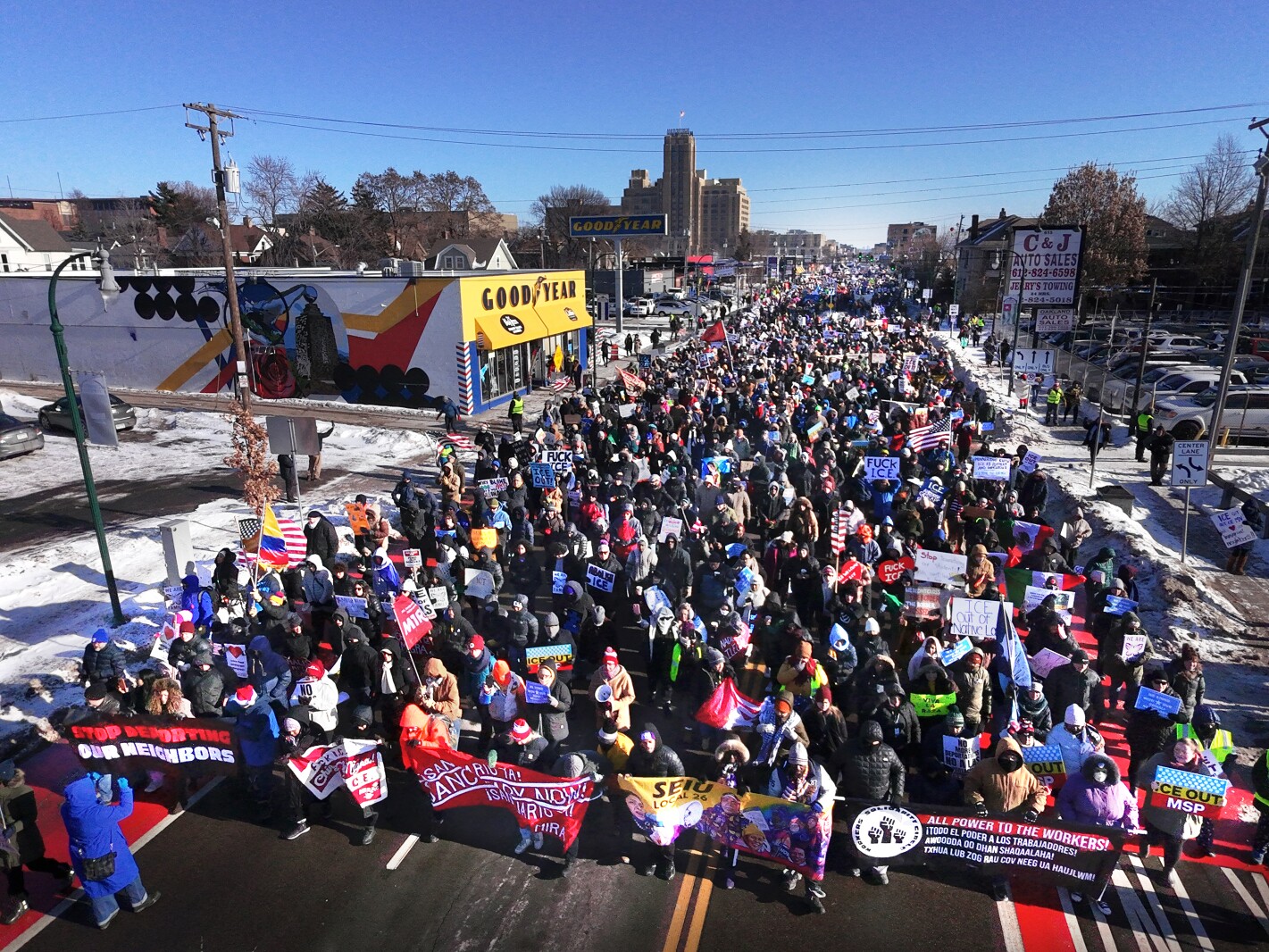
Photographer Challenges FAA’s Drone Flight Ban Near Immigration Operations
In a notable legal move, Rob Levine, a freelance photographer based in Minneapolis, has filed a lawsuit against the Federal Aviation Administration (FAA) in response to a stringent nationwide prohibition on flying drones near immigration enforcement activities. His petition, submitted last month, disputes the no-fly zone established within 3,000 feet of Department of Homeland Security (DHS) facilities and vehicles.
Concerns Over Unclear Restrictions
Levine described the ban as alarming due to its severe penalties. He highlighted the significant presence of DHS agents in urban areas, estimating between 3,000 to 4,000 agents in Minneapolis alone. “In an urban environment, it’s nearly impossible to know if you are close to a federal agent,” he remarked, expressing his concerns for drone operators under these conditions.
Allegations of Silencing Journalistic Activity
Levine contends that the motivation behind the FAA’s ban is not rooted in safety, but rather aims to obstruct journalists and the public from documenting federal actions. Grayson Clary, an attorney representing Levine from the Reporters Committee for a Free Press, pointed out that the FAA has a troubling history of imposing temporary flight restrictions that hinder the ability of journalists to cover law enforcement activities, protests, and demonstrations.
Levine’s Background and Experience with Drone Journalism
A graduate of the University of Minnesota Duluth, Levine’s career spans decades, including roles as a staff photographer for the Minnesota Star Tribune. He became drawn to drone photography about ten years ago but encountered FAA restrictions during significant coverage events, such as the Standing Rock pipeline protests in 2016. Levine was the only journalist granted a temporary exemption at that time, yet it allowed limited operational range, ultimately restricting his ability to effectively cover the protests.
Impact on Coverage of Local Federal Activities
Since the inception of Operation Metro Surge, Levine has been documenting the activities of federal agents near his residence in Powderhorn Park. However, he argues that the FAA’s recent notices, which ban drone flights within 3,000 feet horizontally and 1,000 feet vertically of DHS “facilities and mobile assets,” have effectively grounded his ability to document these situations accurately.
Legality and Implications of the Drone Ban
Levine pointed out a major concern: while traditional flight restrictions are often clearly marked, the FAA’s ban on drone flights near mobile assets lacks visible indicators. This vagueness could inadvertently lead to severe consequences for operators, including confiscation or destruction of drones and potential legal repercussions. These stringent measures are projected to remain in effect until October 2027.
Legal Action Backed by Major Media Outlets
Determined to challenge the FAA’s policy, Levine sought assistance from local civil rights attorneys and was directed to the Reporters Committee. Clary referred to the restrictions as “arbitrary and capricious,” arguing they infringe on due process rights and stifle First Amendment freedoms. Notably, several prominent media organizations, including The New York Times and The Washington Post, have voiced similar concerns, emphasizing that such restrictions expose journalists to significant legal risks while engaging in fundamental reporting activities.
Petitions for judicial review have been filed with the U.S. Court of Appeals for the District of Columbia Circuit. Clary anticipates that the FAA will soon present the foundational materials supporting its regulations, leading to a comprehensive briefing and subsequent hearing by a three-judge panel. As of now, the FAA has declined to provide further comments on the lawsuit.
