


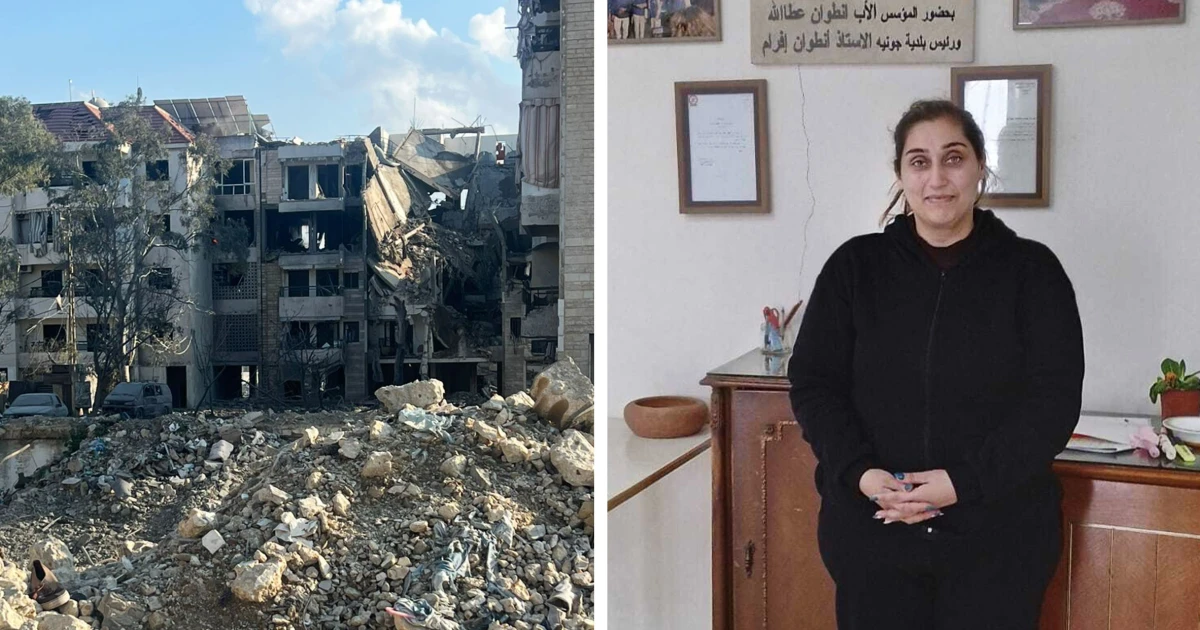
Israel has expressed the necessity for a buffer zone to mitigate the rocket threat posed by Hezbollah at its borders. Defense Minister Israel Katz cautioned that hundreds of thousands of families displaced from the south will be unable to return to their homes—or what remains of them—until the safety of Israel’s northern population is assured.
According to the Lebanese government, the ongoing conflict has resulted in over 1,300 fatalities and more than 4,000 injuries throughout Lebanon.
El Khoury, residing in a temporary shelter in Seheire, Keselwan district, northeast of Beirut with her three young children, recounted her struggles to secure adequate food and essential supplies. “The situation is devastating,” she stated, underscoring the dire circumstances faced by many.
Displacement and Humanitarian Crisis
Humanitarian organizations report that hundreds of thousands of displaced individuals are enduring harsh conditions, with many resorting to sleeping on the streets or in vehicles around the capital, Beirut. Aid groups are actively seeking additional funding to address what they anticipate may be a prolonged crisis of displacement.
Dr. Tania Baban, Lebanon country director for the nonprofit MedGlobal, noted that even in the event of a ceasefire, certain southern areas may remain occupied. “Even if some form of ceasefire is reached, people are worried they won’t be able to return to their lands,” she explained, highlighting the uncertainty that looms over displaced communities.
Abbas Bazoun, forced to leave his home in Deir Ahmes, has been living in a van with his wife and four children for several weeks. He shared the emotional burden of leaving behind his family’s dog, which he was not permitted to bring to the shelter. “My dog is very important to me; I can’t abandon him,” he expressed, revealing the emotional toll of the ongoing conflict on his family.
Growing Sectarian Tensions
Amid this humanitarian crisis, organizations such as the United Nations and MedGlobal have raised concerns about escalating sectarian tensions. Some displaced people are being turned away from host communities out of fear that they may have ties to Hezbollah.
The New York Times reported that the Israeli military has cautioned leaders of Christian and Druze communities in southern Lebanon, advising them to remain in evacuation zones while urging them to prevent displaced individuals from nearby Shiite Muslim areas from seeking refuge in their communities.
Imran Riza, the UN humanitarian coordinator for Lebanon, acknowledged a pervasive sense of insecurity among both host and displaced populations, marking a significant increase in anxiety compared to previous years. Dany Makhlouf, a social activist in Beirut’s Akrafieh neighborhood, expressed concerns that local residents are wary of having shelters in their areas, given the history of divisive incidents in past conflicts.
Local governance reflects these sentiments. Bechara Gholam, mayor of Lemail in Beirut’s Achrafieh district, confirmed that shelters for displaced persons do not exist in his area. He underscored that any potential renters would face scrutiny to ensure they have no connections to “activities associated with Hezbollah.” The prioritization of neighborhood safety remains a primary concern for municipal leaders.
As tensions continue to rise, Dr. Baban expressed growing concern over the potential implications of Israel’s prolonged presence in southern Lebanon. Her hopes rest on the possibility of a resolution, but the shadow of uncertainty looms large for displaced families.
