


Detention of Guatemalan Mother and Daughter Raises Immigration Concerns
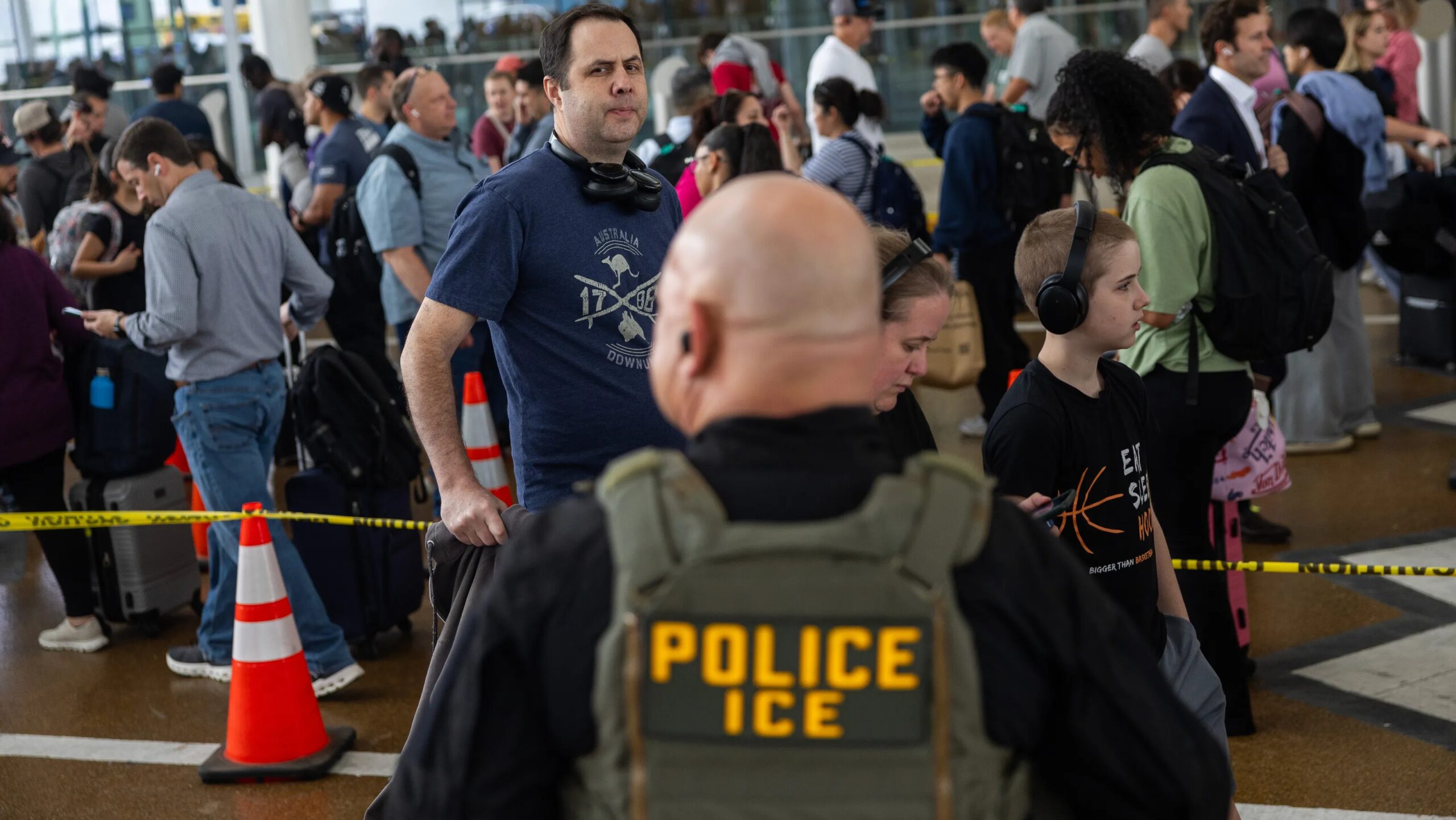
On March 22, 2026, the detention of Angelina Lopez Jimenez and her 9-year-old daughter at San Francisco International Airport has ignited a renewed debate on the Trump administration’s use of government databases in immigration enforcement. As they prepared to board a domestic flight, plainclothes ICE officers apprehended them, a scene captured in a video that has circulated online.
The Transportation Security Administration (TSA) reportedly informed Immigration and Customs Enforcement (ICE) about Lopez Jimenez and her daughter’s scheduled flight, alerting them that the pair had received a final removal order. Critics claim this incident signals a troubling shift in the administration’s approach to immigration policy, as it employs government data to target undocumented individuals for deportation.
Representative John Garamendi (D-Calif.) expressed alarm at the developments, stating that this incident illustrates a disturbing era where the government exercises undue control over individual information. He highlighted plans to utilize IRS tax data and health directories to identify those undocumented immigrants deemed eligible for deportation, raising concerns about a pervasive surveillance state.
Garamendi noted that Lopez Jimenez, 41, and her daughter do not have criminal backgrounds and were previously considered low priorities for deportation under past administrations. Their enforced removal highlights the administration’s commitment to broader deportation efforts as it seeks to fulfill long-held promises to crack down on undocumented immigration.
Details Surrounding the Detention
A statement from the Department of Homeland Security (DHS) clarified that the mother and daughter had been issued final removal orders following a 2019 ruling by an immigration judge. Over the years, they had resided in the San Francisco Bay Area after crossing the border illegally in 2018 when Lopez Jimenez’s daughter was just a toddler. The family had settled into their community, with the child attending local schools.
Local law enforcement arrived in response to a 911 call regarding the incident, though they maintained that they did not play a role in the operation involving federal immigration agents. Eyewitness videos captured officers forming a barrier to shield ICE from the surrounding crowd. The San Francisco Police Department has reiterated its stance against participating in civilian immigration enforcement, citing city and state policies.
DHS indicated that the emotional footage of Lopez Jimenez pleading for assistance during her detention stemmed from her resistance to law enforcement. Subsequently, ICE confirmed that the mother and daughter were deported on March 24 via a repatriation flight to Guatemala, where they are reported to be safe with family.
Official Response to Data Sharing Practices
Recent reports have revealed that TSA informed ICE regarding Lopez Jimenez and her daughter being on the passenger list. A DHS spokesperson stated that under President Trump, the agency aims to reverse policies that previously allowed undocumented immigrants to travel domestically without proper identification, insisting on stricter enforcement measures.
The DHS has not clarified the specifics of these policy changes to date. According to reports from The New York Times, developments have included cooperation between TSA and ICE to compile lists of passengers ordered for deportation. Moreover, federal contractors are developing a $30 million system for tracking suspected undocumented individuals, further heightening concerns regarding privacy and data use.
Perspectives on Immigration Enforcement at Airports
Former TSA Director John Pistole noted that airports generally should not serve as primary enforcement venues for ICE. His assertion underscores a significant divergence in focus between TSA’s responsibilities for aviation security and ICE’s immigration control duties. The randomness and infrequency of immigration interventions at airports, while not new, represent a notable shift from established practices.
Legal experts have indicated that while TSA checks typically require valid identification to board a domestic flight, instances of immigration enforcement remain sporadic. Following the incident, Senators Alex Padilla and Adam Schiff, both California Democrats, have called for investigations into the data-sharing practices between agencies, labeling the surveillance efforts as “alarming.”
Concerns Over Data Privacy and Broadening Surveillance
Concerns regarding civil liberties and privacy have intensified among advocates, with organizations like the Electronic Frontier Foundation cautioning against the dismantling of safeguards between federal entities. Reports indicate that the current administration is leveraging IRS tax data, previously intended for identifying eligible taxpayers, in efforts to identify undocumented residents for deportation.
Recent court rulings have intermittently restricted the government’s ability to utilize such tax information for enforcement purposes. Legal experts point to the Lopez Jimenez case as indicative of a broader strategy to instill fear within immigrant communities, extending enforcement efforts beyond traditional areas like schools and neighborhoods into airports and public spaces.
The evolving strategies of both the administration and immigration enforcement bodies signify a heightened focus on data collection and surveillance, raising essential questions about the implications for civil liberties and privacy in contemporary society.
