


Navigating Nigeria’s Historical Challenges
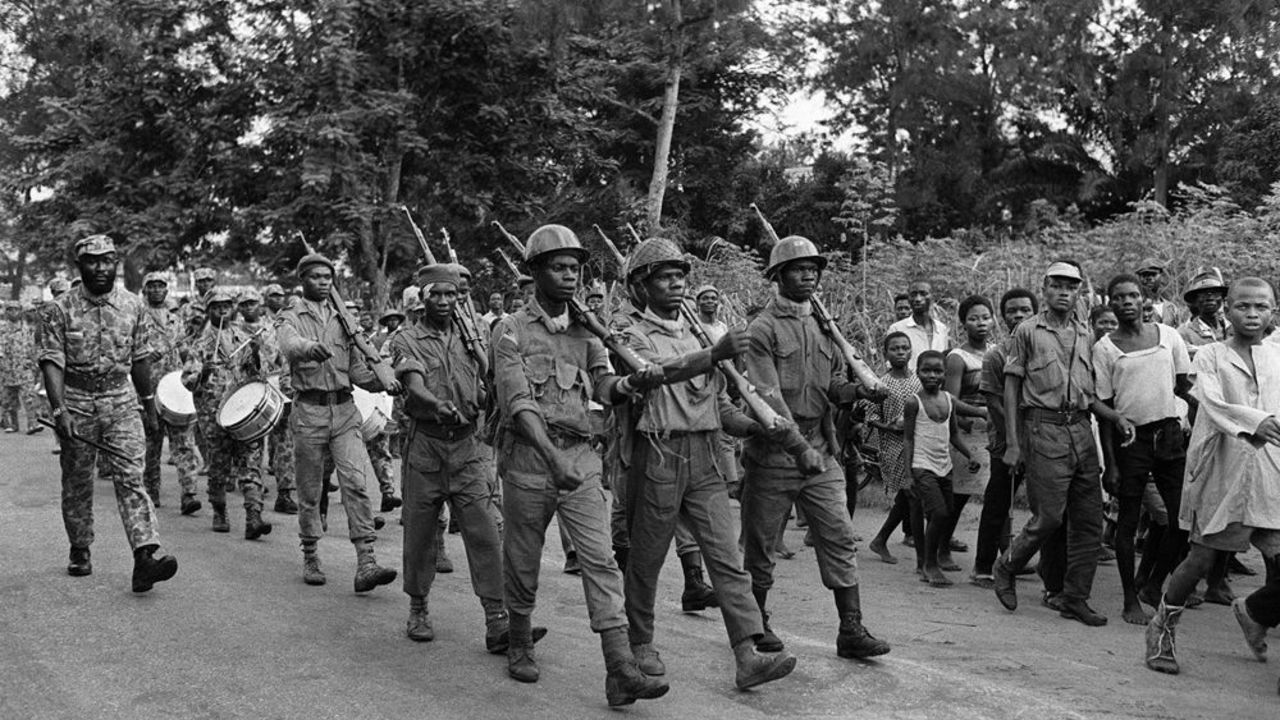
Understanding a nation’s history is fundamental, and for Nigeria, this means confronting a tumultuous past that includes a devastating civil war. Many young Nigerians today lack awareness of this dark chapter, a time when citizens of the same country turned against one another. It is disheartening to recall the celebrations in the streets when figures like Nnamdi Azikiwe, a prominent Igbo leader, were welcomed by Yoruba supporters, only to see that camaraderie dissolve into conflict between 1967 and 1970. This historical backdrop serves as a reminder of ongoing challenges, particularly among those wishing to revive divisive sentiments for selfish ends.
The Roots of the Conflict
The Nigerian civil war cannot be viewed in isolation; it is intricately linked to the colonial history that shaped the nation. The federal system established during colonial rule and the divisive tactics employed by colonial authorities laid a precarious foundation for post-independence Nigeria. The federation that emerged at independence in 1960 was skewed, favoring the northern regions and marginalizing the south. This misalignment drove political inequalities that have lingered for decades. Educational and religious policies from the colonial era further perpetuated divisions among Nigeria’s diverse ethnic groups, inhibiting any semblance of unity.
Political Turmoil and Ethnic Tensions
The immediate catalysts for the civil war were deeply rooted in the interplay of regional politics and ethnic ambitions. The 1950 Ibadan Constitutional Convention exemplified this, as the North secured disproportionate representation based on its population. Despite opposition from southern politicians, allies emerged from unexpected corners, setting the stage for a fragile alliance among Nigeria’s major parties. This coalition did little to ease the mounting tensions, especially as the South began to challenge Northern political dominance, leading to crises like the contentious census of 1962-1963 and the divisive elections of 1964.
The Coup and its Aftermath
The turning point came on January 15, 1966, when a coup attempted to reshape Nigeria’s political landscape. The coup leaders, predominantly from the Igbo-dominated eastern region, claimed to act in the interest of the nation, yet their actions sparked controversy and resentment. The targeted elimination of key politicians and military figures affiliated with both the North and South further exacerbated ethnic tensions. Major General Johnson Aguiyi-Ironsi, an Igbo leader, could not quell the dissent following the coup, particularly after his unification decree in May 1966 was perceived as a direct threat to Northern interests.
A Path to Civil War
The subsequent failure to hold coup leaders accountable fanned the flames of discontent, leading to the July 1966 counter-coup, which decimated the ranks of Igbo soldiers and saw widespread violence against the Igbo population in the North. As bodies returned home to the East, the sentiment of outrage grew, paving the way for civil war. A critical factor in going to war was the refusal of Lieutenant Colonel Chukwuemeka Odumegwu Ojukwu, the Eastern Regional Military Governor, to recognize the authority of his junior, Lieutenant Colonel Yakubu Gowon. Attempts at reconciliation, such as the Aburi agreement, ultimately failed, and the situation rapidly deteriorated.
The Economic Implications of Secession
The discovery of oil in Eastern Nigeria added another layer of complexity to the conflict, transforming the secession movement into a potentially viable economic entity. The allure of oil attracted the attention of global powers, turning what was fundamentally a fratricidal conflict into a geopolitical issue, where international interests overshadowed the human cost of war. As a result, the war evolved far beyond a local struggle, drawing in external forces each vying for control over valuable resources.
The Need for Unity
Reflecting on the civil war, Gowon’s assertion that “there are no winners or losers” encapsulates the collective responsibility for preventing a repetition of such catastrophic violence. The path forward lies in fostering a true federation that celebrates diversity and ensures equitable distribution of resources. In a global context where powerful states dictate terms, any advocacy for the dissolution of Nigeria must be scrutinized; such sentiments do not align with the aspirations of future generations or the dignity of the black race.
Ultimately, acknowledging and learning from the past is essential if Nigeria hopes to navigate its complex social fabric and build a harmonious future.
