


Republican Proposals Targeting Welfare Benefits for Undocumented Immigrants Advance in Oklahoma
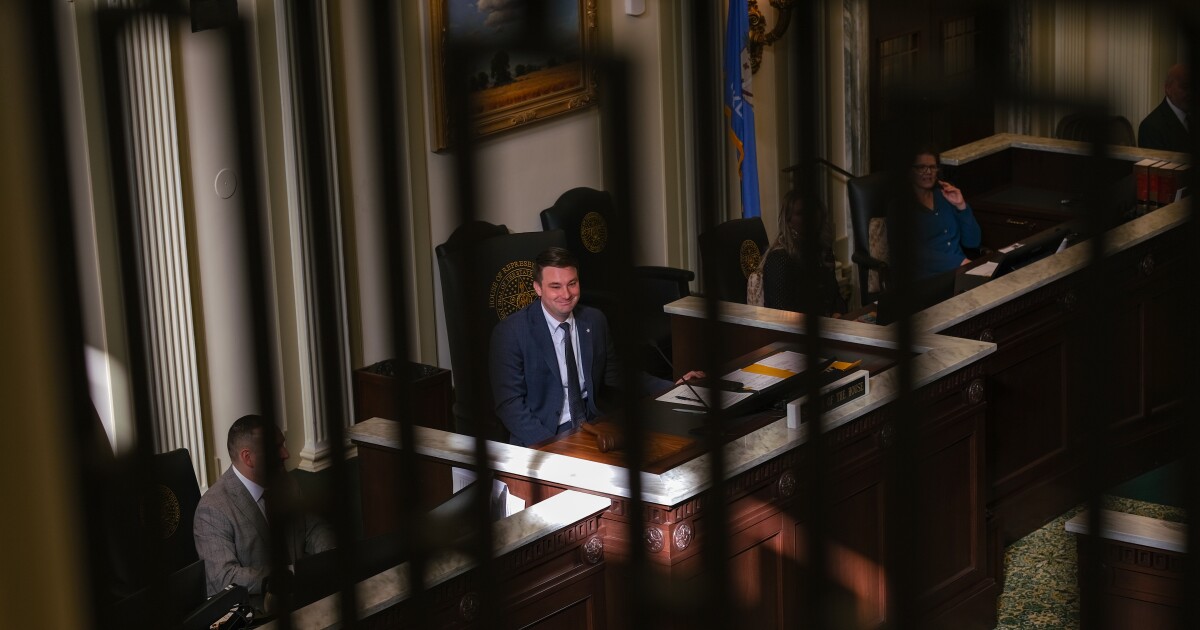
Last fall, Republican lawmakers from across the nation convened with White House officials to deliberate on strategies for monitoring individuals utilizing federal welfare benefits despite lacking legal immigration status. Among those in attendance was Oklahoma House Speaker Kyle Hilbert, who later addressed the media regarding two proposed bills aimed at facilitating deportations: House Bills 4422 and 4423, collectively known as the Security Act.
Hilbert expressed that individuals residing in the country unlawfully should bear the consequences of their choices. He emphasized, “If you’re here and you’re not an American citizen while applying for taxpayer-funded welfare, that’s a risk you take.” The proposed legislation mandates state officials to verify the immigration status of applicants for federal grocery assistance and health insurance, subsequently reporting undocumented individuals to federal immigration authorities.
The benefit programs affected under this proposal include the Supplemental Nutrition Assistance Program (SNAP), Women, Infants, and Children Assistance (WIC), and Medicaid, known locally as Sooner Care. However, it remains ambiguous who would be reported to law enforcement under the bill’s provisions, as undocumented individuals are already barred from accessing federal benefits.
The eligibility of many who previously could apply without citizenship or green cards has diminished due to previous measures enacted by President Donald Trump and Congress aimed at curbing such access. Hilbert noted another meeting in December with White House Deputy Chief of Staff Stephen Miller, where ideas surrounding the legislation were further discussed and refined to benefit Oklahoma.
Officials from the White House corroborated ongoing discussions with state lawmakers about measures to “protect the American people from fraud and abuse.” An official statement from the White House press secretary reiterated that “illegal aliens should not receive federal welfare benefits while hardworking Americans pay for them.” This effort reflects the administration’s broader strategy to engage with state legislators for the effective implementation of its policies.
Concerns Emerge Over Proposed Legislation Affecting Immigrants
Advocates for immigrant rights argue that it is already uncommon for undocumented individuals to seek public benefits. Federal data backs this claim, showing that roughly 96% of SNAP beneficiaries are U.S. citizens. Despite this, Oklahoma stands as one of the few states moving forward with initiatives that align with Trump administration policies.
Other states, like Tennessee, are also considering legislation echoing Oklahoma’s approach, while lawmakers in Iowa and Kentucky explore similar welfare measures. Margot Dankner, a senior policy analyst on immigration at the Center on Budget and Policy Priorities, highlighted a concerning trend: “We are witnessing a pattern in these state bills aimed at weaponizing information from public benefits programs for immigration enforcement.” This strategy, she contends, appears to foster anti-immigrant sentiment.
Gabriela Ramírez Perez, an immigration law analyst for the Oklahoma Policy Institute, warned that these legislative actions can instill fear and uncertainty among communities. “Individuals going through difficult times may avoid seeking assistance, risking hunger and critical medical care simply to protect themselves or their families from ICE,” she noted.
Democratic Rep. Arturo Alonso-Sandoval, one of only three Latino members in the Oklahoma State Legislature, criticized the Republicans for straying from their commitment to focus deportations on serious criminals. “The real threats are not American citizens,” said Alonso-Sandoval, adding, “We are not discussing criminals; we are talking about families suffering from hunger and illness.”
Concerns arise over the bill’s implications for undocumented parents applying for benefits on behalf of their U.S. citizen children. Sen. Michael Brooks, chairman of the Oklahoma Latino Congressional Caucus, pointed out that the definition of an “applicant” plays a critical role in determining who is affected by the legislation. He explained that the assistance is primarily intended for the children, rather than the parents themselves, potentially leaving vulnerable families at risk.
Hilbert clarified that the initial intent of the legislation was to ensure that individuals managing welfare accounts were not undocumented. Nonetheless, subsequent amendments allowed the Oklahoma attorney general to review reported cases before alerting ICE, though uncertainties remain regarding the criteria used for such determinations.
Brooks is contemplating additional amendments to safeguard the rights of eligible U.S.-born children to access federal food and medical assistance. Following its passage in the Oklahoma House of Representatives, the bill is set to be examined by the Senate Health and Human Services Committee in the forthcoming sessions.
