


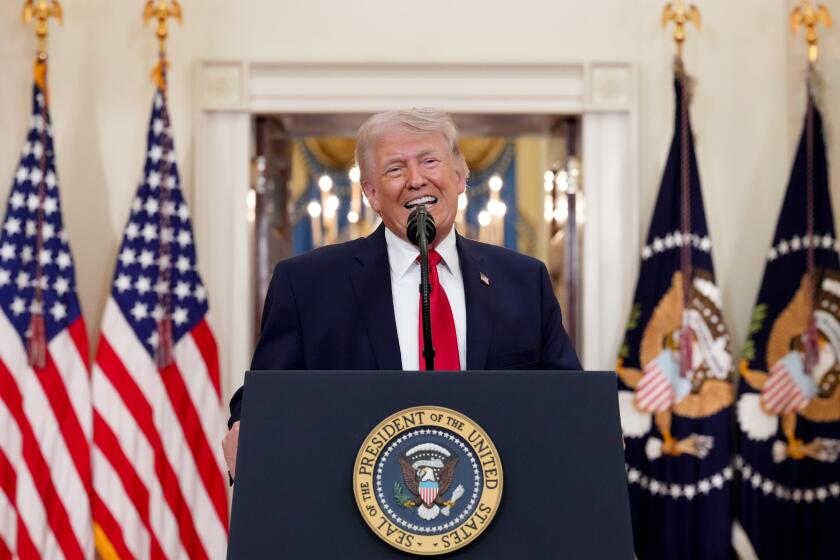
Last week, President Trump directed sharp criticism at the judicial system, while courts across the nation issued rulings that challenged his administration’s actions.
Making history as the first sitting president to attend oral arguments at the Supreme Court, Trump faced intense questioning regarding his attempts to eliminate birthright citizenship. Meanwhile, his policies were quietly contested in courtrooms nationwide.
In the lead-up to January 6, issues surrounding immigration policy, the proposed White House Ballroom renovation, and his personal responsibilities were brought into focus.
In a post on Truth Social, he stated, “Stupid judges and judges cannot build a great country!”
By the week’s end, a series of judicial decisions highlighted the administration’s overreach of executive authority, marking significant setbacks for Trump.
Recent Immigration Rulings
Immigration has been a central theme of Trump’s policy platform, and recently, he experienced key legal challenges in this arena.
On Monday, a federal court in California granted permission for class-action lawsuits regarding how the administration has handled specific asylum applications. This case includes thousands of asylum seekers who used the Biden administration’s CBP One app to schedule appointments with immigration officials.
Many of these migrants have endured lengthy waits in Mexico to meet with Border Patrol agents after securing appointments through the app.
However, after Trump assumed office, these appointments were abruptly canceled, prompting judges to recognize the rights of these asylum seekers to challenge the government in court.
Similarly, a Boston-based federal judge ruled that the administration unlawfully revoked the temporary legal status of up to 900,000 immigrants who entered the U.S. through these phone applications, resulting in deportations and forced departures for tens of thousands.
The judge mandated that the government must restore the legal status and work permits for many affected individuals, a clear repudiation of the administration’s efforts to erase their legal standing with little consideration.
Legal Challenges to Sanctuary Cities
On Tuesday, a federal judge dismissed a Justice Department lawsuit against Denver and Colorado, asserting that their “sanctuary” laws did not interfere with immigration enforcement.
The court determined that the federal government had not demonstrated its authority to override local resource allocation decisions. The ruling emphasized the constitutional limitations on federal influence over local governance.
Colorado Attorney General Phil Weiser remarked that the state retains the right to determine how its law enforcement operates without federal interference.
Birthright Citizenship Debate
In another significant case, Supreme Court justices displayed skepticism on Wednesday regarding Trump’s stance on birthright citizenship for children born to parents temporarily present or illegally residing in the U.S.
Both conservative and liberal justices questioned the validity of the administration’s arguments, which relied on ambiguous sources, including outdated case law.
Confident in his stance, Trump departed the Supreme Court proceedings halfway through, later voicing his criticism on social media about the country recognizing ‘natural-born’ citizenship.
Austin Kocher, an immigration enforcement expert, noted the mismatch between the administration’s objectives and actual outcomes, especially during Trump’s second term, highlighting a disconnect in the mass deportation narrative.
Judicial Compliance Issues
Various rulings have highlighted instances where the Trump administration appeared unyielding to judicial directives. A recent decision revealed that Border Patrol agents continued to conduct unlawful arrests in California’s Central Valley, infringing on individuals’ rights without just cause.
Judge Jennifer Thurston noted that the government actions relied on unsubstantiated assumptions rather than concrete evidence linking individuals’ statuses to unlawful behavior.
The White House Ballroom Controversy
As the week began, President Trump promoted the ambitious design of a new 90,000-square-foot ballroom, asserting it would become one of the finest venues globally. However, his plans were thwarted when U.S. District Judge Richard Leon issued a temporary injunction halting construction.
The judge ruled that as the “custodian” of the White House, Trump cannot unilaterally approve major renovations without Congress’s explicit consent. In response, Trump expressed his discontent on Truth Social, arguing that Congressional approval has never been a prerequisite for White House construction endeavors.
Legal Repercussions for January 6 Accountability
In a significant legal development, a judge ruled that Trump remains personally liable in civil lawsuits linked to the January 6, 2021, Capitol incursion, allowing these claims to advance—posing serious legal challenges for him.
Trump previously benefited from a Supreme Court decision that provided former presidents immunity regarding actions taken while in office. However, the recent ruling classified his incendiary speech on January 6 as a political act, distinct from official presidential duties.
The week concluded with yet another setback for Trump as a federal judge blocked his administration’s efforts to compel colleges to provide extensive applicant data related to racial considerations in admissions.
Reflections on the Week’s Legal Challenges
UCLA constitutional law professor Adam Winkler asserted that Trump faced a notable setback last week, clarifying that the courts are not inherently anti-Trump, as evidenced by his past victories. He emphasized that Trump’s aggressive policymaking has often led to conflicts with existing legal precedents.
The cumulative impact of last week’s court rulings indicates the judiciary’s assertion that the president bears accountability for his actions, while state governments retain constitutional powers that federal authority cannot supersede.
Legal experts emphasized that recent court decisions reaffirm the essential checks and balances within government systems and the enduring capacity of civil society to uphold the rule of law against unconstitutional actions.
