


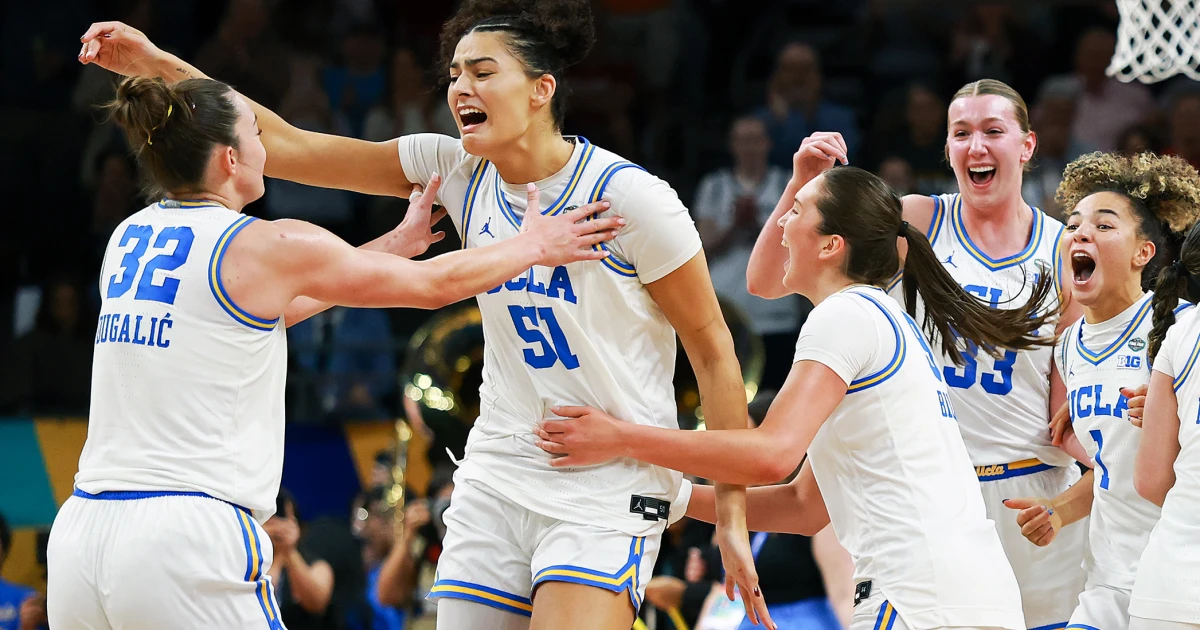
UCLA Triumphs in Women’s National Championship
In a display of strategic prowess, UCLA women’s basketball coach Cori Close methodically substituted her starting lineup in the closing minutes of the national championship game against South Carolina on Sunday. This careful management was crucial as the stakes rose in the final moments of an intense matchup.
Veteran Leadership Takes Center Stage
The Bruins boasted a roster heavily reliant on experience, featuring eight seniors and graduate students out of a 12-member team. This unconventional approach set UCLA apart in a season where no other college team—men’s or women’s—depended so heavily on veteran players. As part of their NCAA Tournament strategy, Close primarily utilized her most seasoned athletes, emphasizing the importance of seizing this championship opportunity before a majority of the roster moves on to the WNBA.
Historic Victory for UCLA
UCLA clinched the national title with a commanding 79-51 victory over South Carolina, marking the program’s first NCAA championship. The Bruins scored all 130 of their final four tournament points in the hands of players in their last year of eligibility, wrapping up the tournament with an astonishing total of 170 consecutive points.
A Unique Roster Strategy in Women’s Basketball
The registration age for aspiring WNBA players is notably older than that of male athletes, dictated by the league’s recent collective bargaining agreement. This stipulates that only graduated players, those who are four years removed from high school, or individuals aged 22 or older can enter the WNBA Draft. Nonetheless, no team has embraced this approach as fully as UCLA, which designed a championship roster centered around seasoned talent. Historically, seniors have only claimed the Women’s Final Four Most Valuable Player award nine times since 2000, highlighting the rarity of this strategy’s success.
UCLA’s Blueprint for Success
The Bruins’ unconventional roster yielded impressive results, finishing with an extraordinary 31-game winning streak and becoming the first national champion from the Big Ten Conference since 1999. Close expressed her admiration for the players’ dedication and character, culminating in a championship run that exceeded initial expectations.
Building the Team Through Transfers
UCLA effectively utilized the transfer portal to enhance its roster, with notable additions such as Big Ten Player of the Year Lauren Betts, who transferred from Stanford. Other key contributors included players from Oregon, Washington State, and Utah State. However, while the NCAA’s relaxed transfer rules allow for quick player movement, they do not guarantee immediate team chemistry, a challenge acknowledged by both coaching staff and players.
A Future of Change and Aspiration
Despite the team’s recent triumph, fundamental changes loom on the horizon. Betts admitted to sentimentality in reflecting on her time with the seniors and graduate students, reinforcing the understanding that next season’s squad will undergo a significant transformation. In recognition of this, Close acknowledged the urgent need for recruiting new talent in the offseason. As Kiki Rice noted, there is no more fitting conclusion to her collegiate career than this championship win, leaving behind a legacy that may well resonate for years to come.
