


Duluth Photographer Challenges Drone Ban Imposed by FAA
A man from Duluth is taking legal action against the Federal Aviation Administration (FAA) over its stringent prohibition of drone flights near immigration enforcement operations. Rob Levine, a freelance photographer based in Minneapolis, filed a petition last month contesting the no-fly zone that extends 3,000 feet from Department of Homeland Security (DHS) facilities and vehicles.
The extensive reach of this ban has raised concerns for Levine, who noted the potential for severe penalties associated with inadvertent violations. He estimated that there are approximately 3,000 to 4,000 immigration agents in the Minneapolis area, making it nearly impossible to determine when one might unknowingly be flying near an agent. “It sent chills down my spine,” Levine stated.
Levine contends that the true motivation behind the ban is not safety but rather a tactic to prevent journalists and the public from documenting federal activities. Grayson Clary, a lawyer representing Levine from the Reporters Committee for a Free Press, criticized the FAA, highlighting its “long and unfortunate history” of imposing temporary flight restrictions that hinder media coverage of law enforcement actions, protests, and demonstrations.
Clary remarked, “These restrictions have become increasingly broad and aggressive, with government agencies implementing them without considering their impact on accountability.” Levine, who graduated in 1980 from the University of Minnesota Duluth, previously worked as a staff photographer for the Star Tribune before transitioning to freelance work. He became interested in drone photojournalism a decade ago and has held the necessary certifications despite frequently navigating FAA limitations.
The controversial no-fly rule was established during the coverage of the Standing Rock pipeline protests in 2016. At that time, Levine was the only journalist granted a temporary exemption, albeit with restrictions that limited his operational range.
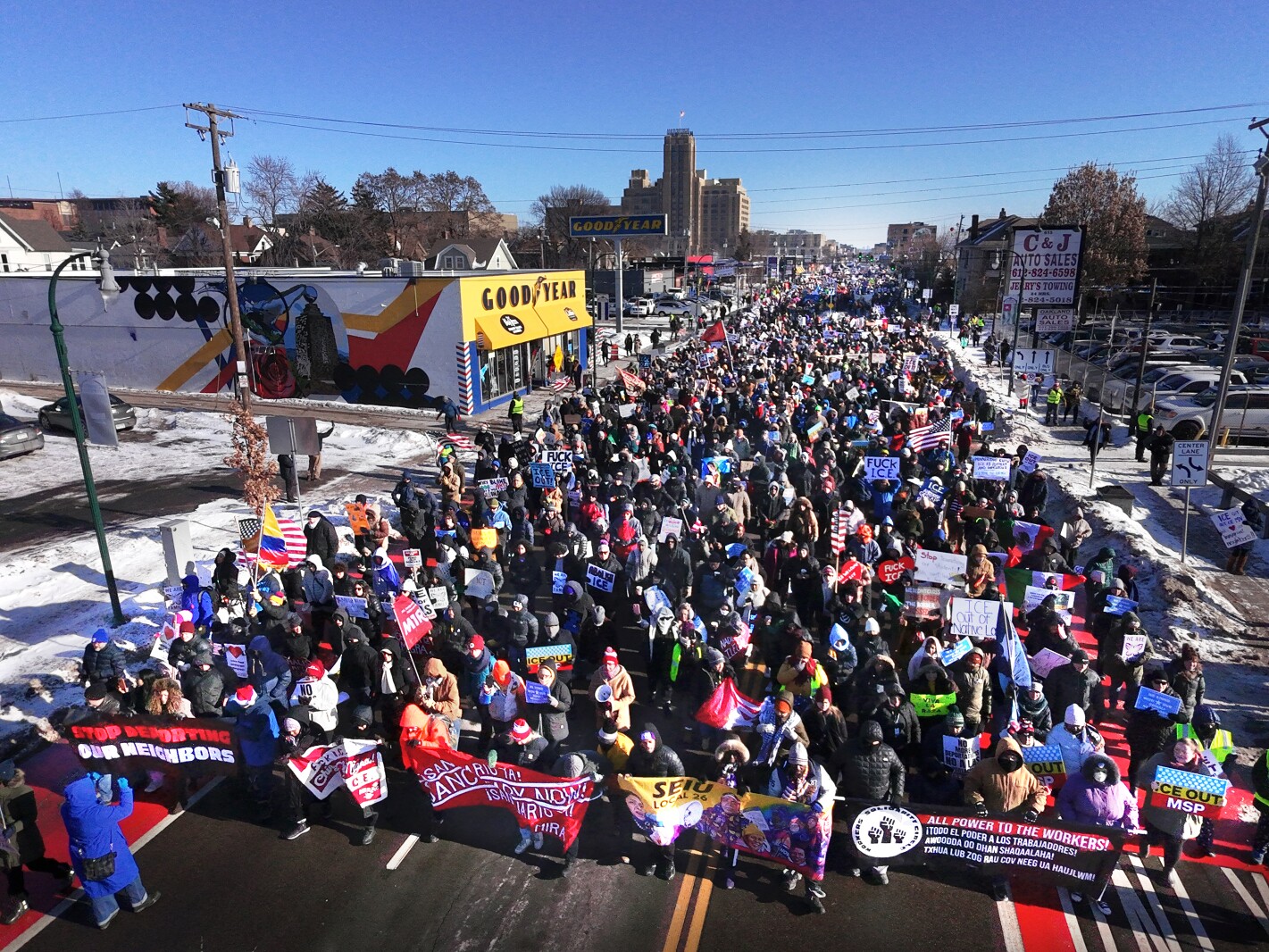
More recently, Levine began documenting the activities of federal agents and protests in his Powderhorn Park neighborhood amidst Operation Metro Surge. However, the FAA’s January 16 announcement effectively grounded his drone, as it prohibits flights near DHS “facilities and mobile assets” within both horizontal and vertical limits.
The scope of this ban includes unmarked vehicles, which Levine noted pose unique challenges. Unlike clearly marked flight restriction areas, the presence of these moving obstacles can’t be detected until drones are already in the air, creating a risk for inadvertent noncompliance. Violations could lead to arrest, confiscation, or the destruction of equipment, and this prohibition remains in place until October 2027. “I don’t think it’s right to have a law that’s so vague that we can’t abide by it,” he expressed.
Determined to take the matter to court, Levine contacted several civil rights attorneys before connecting with the Reporters Committee. Clary described the FAA’s restrictions as “arbitrary and capricious,” claiming that they infringe upon due process and have a chilling effect on First Amendment rights. Major media outlets, including the New York Times and the Washington Post, have voiced their concerns, arguing that the policy exposes journalists to unjust penalties for engaging in what has traditionally been a protected activity.
Petitions for judicial review have been filed in the U.S. Court of Appeals for the District of Columbia Circuit. Clary anticipates that the FAA will first produce documentation outlining how the ruling is enforced, followed by scheduled briefings before a three-judge panel. The FAA has yet to comment on the ongoing situation.
