


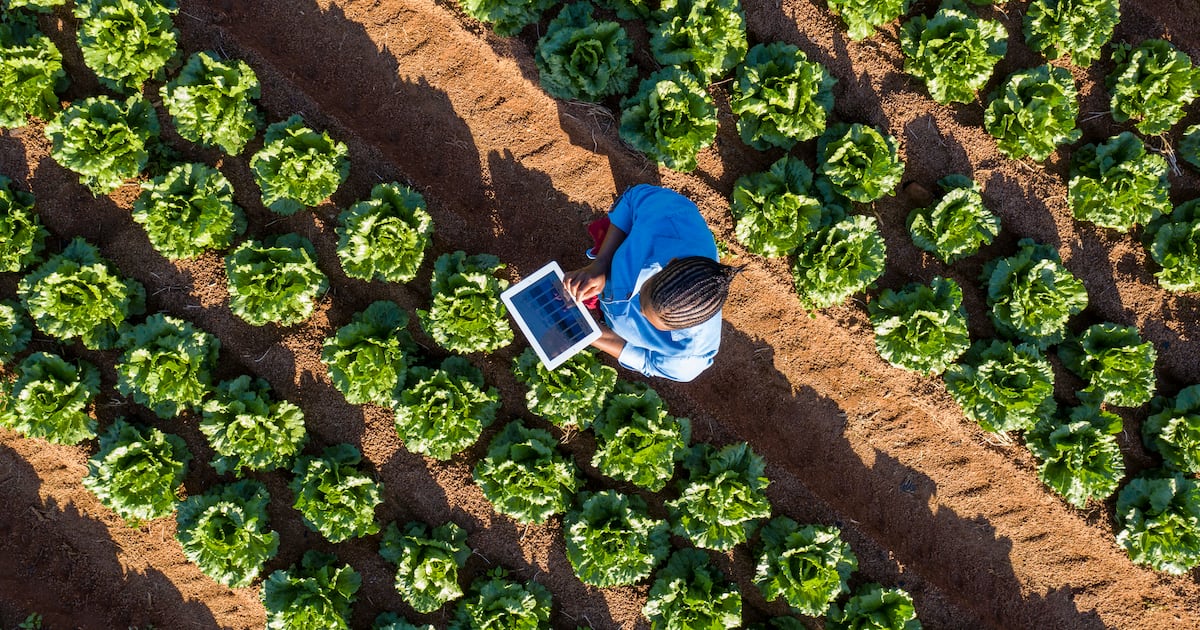
The Annual Trends and Outlook Report 2025 (ATOR 2025) highlights Africa’s burgeoning agricultural innovation landscape, filled with emerging and underutilized technologies that hold the key to enhancing productivity, climate resilience, and food security across the continent.
However, the report, titled “Shifting Technological Frontiers in Africa’s Agri-Food Systems,” identifies integration, rather than invention, as the primary challenge. For Africa to achieve significant productivity improvements in the coming decade, it asserts that coordinated efforts among various institutions are essential to bolster the adoption, interoperability, and contextualization of existing innovations.
Technologies including digital tools, precision agriculture, remote sensing, artificial intelligence, biotechnology, mechanization, and climate-smart systems present substantial benefits. Yet, without the support of robust institutions, a consistent regulatory framework, a predictable policy landscape, and well-organized dissemination channels, their potential impact will remain scattered and limited.
Results Demand More Than Technology
According to a report from Rwanda-based policy institute AKADEMIYA2063, the future of Africa’s agricultural sector will depend not only on the technologies available but also on how these technologies are governed, financed, and integrated into inclusive systems.
With strategic investments in science, digital infrastructure, empowered producer organizations, climate-resilient pathways, and strong accountability mechanisms, Africa can evolve from simply adopting technology to becoming a leader in shaping its agricultural landscape. This shift could significantly influence global responses to climate change, food insecurity, and sustainable development.
Dr. Ousmane Badianu, executive chairman of AKADEMIYA2063, emphasizes that the technological frontier is not merely defined by single breakthrough innovations; rather, it encompasses a synergistic ecosystem of biological, digital, engineering, ecological, and institutional advancements within a supportive political economy.
Institutional Barriers Hinder Progress
The ATOR 2025 report underscores that Africa’s challenges with productivity stem not from a lack of technological advances, but from enduring obstacles to adoption. The report outlines three complementary pathways necessary for transformation: advancing technology, enhancing efficiency, and lowering transaction costs.
It highlights how weak institutional support, uneven technology uptake, and a failure to adapt innovations to local contexts hinder systemic change. The review encompasses an extensive range of emerging technologies, including AI, geospatial tools, digital agriculture, mechanization, and aquaponics. Yet, their effectiveness is contingent upon sound governance, appropriate funding, comprehensive dissemination, and ongoing research and development investments.
Metrics for Progress: Identifying Key Areas for Leapfrogging
The report introduces two novel indicators aimed at guiding both governments and investors in prioritizing their actions.
The first is the Untapped Potential Index, an innovative tool that identifies countries best positioned to scale AI and geospatial transformations in agriculture. South Africa and Botswana are leading in progress, while Kenya, Egypt, Ghana, and Mali show readiness for advancement. Conversely, nations like South Sudan, Niger, and Zambia present untapped potential but have significant needs and varying capabilities.
Secondly, the Agricultural R&D System Capability Index evaluates how effectively countries translate agricultural research and development investments into scientific capabilities. Initial findings in West Africa indicate that Ghana is making commendable strides, reflecting a high proportion of PhD-qualified researchers and increasing research intensity.
Emerging Opportunities for Sustainable Agriculture
ATOR 2025 outlines numerous underutilized opportunities within the agricultural sector.
- Expansion of small-scale irrigation, water harvesting, and resource-efficient technologies
- Growth in insect farming and circular economy initiatives
- Rapid adoption of aquaponics and integrated nutrient management
- New economic avenues for youth-led businesses and digital startups
These technologies align closely with the Kampala Declaration and the African Union’s framework for transforming agriculture by 2035, thereby enhancing the relevance of the CAADP monitoring system.
Strategic Directions for Agricultural Innovation in the Coming Decade
The report specifies five priority areas to guide investment and policy direction under the Kampala CAADP Agenda.
- Strengthening innovation ecosystems and scientific institutions with long-term R&D funding and regulatory coherence
- Promoting inclusive technology through support for small and medium-sized enterprises, youth-led initiatives, and digital innovators
- Expanding infrastructure for digital and climate intelligence, including investments in geospatial tools and real-time data systems
- Enhancing climate resilience across various agricultural domains
- Improving governance and accountability structures within the CAADP system
His Excellency Moses Vilakati, African Union Commissioner for Agriculture, emphasized the report’s timely insights on the management and scaling of frontier technologies to achieve food security and sustainable growth.
He underscored its importance as a strategic reference for policymakers, investors, and researchers focused on building resilient agricultural systems.
The Path Forward: Integration Is Key
The findings of ATOR 2025 articulate a crucial message: Africa possesses the innovative potential it needs to thrive. What remains essential is:
- A collaborative approach
- Strengthened institutions
- More effective dissemination channels
- Interoperable digital systems
- Policy frameworks aligned with scientific advancements
With these elements firmly established, Africa can transition from mere technology adoption to becoming a global leader in agricultural innovation.
