


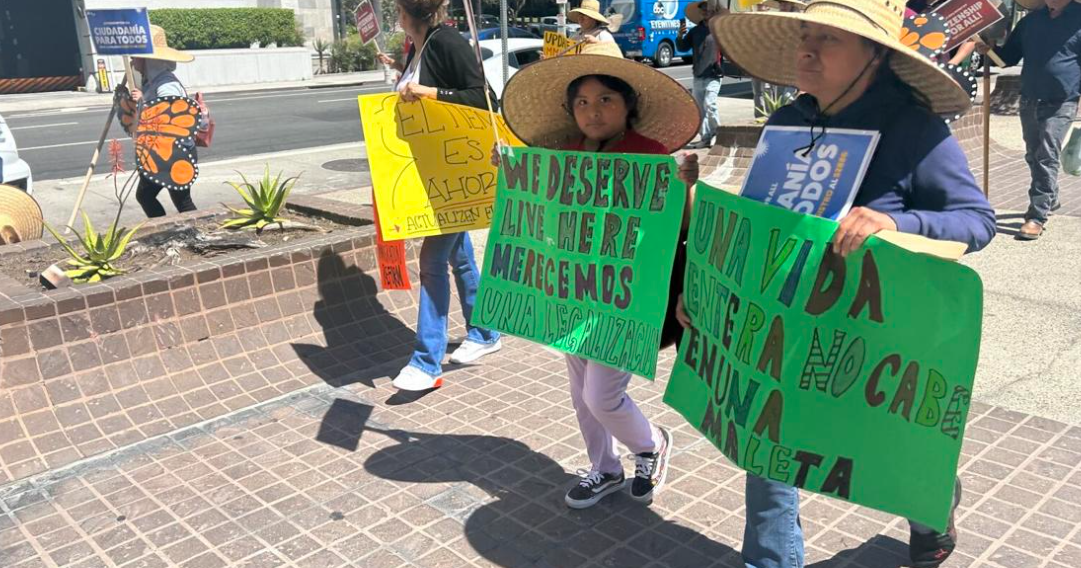
Impact of Immigration Policies on Mental Health in Latino Communities
Since taking office, President Donald Trump’s stringent immigration policies have significantly affected the Latino community, generating widespread anxiety and raising substantial mental health concerns.
Widespread Undocumented Status in Households
According to the Center for Immigration Studies, about 5.8 million households in the United States include at least one undocumented individual, with 4.7 million households comprising both undocumented immigrants and citizens or those with legal status. This reality highlights the deep intertwining of immigrant families within the broader societal fabric, which is increasingly stressed by current policies.
Exploring the Psychological Impact on Children
CALÓ News recently engaged with Estela Zarate, dean and professor at Loyola Marymount University, to discuss the extensive impact of federal immigration enforcement on both children and adults. Zarate emphasizes that children, in particular, face profound psychological challenges as they navigate the crises presented by immigration enforcement.
Subtle Manifestations of Trauma in Classrooms
Zarate notes that the symptoms of trauma in children often manifest in less obvious, but equally troubling, ways. School environments can reflect emotional distress, with distractions, difficulty concentrating, and sudden outbursts of tears common among affected students. These reactions underscore the pervasive influence of immigration enforcement on young lives.
Schools as Critical Support Systems
According to Zarate, schools have a pivotal role in addressing the mental health needs of their students. “A classroom is not just a place for academic learning; it’s where the values and struggles of students’ communities come alive,” she explains. This perspective reinforces the necessity for educational institutions to take a comprehensive approach to student well-being, ensuring that mental health is recognized as integral to academic success.
Student Activism and Resistance
In recent years, local students have participated in school walkouts to protest immigration enforcement actions, transforming their experiences of fear and uncertainty into acts of advocacy. For example, in February, hundreds of students from Synergy Quantum Academy and other schools across Los Angeles staged a walkout against ICE raids. This collective action not only highlights student agency but also poses challenges for school administrators to ensure the safety of participants.
Building Trust and Community Resources
Zarate emphasizes the need for schools to forge strong relationships with families facing immigration-related pressures. Many families are reluctant to engage with educational institutions due to concerns about their immigration status. Schools can counter this hesitance by implementing effective volunteer programs, providing resources on rights, and positioning themselves as supportive allies within their communities. Zarate asserts, “Effective leaders are often integral members of their communities, fostering trust through genuine engagement.”
Understanding Student Absenteeism Trends
A recent study by the Institute for Parent Educational Quality (PIQE), led by Dr. Monique Escobedo, sheds light on the correlation between immigration fears and student absenteeism. In California’s Central Valley, certain ICE operations have resulted in a 22% increase in absentee rates among young children from mixed-status or undocumented families. Schools are urged to investigate the underlying factors contributing to this trend, paving the way for tailored support systems that address both external fears and internal emotional challenges.
