


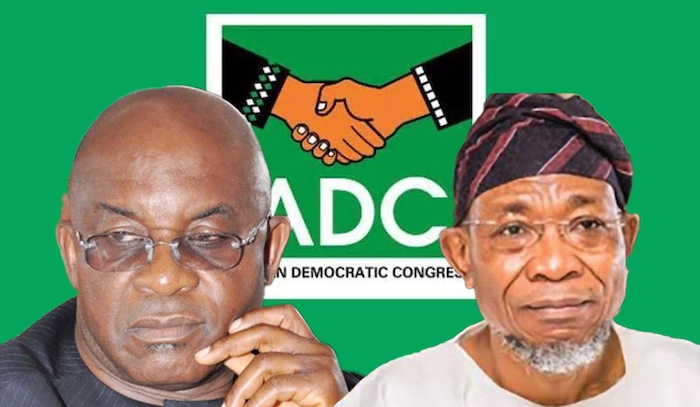
Leadership Crisis Escalates in Nigerian Political Landscape
The African Democratic Congress (ADC) is facing a deepening crisis following the release of an affidavit, allegedly from the Independent National Electoral Commission (INEC), dated September 12, 2025. This document recognizes the leadership of the party’s National Working Committee (NWC), headed by former Senate President David Mark.
Through its official X account, ADC Vanguard, the party stated that the affidavit confirmed the completion of the leadership transition, asserting that INEC had formally approved it. The document stresses that internal party matters are not subject to judicial review, highlighting the complexity of the situation.
This development coincides with rising political tensions, as INEC has recently declined to acknowledge Mark’s leadership. This refusal has ignited frustration both within the party and among opposition groups, raising questions about the integrity of the electoral body.
In response, ADC leaders pointed to Articles 14 to 19 of the affidavit, arguing that INEC’s current stance contradicts its previous endorsement. One official remarked that the affidavit indicates INEC’s acceptance of the internal processes, questioning how the same agency could now deny that recognition without creating a conflict of legal and ethical standards.
Additionally, the ADC accused the ruling All Progressives Congress (APC) of political interference, claiming that state institutions are being manipulated to undermine the opposition ahead of future elections. The party’s statement suggested that APC and INEC Chairman, Professor Mahmoud Yakubu, are attempting to establish a one-party regime in Nigeria under President Bola Ahmed Tinubu’s administration.
Such actions have raised alarms about the future of democratic governance in Nigeria. ADC leaders argue that this crisis transcends party interests, being a wider struggle to safeguard the nation’s multiparty democratic framework. They asserted that democracy cannot thrive if supposedly neutral institutions become tools for political oppression, emphasizing that the current situation seeks to silence alternative perspectives.
In light of these developments, the ADC has called for vigilance among Nigerians, civil society organizations, and the international community. They described this period as pivotal for Nigeria’s ongoing democratic journey, urging all citizens to defend the integrity of the democratic process. The party’s statement underscored that this battle is not solely for ADC but for the nation’s democratic future.
As tensions mount, the focus now shifts to INEC for a potential change in stance. Legal avenues may soon be explored as courts could be asked to intervene in this escalating leadership crisis.
