


Impact of Immigration Status on Healthcare Access in Connecticut
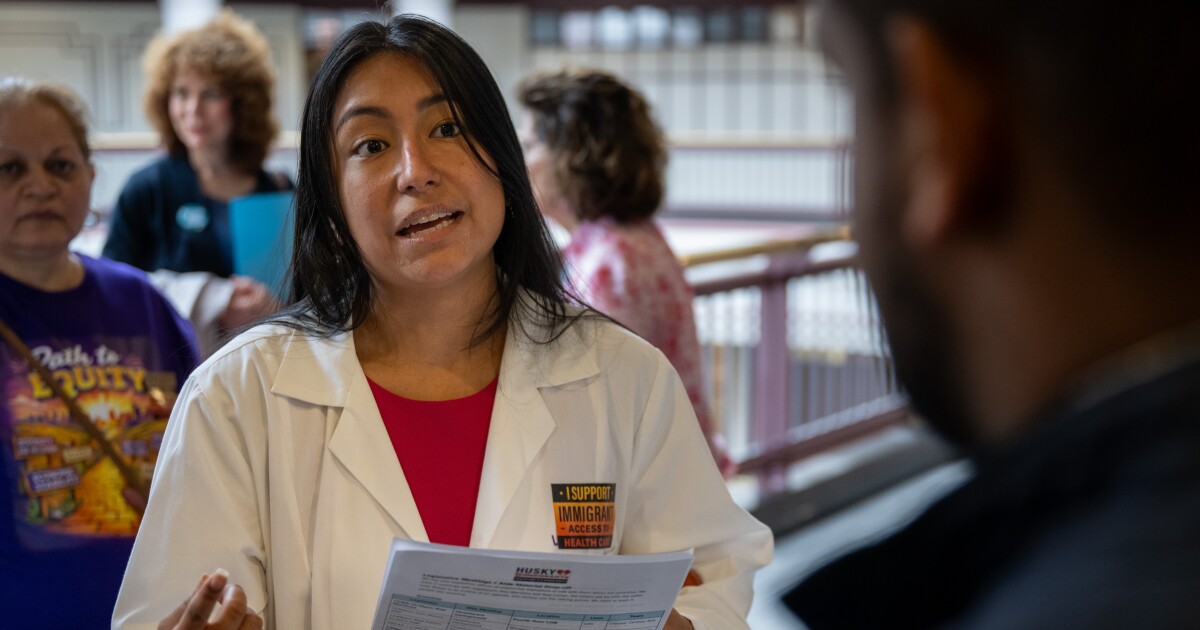
Teresa Elmore, a third-year medical resident at Yale New Haven Health, recalls a poignant moment when a mother entered the clinic distressed, clutching her newborn and expressing fears about financial instability. Elmore noted that the mother’s immigration status severely limited her access to essential resources, highlighting a systemic issue within healthcare.
“At one point, someone suggested that she seek help from her church, a testament to the inadequacies present in our healthcare system,” Elmore stated. “This should not be the reality in Connecticut.”
In light of these challenges, Elmore and other medical professionals are advocating for Connecticut lawmakers to ensure that healthcare solutions are accessible to all residents, irrespective of their immigration status. They underscored this sentiment in a jointly authored letter organized by the immigrant-led coalition HUSKY 4 Immigrants, which garnered over 500 signatures from healthcare workers and 30 organizations. Coalition members personally delivered these letters to various state leaders at the Capitol.
Connecticut’s current healthcare framework provides coverage for residents under 15 years old, regardless of immigration status. However, recent federal funding cuts, particularly those proposed in H.R. 1, threaten the viability of health programs. These cuts have sparked concern among state Republicans, who are wary of Connecticut’s commitment to funding programs like Husky Health, which benefits undocumented immigrants under 15 years old.
Republican leaders Vincent Candelora and Stephen Harding have voiced their opposition to certain funding proposals, claiming these initiatives mislead legal residents regarding actual costs, portraying them as efforts to advance a “progressive agenda” by Democrats.
Legislative Proposals for Healthcare Equity
Katherine Villeda, Executive Director of HUSKY 4 Immigrants, articulated a straightforward message: “We support these policies and want them to become reality. The best way to achieve this is to ensure that all Connecticut residents benefit from proposed policies, regardless of their immigration status.”
One significant legislative proposal, SB3, seeks to establish an Affordable Care Trust Fund designed to mitigate the effects of federal cuts on health insurance premium subsidies. Under this bill, if any federal regulation might affect funding levels, the Secretary of Policy and Management is required to notify relevant parties while recommending measures to maintain access for eligible residents.
However, the current language of the bill does not clarify whether the trust fund would expand affordable healthcare access to individuals ineligible due to immigration status—an omission advocates are urging lawmakers to rectify.
Another pertinent proposal, SB 401, aims to create a state-funded bridge program to provide healthcare, food, and housing benefits for those at risk of losing federal support. Presently, the bill defines “vulnerable persons” to include veterans, individuals experiencing homelessness, and middle-aged adults at risk of losing assistance.
Advocates stress the importance of incorporating all at-risk residents, particularly asylees, refugees, and various visa holders, in this bridge program. The intent is to ensure comprehensive support extends to those excluded from coverage purely based on their immigration status.
Villeda emphasized the importance of these legislative efforts but urged Governor Ned Lamont to bolster them further. “While he’s doing commendable work, there’s still room for more consideration of the diverse population in our state,” she noted.
Additionally, healthcare providers expressed their support for SB 91, which proposes protections for specific areas like schools and hospitals, prohibiting federal immigration enforcement. This initiative gained traction in light of the previous administration’s rescinding of similar federal protections.
Young advocate Saif Benjamin Halacha Cespedes from Make the Road Connecticut, emphasized the vital role of youth in promoting health equity. He believes that the onus to drive change extends beyond the older generation, stating, “It’s not solely our parents’ task to shape our future; it’s ours too.” The call for young voices in advocating for comprehensive healthcare is stronger than ever.
