


U.S. Strategy in Africa Shifts Towards Investment and Technology
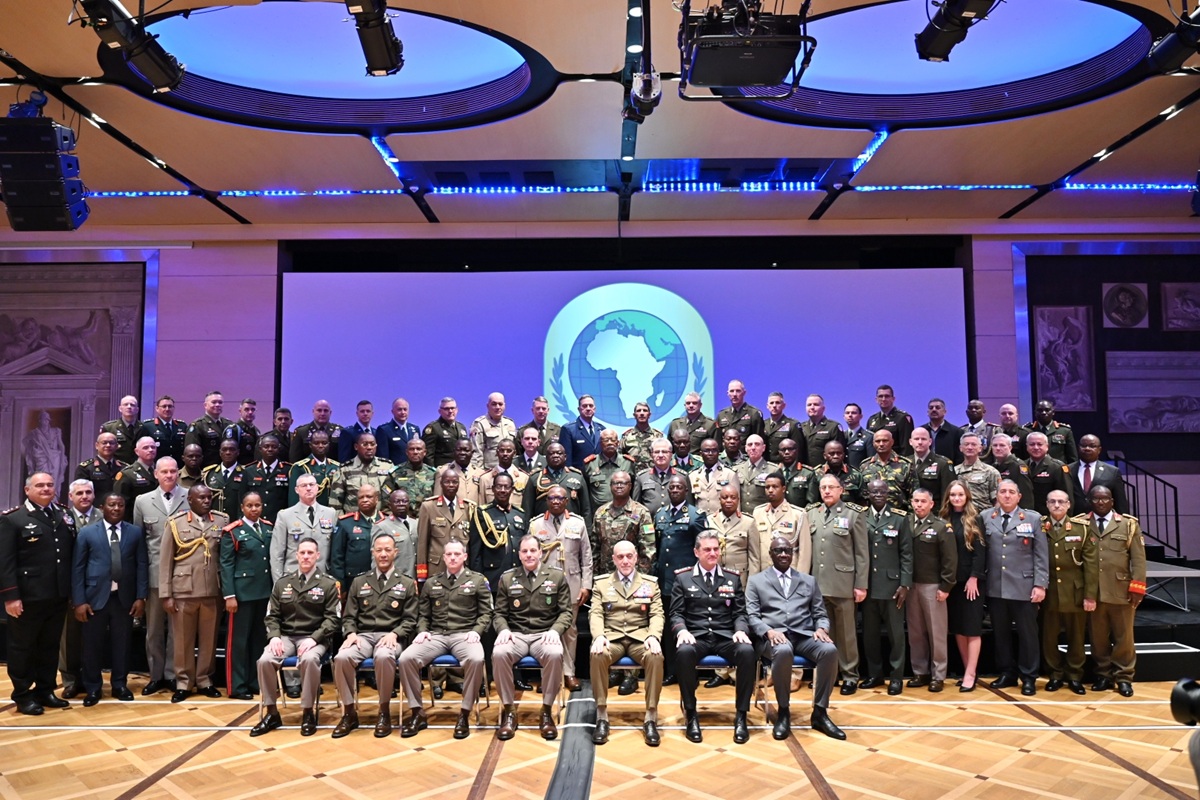
The recent summit in Rome signals a transformative shift in U.S. strategy regarding Africa, moving from traditional models of aid and military cooperation to a framework that prioritizes investment, technological innovation, and private sector collaborations. Italy’s selection as the host country underscores its emerging role as a crucial link to Africa, facilitating an integrated approach that intertwines security, economics, and geopolitics.
A Familiar Yet Evolving Summit Structure
The 2026 Africa Army Summit initially appeared to follow the familiar format of U.S.-led military gatherings, featuring uniforms, bilateral discussions, counterterrorism panels, and training initiatives. Representatives from over 40 countries and more than 300 senior leaders participated in this enduring fixture of U.S.-Africa security engagement. However, a closer look revealed a different narrative.
Alongside military generals and defense officials, the presence of venture capitalists, artificial intelligence startups, data companies, and cryptocurrency advocates marked a notable shift. While traditional defense contractors were still present, their influence has diminished significantly, indicating a fundamental change in the landscape.
Trade, Not Aid
This summit exemplified a broader transformation under President Trump’s administration, which is moving away from entrenched development aid paradigms in favor of more transactional relationships. U.S. involvement in Africa, which once revolved around aid, training, and institutional support, is now increasingly framed in terms of:
- Commercial transactions.
- Technology transfer.
- Private investment.
Senior U.S. military officials have emphasized this shift, asserting that the guiding principle is “trade, not aid.” The Pentagon’s role in Africa is evolving from a provider of support to that of a broker facilitating commercial relationships.
Convergence of Security, Capital, and Technology
The Rome summit formalized a nascent model integrating defense, industry, and finance into a comprehensive operational framework. Central to this approach is the concept of dual-use technology—systems designed for both civilian and military applications. Tools such as artificial intelligence, data platforms, and digital infrastructure have transitioned from peripheral to essential components of national security strategies.
This integration extends beyond technology to incorporate financial capital. Investors now find themselves in the same arenas as military strategists and defense contractors, with the aim of fostering scalable partnerships. Consequently, a new ecosystem emerges where military needs inform operational solutions, and investors enable their deployment.
Transforming State Roles in Security
This evolving model reframes security as not only a strategic objective but also an investment opportunity. The structural impact of this approach reveals a shift towards privatized state institutions, where private actors assume roles traditionally held by the government. The U.S. is now more focused on facilitating connections among various stakeholders:
- Connecting African forces with American companies.
- Linking government entities with financial capital.
- Addressing security challenges with market-driven solutions.
As a result, the state’s role transitions from direct action to one of coordination, capitalizing on the private sector’s speed and innovation capabilities. This shift is particularly relevant in areas where competing nations like China have established footholds, ranging from infrastructure to resource extraction.
Rome as a Strategic Nexus
Hosting the summit in Rome underscores its significance as a strategic nexus. This event marks the first time the summit has taken place in Europe, reflecting a deliberate effort to extend the framework beyond a straightforward bilateral relationship between the U.S. and African nations. Italy’s evolving role is pivotal in this strategy.
Through initiatives like the “Piano Mattei,” Rome is positioning itself as a critical conduit between Europe and Africa, advancing a model of cooperation that merges energy, infrastructure, and development with principles of equitable partnership. This development highlights the U.S. focus on investment-driven engagement alongside Italy’s push for redefined strategic partnerships.
Commercial Opportunities Amidst Challenges
For U.S. companies and investors, this recalibrated model presents significant opportunities. Africa is increasingly viewed as a high-growth region where the intersecting demands of security and commercial ventures—from defense technology to digital infrastructure—offer promising prospects. However, this alignment also raises questions and uncertainties as private entities navigate sectors traditionally dominated by government initiatives.
Some African partners have noted the need for continuity and reliability in the face of this shift, asserting that commercial solutions may not fully replace longstanding forms of security cooperation built on shared trust and sustained support.
Partnership and Interoperability at the Forefront
The Italian military leadership has framed its collaborative approach around interoperability and shared security. Chief of Staff of the Italian Army, Carmine Masiero, emphasized the necessity of cooperation among allies, stating that effective and resilient collective security relies on the development of common capabilities and structured partnerships. He advocated for a “peer-to-peer approach” that recognizes and promotes the unique potential of African nations, fostering collaborative solutions rooted in mutual respect and shared accountability.
The 2026 Africa Army Summit marks a pivotal moment in U.S. foreign policy toward Africa. By replacing aid with access and reorienting partnerships toward trade, the U.S. aims to align its security objectives with market dynamics while integrating geopolitical considerations within its economic framework. As the rules of engagement evolve, the summit in Rome offered a glimpse into the future of U.S.-Africa relations.
