


Fatal Shooting of California Man Raises Questions About ICE Conduct
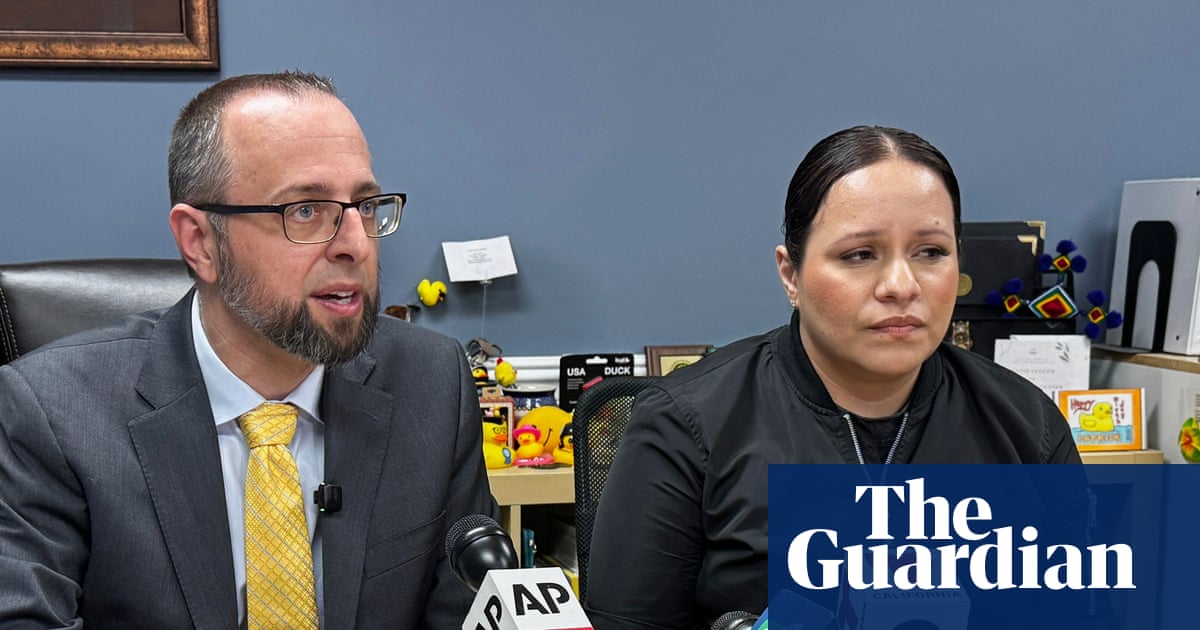
A man shot and killed by a U.S. immigration officer in California has accused authorities of unjustly labeling him a gang member and claimed the officer opened fire without probable cause during a traffic stop. Carlos Ivan Mendoza Hernandez, 36, was shot on Tuesday by Immigration and Customs Enforcement (ICE) agents in Paterson, a rural farming community in California’s Central Valley. Hernandez’s attorney, Patrick Kolasinski, visited him in the hospital on Thursday to relay his client’s perspective on the incident.
According to Kolasinski, Hernandez sustained at least six gunshot wounds, including one to the face, and has undergone three surgeries. Following the shooting, Hernandez’s family expressed their frustration over what they deemed false and misleading statements made by authorities, further intensifying scrutiny on ICE’s actions.
Dashcam footage from the encounter reveals three ICE agents surrounding Hernandez’s vehicle. While the video lacks audio and clarity, it captures Hernandez backing away with the passenger door ajar, as two officers point their weapons at him. The video then shows the car moving forward, quickly jumping over the median and disappearing from view. The precise moment the officer discharged his weapon remains unclear.
ICE Acting Director Todd Lyons stated that Hernandez allegedly used his vehicle as a weapon, claiming he attempted to run over an officer—an assertion contradicted by the lack of injuries to any officers. Lyons defended the decision to shoot, asserting that the officers were responding defensively to protect themselves and the public.
Kolasinski recounted Hernandez’s insistence that he was shot before he could move his vehicle, stating that the motion observed in the footage was a reaction to gunfire. “He was getting shot and was trying to run away… he panicked and drove off,” Kolasinski explained. The attorney noted that Hernandez, still recovering and unable to communicate clearly, is struggling to comprehend the events that transpired.
Hernandez is a devoted partner and father of a two-year-old daughter, who he was on his way to work to support when the incident occurred. Kolasinski highlighted Hernandez’s non-violent work restoring damaged buildings and emphasized that he has never been involved in gang activity, contrary to ICE’s claims that he is a member of the “18th Street Gang.” The agency has not provided evidence to substantiate this allegation.
While court records show that Hernandez faced murder charges in El Salvador, Kolasinski clarified that he was acquitted and released from custody. The attorney is still investigating Hernandez’s legal status in the United States, as well as his history in El Salvador. A spokesperson for the Department of Homeland Security did not address questions regarding Hernandez’s legal status or his attorney’s claims.
ICE has faced ongoing criticism over its aggressive tactics, particularly during traffic stops. Observers have frequently condemned the agency for labeling individuals as gang members without adequate evidence. Following several high-profile shootings, detractors have called for more stringent guidelines to ensure the safety of both law enforcement and civilians during such encounters. Kolasinski criticized ICE’s training practices, suggesting they pose a significant risk to public safety, including the officers themselves. As Hernandez continues to recover in intensive care, the emotional toll on his family, especially his young daughter, remains significant, with Kolasinski noting her confusion and distress over her father’s absence.
