


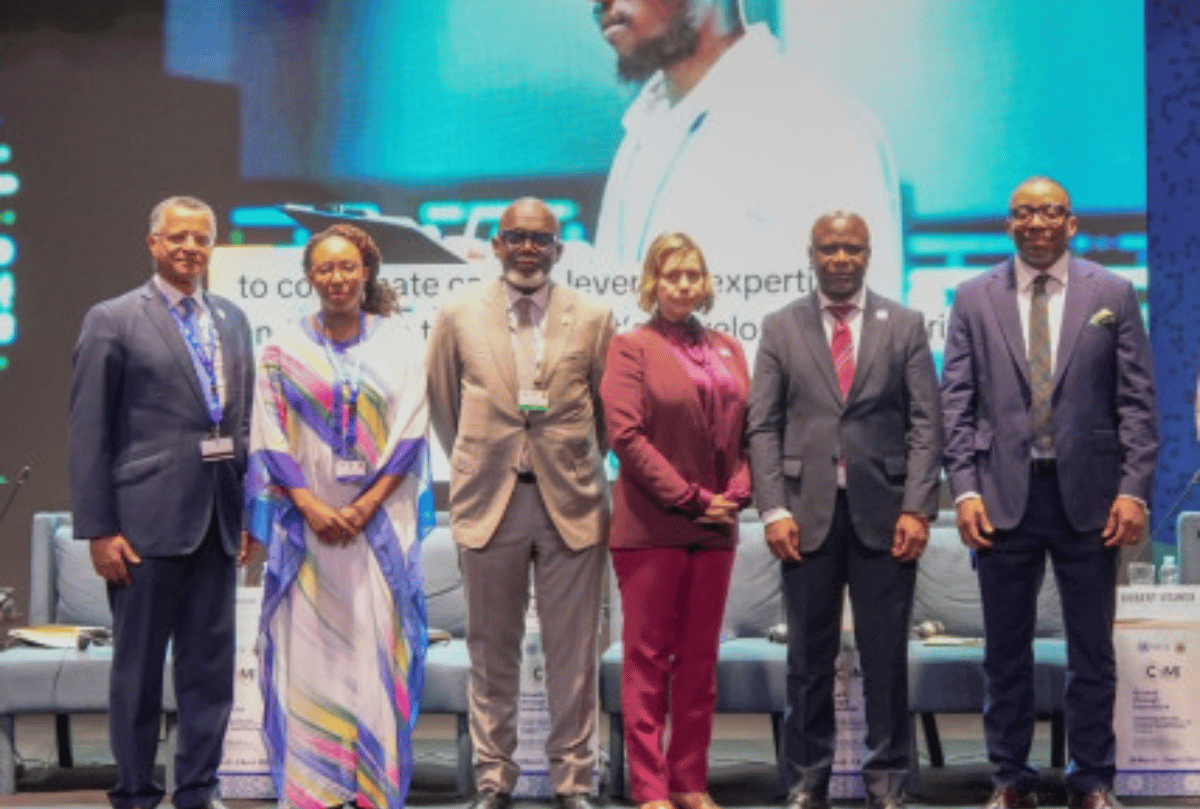
Call for Innovative Financing Approaches in Africa
Leaders from Africa’s multilateral financial institutions, policymakers, development partners, and the private sector are advocating for a concerted effort toward more coordinated, innovative, and better-structured financing solutions to advance the continent’s digital and technological transformation.
This appeal was made during a high-profile session on April 1, held alongside the 58th Economic Commission for Africa Meeting of African Ministers of Finance, Planning, and Economic Development. The discussion centered on the pivotal role played by Africa’s multilateral financial institutions in mobilizing capital for technological and economic growth across the region.
Senior representatives from various governments, financial institutions, and development partners convened to explore strategies for securing long-term, affordable financing aimed at enhancing digital infrastructure, artificial intelligence, and sectors driven by innovation. These areas are perceived as fundamental to boosting productivity, generating jobs, and enabling structural transformations throughout Africa.
Despite a rapidly advancing digital economy, the participants noted that access to cost-effective, long-term financing continues to pose significant challenges. High capital costs, limited risk-sharing mechanisms, currency fluctuations, and insufficient early-stage funding are impeding investments in digital infrastructure and innovation ecosystems. These obstacles are further exacerbated by inadequate project preparation and a scarcity of viable investment opportunities.
Hanan Morsy, head of the United Nations Economic Commission for Africa, highlighted that while Africa possesses immense potential for innovation, current funding limitations are hindering progress. Stakeholders expressed concern over the disconnect between available capital and actual investments in innovation-led sectors.
Haytham Elmayagi, President of the African Export-Import Bank, underscored the necessity of enhancing the project pipeline and facilitating better inter-agency coordination to effectively scale investments. The consensus was that improving project readiness and creating bankable opportunities are critical steps toward enabling large-scale financing.
Some participants advocated for the development of more flexible and innovative funding models. Adeniran Aderogba from the Regional Maritime Development Bank emphasized the need for creative financing structures and dedicated financial instruments tailored to support early-stage innovation, particularly in the technology sector, where risks are inherently complex.
The importance of integrating financing and investment strategies to deliver comprehensive infrastructure was also emphasized. Robert Lisinge noted that innovation is not limited to digital solutions; it necessitates substantial investments in infrastructure, energy, and emerging technologies.
The session wrapped up with a strong call to transcend traditional financing methodologies by reducing capital costs, expanding risk-sharing and co-financing mechanisms, enhancing project preparation and investment pipelines, mobilizing long-term finance at scale, and fostering cooperative engagements between African institutions and development partners.
