


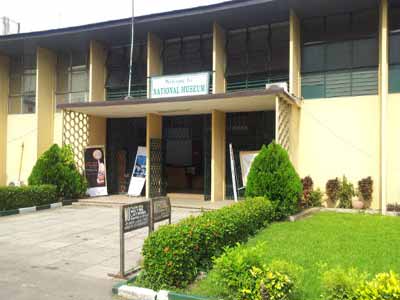
Collaboration to Revitalize the National Museum in Lagos
The initiative by Lagos State authorities, in partnership with the Federal Government, to redesign and modernize the National Museum in Onikan, Lagos, is commendable and deserves robust support. Museums globally serve as custodians of cultural heritage, and the National Museum plays a vital role in preserving Nigeria’s history and collective experience. This proposed renovation is a significant step in revitalizing this essential institution.
Governor’s Announcement of Museum Renovation
Governor Akinwunmi Ambode unveiled the renovation plans during a visit to Minister of Information and Culture, Lai Mohammed, who highlighted the goal of transforming the museum into an international tourism hub and a recognized historical landmark. This initiative represents a forward-thinking approach to enhance Nigeria’s cultural landscape.
Aligning Renovation with Tourism Goals
Governor Ambode emphasized that the renovation aligns with the Lagos State Government’s broader strategy to partner with the Federal Government in enhancing infrastructure and security to foster tourism. By upgrading the facilities inherited from the Federal Government, the initiative aims to benefit Lagosians and stimulate the economic engine of the state. The governor assured that efforts would be accelerated to modernize the museum in time for the 50th-anniversary celebrations of Lagos State next year.
A Focus on Cultural Disconnection
The revival of the National Museum is particularly poignant given its prolonged neglect. This monument stands as a stark reminder of a society that has overlooked its historical and cultural roots. The disconnection from Nigeria’s past is alarming, especially given that history is scarcely taught in schools, leaving younger generations largely unaware of their country’s heritage and foundational narratives.
Historical Significance of the National Museum
Established in 1957 by British archaeologist Kenneth Murray, the National Museum boasts a remarkable array of Nigerian art and ethnographic collections. Among its treasures is an unglazed human head from the Nok culture, which dates back to around 900-200 BC. The Nok culture, flourishing in northern Nigeria around 1000 BC before its mysterious decline, is believed to have played a crucial role in the ancestry of several Nigerian tribes. The museum encapsulates not only Nigeria’s historical triumphs and failures but also serves as a testament to the nation’s rich and diverse cultural fabric.
Need for Additional Monument Restoration
While the National Museum is significant, it is just one of several major monuments that define Lagos. The National Arts Theater in Iganmu and the National Stadium in Surulere are equally important and deserve attention. Commemorating 50 years of Lagos State without these iconic structures would be unthinkable; however, both are currently in a state of serious decline.
Call for a Comprehensive Restoration Strategy
There is an urgent need for the Lagos State Government to develop a strategic plan for restoring these national monuments, with the Federal Government providing necessary support. Acknowledging that these institutions are under federal jurisdiction, their importance to Lagos and its residents should not be underestimated. The dilapidated conditions of the National Theater and National Museum are detrimental to Nigeria’s cultural landscape.
Global Comparisons and Aspirations
In comparison, iconic institutions like the Louvre in Paris, the Uffizi Gallery in Italy, Museum Island in Berlin, and the British Museum in London have set high standards, attracting millions of visitors annually and enhancing the cultural image of their cities. The National Museum in Lagos has the potential to achieve similar recognition, serving as a comprehensive center dedicated to art, culture, history, and science for the public to experience and appreciate.
