


Updated April 10, 2026, 7:58 PM MT
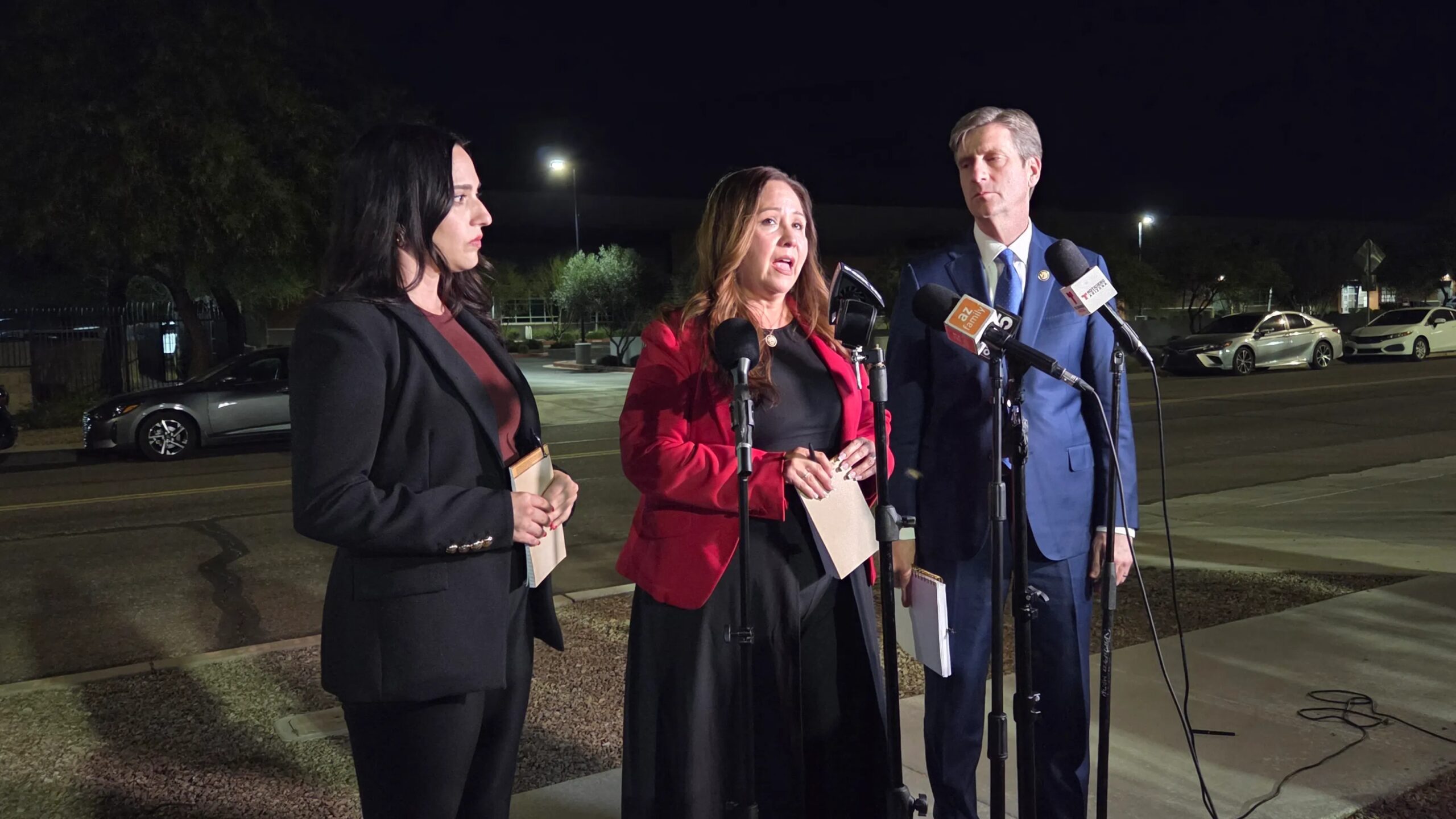
On April 9, congressional representatives witnessed around 45 individuals crammed into a space designed for just 24. Democratic Reps. Adelita Grijalva, Yasamin Ansari, and Greg Stanton raised alarms about the situation at the Arizona Removal Operations Coordination Center, located near Mesa Gateway Airport. They reported finding detainees who were not only unwell but also deprived of basic necessities such as sanitary products.
Grijalva noted her team’s alarming discovery of two chartered buses containing approximately 80 people parked outside the facility during their unannounced visit at 9:30 p.m. When questioned about the bus destinations, the facility supervisor was unable to provide clear answers, stating that “it depends” on the circumstances.
Despite legal restrictions on initiating conversations with detainees, Stanton mentioned that individuals still sought to communicate with them. Ansari recounted encounters where detainees attempted to reach out through the facility’s barriers, some of whom spoke of their extreme discomfort and medical emergencies. One detainee urgently asked for help, saying, “It’s so hot in here. Someone has a fever. Can you help me? Someone’s really sick here.”
The representatives’ observations painted a troubling picture. During their interactions with facility staff, Ansari felt his requests for medical assistance were met with indifference, as the supervisor claimed that medical personnel were preoccupied. Following up on whether help would arrive, Ansari was informed that it would come only after their visit concluded.
ICE did not provide immediate responses to the allegations of overcrowding, with representatives stating that inquiries would be addressed the following day.
House Members React to Reports of Potential Hunger Strikes
Ansari’s visit was catalyzed by email inquiries from The Arizona Republic and other local outlets regarding rumored hunger strikes at the facility. Grijalva, however, stated that there were no such protests and indicated that food access did not seem to be restricted. She noted the presence of an uneaten sandwich that appeared unappetizing to detainees.
The Arizona Removal Operations Coordination Center, also known as AROCC, serves as a temporary holding facility for individuals awaiting deportation flights. According to reports, the center can detain up to 157 individuals for as long as 12 hours at a time.
During their visit, Stanton learned that many detainees had already spent several days in confinement, raising concerns about the staff’s lack of awareness about the duration of detention for individuals. He underscored the disquieting nature of the situation, emphasizing that many individuals had endured these conditions for extended periods.
Grijalva contrasted her experience at the Mesa facility with previous visits to other detention centers. She described the distressing sight of detainees fanning themselves in the sweltering heat, with no blankets available, lying on cold concrete in cramped conditions.
Witness accounts from House representatives estimated that 40 to 47 individuals occupied each of the six large rooms they observed, leading to a total figure exceeding 250 detainees. Grijalva emphasized the disconcerting reality of counting individuals across the crowded floors.
Representatives Express Urgency and Frustration
Grijalva conveyed her frustration with the constraints of her role, stating that they were limited to taking notes and voicing concerns without immediate recourse for change. “This is so horrifying that unless you see it with your own eyes, you can’t imagine that this is happening to humans,” she asserted.
Her remarks emphasized a moral imperative, questioning why such treatment seems acceptable within U.S. borders. “People would go crazy if they treated animals like this, right? But is it OK here? In the United States, it’s not fair to treat people like this,” she concluded.
