


James Orley
Sam Tai

Sam Tai
ESPN
Sam is a writer, broadcaster, and podcaster for ESPN, focusing on the Premier League, scouting, and transfers.
multiple authors
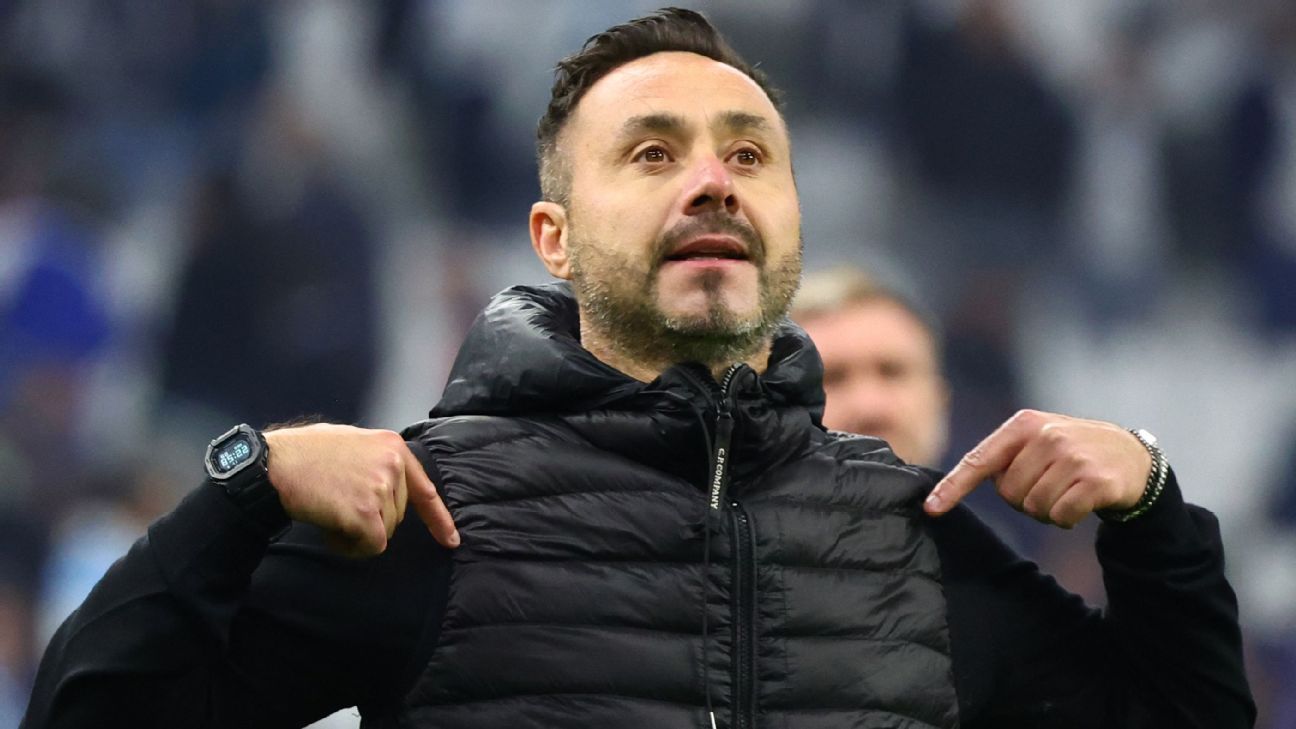
Tottenham Hotspur has made headlines in club football by appointing Roberto de Zerbi as its new manager. De Zerbi has signed a five-year contract to succeed Igor Tudor, who managed the team for only six weeks.
The new managerial role presents a formidable challenge for De Zerbi, as his team currently sits just one point above the relegation zone with only seven matches remaining. This creates an urgent need to secure their status in the Premier League and avoid relegation for the second consecutive season.
In a recent club statement, De Zerbi expressed his enthusiasm for the new opportunity, stating, “I am delighted to be joining this great football club, one of the biggest and most prestigious in the world. I am here because I believe in that ambition and have signed a long-term contract to do everything in my power to realize it.”
Reasons Behind Tottenham’s Decision to Hire De Zerbi
Sources informed ESPN that De Zerbi was Tottenham’s preferred candidate for a long-term appointment, even before they initially pursued him following Thomas Frank’s dismissal in February. After parting ways with Marseille on the same day Frank was sacked, De Zerbi’s hesitation to immediately take another job led the club to consider alternative options, ultimately hiring Tudor instead.
At 46, De Zerbi was already on the club’s radar last year when they sought a new head coach. Tottenham had identified ten criteria essential for their ideal candidate, including a proven ability to develop young talent and a compelling style of play. Though Frank didn’t meet these standards, the foundation for addressing these criteria remains intact. Sporting director Johan Lange elaborated on the club’s aspirations to create a dominant football team that effectively controls matches.
Potential Tactical Influence of De Zerbi on Spurs
De Zerbi significantly impacted the Premier League during his tenure at Brighton, implementing unique tactical strategies that set his team apart. Known for innovative approaches, he encouraged his players to adopt techniques that would provoke opposing teams into making mistakes. This philosophy, dubbed “cheating the press,” allowed Brighton to exploit gaps and transition swiftly to attack.
Interestingly, while De Zerbi’s possession-oriented style prioritizes ball control, he will need to produce results quickly to navigate Tottenham out of its current predicament. With just seven games remaining, the immediate focus will be on averting relegation instead of implementing a long-term strategic vision.
Moreover, De Zerbi’s ability to communicate effectively has generated optimism, though his reputation as a controversial figure, known for friction with management, raises some concerns. Some Spurs fan groups have expressed reservations about his past comments regarding Mason Greenwood, who faced serious legal allegations before joining Marseille. Despite these issues, the club feels confident in its decision to proceed with his appointment.
The Key Question: Is De Zerbi the Right Leader for Spurs?
While De Zerbi’s past results speak volumes—his time at Brighton resulted in a sixth-place finish and a European qualification—the real challenge will be applying his methods to the current Tottenham squad. The question remains whether the players can adapt to a pressing system and whether the midfield can support a possession-oriented game under pressure.
As Tottenham navigates a highly competitive Premier League landscape, the efficacy of a ball-dominant strategy could be crucial. The stakes are high for De Zerbi, who must balance maintaining his tactical ideals with the urgent need to produce results that ensure the club’s survival in the top flight.
