


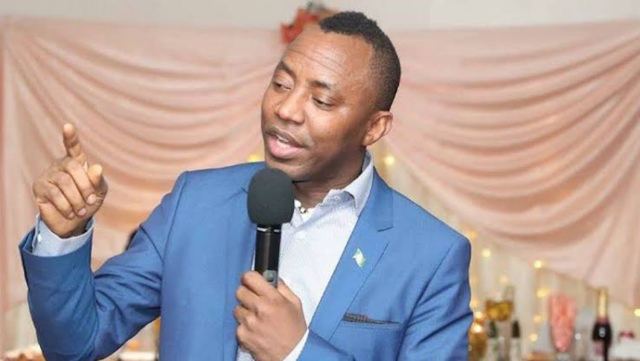
Challenges Mount for Omoyele Sowore Amidst Legal and Political Setbacks
Omoyele Sowore, a prominent politician and online publisher, has recently faced significant challenges that could mark his second major setback since beginning his activist career in 1989 at the University of Lagos. Over the past two weeks, a series of events has highlighted the growing tensions surrounding Sowore as he navigates both legal issues and internal political conflicts.
Legal Troubles Unfold in Abuja
The turning point for Sowore came on March 17, 2026, during proceedings in the Federal High Court in Abuja. Justice Mohammed Umar oversaw a case brought against Sowore by the Department of State Services (DSS). The trouble began when Sowore labeled President Bola Tinubu a “criminal” in a social media post last year. Despite multiple appeals from the DSS, which argued that Sowore’s comment was offensive, the court was called to assess the legality of his statement under the Cybercrime (Prohibition and Prevention) Amendment Act.
Delays and Frustrations in Court
Counsel for the DSS, SAN Akinlolu Kehinde, suggested that Sowore and his legal team were employing delaying tactics to prolong proceedings. Frustrations peaked when Sowore and his attorney at times failed to appear in court. After extensive courtroom delays, a new hearing date was set, but Sowore’s lawyer, Marshall Abubakar, rejected all proposed dates, taking control of proceedings himself at one point. His outburst drew the ire of the judge, further complicating Sowore’s legal woes.
Setback in Human Rights Case
By April 2, 2026, Sowore had filed a lawsuit against the DSS, its Executive Director Oluwatosin Adeola Ajayi, and Meta, arguing that the removal of his post regarding Tinubu violated his fundamental human rights. Unfortunately for him, the court dismissed his case as frivolous and imposed a hefty fine of ₦1.5 million, marking a rare legal defeat for Sowore, who has generally been successful in challenging governmental actions.
Conflict with Fellow Activists
Just a day after the court’s ruling, Sowore faced another setback, this time from within activist circles. Fellow activist Martins Otse, known as VDM, was embroiled in a fierce dispute with crypto entrepreneur Linus Ifewarika, which escalated dramatically. Accusations of serious crimes were exchanged, leading to the latter’s arrest and detainment. VDM publicly celebrated the situation, prompting Sowore to speak out against the celebration of anyone’s incarceration, vowing to support Ifewarika in his legal struggles.
Exchanging Barbs Online
Sowore’s comments did not sit well with VDM, who retorted by accusing Sowore of failing to engage with him directly. VDM’s response was sharp and threatening, warning Sowore that if he attempted to impersonate him or misuse his identity, he too would face legal consequences. The escalating tension was palpable as VDM challenged Sowore’s track record as a self-proclaimed champion of justice, promising to unleash the full weight of the law should Sowore cross him.
Future Uncertain for Sowore’s Political Aspirations
Despite being 23 years older than VDM, Sowore remained unfazed by the threats, indicating that he has long been familiar with confinement due to his activism. As Sowore looks toward a third attempt at Nigeria’s presidency, he reflects on his previous electoral performances, which have markedly declined since his 2019 bid. In that election, he garnered 33,953 votes, sharply down to 14,608 in 2023. The upcoming elections in 2027 could bring new challenges and surprises in Sowore’s political journey.
Tony Asuquo, a veteran journalist, resides in Uyo and continues to cover the intricacies of Nigeria’s political landscape.
