


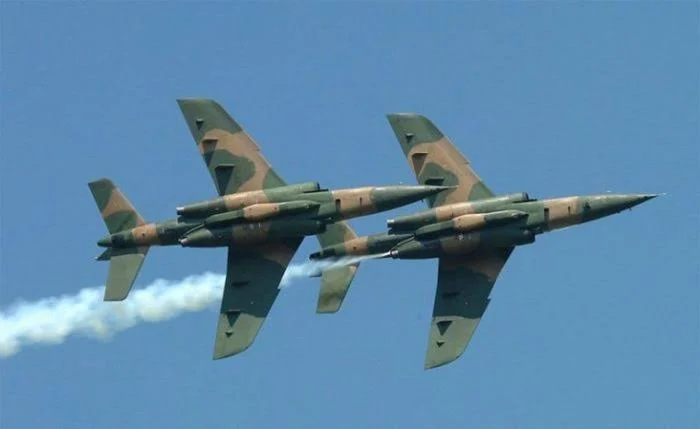
Nigerian Military Defends Jiri Market Airstrikes Amid Controversy
The Nigerian military has defended its airstrikes on the Jiri market, located along the Borno-Yobe border, characterizing the operation as a precise strike against terrorist logistics. This response comes in the wake of claims by Amnesty International, which asserted that the attack resulted in the deaths of 100 individuals, many of whom were civilians.
Conducted on April 11 along the Bindur Jiri axis in Gubio Local Government Area (LGA) of Borno State, the military stated that the operation targeted what they identified as a gathering point for fighters from the Islamic State West Africa Province and their associates. Sani Uba, spokesman for Operation Hadin Kayi, released a statement asserting that the operation was based on a thorough intelligence, surveillance, and reconnaissance mission, emphasizing the rigorous pre-attack targeting process.
Amnesty International condemned the airstrike, which it claims caused civilian casualties. While the Yobe state government validated the operation, it specified that the focus was on suspected Boko Haram militants operating in the area.
In light of rising concerns, Uba indicated that aerial surveillance detected multiple motorcycles and vehicles gathering near Jiri, a movement subsequently corroborated by human intelligence. The military claimed these elements were preparing logistical support for an anticipated attack on troop strongholds within the Gubio axis.
This operation fits into a broader context of escalating violence. For instance, a January IED attack along the Bindur route led to the deaths of eight soldiers, and a series of coordinated attacks were reported on April 9 in Ngamudu and Benisheik, believed to be orchestrated by the same network targeted in the Jiri airstrikes. Uba reported that assessments following the operation confirmed its precision, noting destruction in the identified terrorist logistics area and indicating the neutralization of several militants.
On April 12, authorities apprehended a suspected logistics courier, Turja Buru, in Gamdo, who reportedly confessed to involvement in previous attacks in Benishek. The military reiterated its stance on the prohibition of motorcycle use throughout the northeast operational theaters, particularly in Borno and Yobe states.
Governor Zulum Calls for Community Vigilance
Borno Governor Babagana Zulum has urged residents to refrain from aiding, sheltering, or providing logistical support to insurgents, which follows a military operation in the Kiri area. The governor’s warning comes as he identified Jiri market as a notorious supply hub for rebels. He emphasized that the state government had officially closed the Jiri and Gazabre markets five years ago.
Zulum assured that the government is working closely with military officials before reopening any markets in areas impacted by the insurgency. His commitment to safeguarding law-abiding citizens and restoring lasting peace within the state remains steadfast.
Yobe State Initiates Emergency Response for Border Casualties
In response to the recent incident at Jiri Market, the Yobe State Government has activated its emergency response system. This community represents a critical juncture between the Gubio LGA of Borno and the Geidam LGA of Yobe. Mohammed Goje, Director-General of the Yobe State Emergency Management Agency, confirmed that the response was initiated following directives from Governor Mai Mala Buni.
Preliminary reports indicate that the incident may have resulted in casualties among traders in Geidam. Emergency response teams have been mobilized in collaboration with security and health authorities to conduct on-site investigations and evaluate the immediate needs of affected individuals.
