


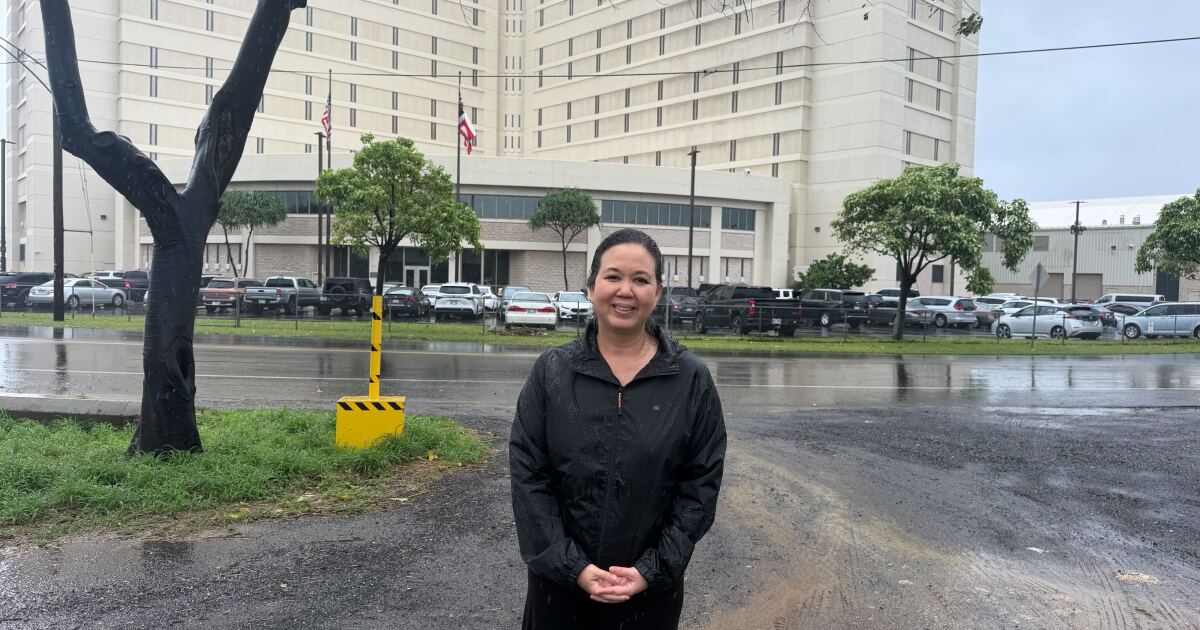
As immigration enforcement actions escalate under the Trump administration, the Honolulu Federal Detention Center is witnessing an increase in the number of detainees held by Immigration and Customs Enforcement (ICE). Details about the situation within the facility remain scarce, prompting U.S. Representative Jill Tokuda to make her fourth visit to gain insight into the circumstances surrounding the detainees.
Accompanied by an interpreter, Tokuda engaged directly with those being held at the center. She reported that the detainees hail from various regions, including Europe, Asia, and Central and South America. However, the majority had established lives in Hawaii prior to their detention, and they are currently isolated from general prison populations.
Profile of Detainees
Diversity Among the Detained
Congresswoman Jill Tokuda shared her observations about the individuals held at the facility. “We have people from all over the world—England, Ireland, Russia, and even Micronesia,” she noted. “Among those I met were individuals from China, Vietnam, Venezuela, and Mexico. The common thread is that most detainees previously resided in Hawaii. They were employed, contributing to their communities, and many had families, including children who are U.S. citizens. The disruption to their lives is profound. Contrary to the narrative that they represent the worst criminals, the reality I encountered tells a different story.”
Conditions Within the Facility
Discussing the conditions at the detention center, Tokuda highlighted significant improvements due to funding from the Big Ugly Bill, which allocated over a billion dollars to create separate units for male and female ICE detainees. “Initially, federal criminals were mixed in here, leading to troubling situations. Now, the environment has improved, though challenges remain,” she stated.
Tokuda described the living conditions as relatively favorable compared to other locations on the mainland, citing air conditioning and individual cells for each detainee. However, she emphasized a critical drawback: the lack of natural light. “While detainees have access to hot meals and an exercise area, the absence of fresh air and daylight can significantly impact mental well-being. During my visit, I struggled to discern whether it was raining or sunny outside due to the barred windows,” she explained. “The psychological implications of this environment cannot be understated.”
Advocacy for Detainees
Tokuda expressed her commitment to advocating for the detainees, framing their experiences as part of a broader struggle. “The goal is to approach this inhumane process as humanely as possible,” she stated. “Individuals are forcibly separated from their homes and families, often lacking the means to communicate. Many have provided labor in our communities, be it through cooking, gardening, or other contributions, and yet they are reduced to a stereotype that doesn’t reflect their true nature.”
For those with loved ones in ICE custody or in need of immigration assistance, Tokuda encourages outreach to her office. Additional information can be found on her official website.
This story originally aired on The Conversation on April 13, 2026, and was adapted for the web by Jinwook Lee.
