


Investment in Youth Leadership Essential for National Progress
Desi Elmoye in Abuja
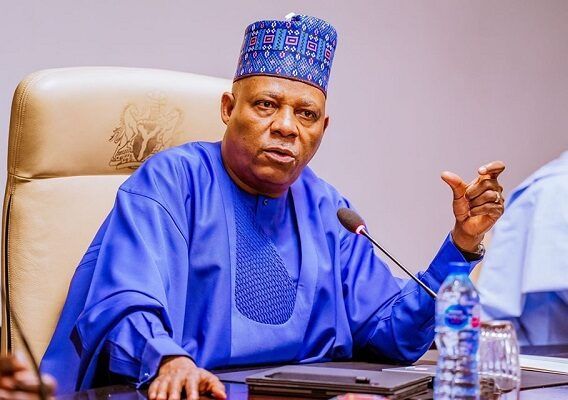
Vice President Kassim Shettima emphasized the importance of a comprehensive framework for youth leadership development during a recent discussion in Abuja. He highlighted that aligning the nation’s demographic strengths with strategic planning is crucial for achieving sustainable progress.
Shettima cautioned that Nigeria’s status as one of the world’s youngest nations would remain largely hollow without targeted institutional investments commensurate with its population size. Speaking at the Abuja Dialogue 2026, organized by the Office of the Vice President and the Lateef Jakande Leadership Academy of Lagos State, he called for a shift from viewing demographics as mere talking points in public discourse to recognizing them as strategic realities demanding high-level policy attention.
“We are one of the youngest countries on earth,” Shettima remarked. “This essential fact should not simply serve as a statistic or sound bite; it represents a national condition with profound implications.”
The Vice President asserted that Nigeria’s future hinges not only on its abundance of natural resources or governmental ambition but also on the continuity of leadership and frameworks that support national development. He described the Abuja Dialogue as a vital platform for introspection, especially at a time when global leaders are challenged to respond effectively to rapid advancements in technology, economic shifts, and evolving public expectations.
Modern leadership, he argued, cannot be left to chance; it must be cultivated through structured pathways that effectively prepare young people for their future responsibilities. “Youth leadership must be clearly understood. It is not merely a ceremonial transition awaiting chronological milestones; it involves a systematic process by which young individuals are prepared, entrusted, integrated, and supported within the institutions that will shape our future.”
Shettima proposed that the framework for youth leadership development must extend beyond slogans and accolades, fundamentally redesigning education and public services, as well as civic institutions. He underscored the importance of creating a gradual pathway where young Nigerians can take on responsibilities, emphasizing that leadership maturity develops through active engagement and accountability.
“Leadership grows when young people are afforded the space to learn, contribute, make decisions, and be accountable for their actions,” he stated. Addressing the youth directly, Shettima conveyed that they bear both the invitation and the obligation to actively participate in shaping Nigeria’s future. “True leadership transcends age; it reflects a willingness to embrace responsibilities, prioritize the public good, and focus on long-term objectives rather than instant accolades,” he noted.
Recognition of Leadership Initiatives
The Vice President praised the Lateef Jakande Leadership Academy and Lagos State Governor Babajide Olusola Sanwo-Olu for convening the dialogue, naming it a significant contribution to the national discourse on leadership renewal and sustainable development. He encouraged young Nigerians to approach the future with discipline, preparedness, and a clear sense of national purpose.
“The country we aspire to will not be handed to us in perfect condition. It will be built by individuals who recognize that excellence is a responsibility, not merely an ornament,” Shettima added. Governor Sanwo-Olu expressed gratitude for the Vice President’s commitment to hosting the dialogue, asserting that it sends a profound message to state governments, development partners, and the Nigerian youth regarding the federal government’s recognition of the importance of youth leadership development.
The governor described the Lateef Jakande Leadership Academy as a critical institution within Lagos’s leadership ecosystem, named in honor of one of the state’s most innovative leaders. He explained that the academy is not just a fellowship program; it serves as a talent incubator where young Nigerians gain practical experience in the public sector, engage in comprehensive learning across disciplines, and receive mentorship from seasoned leaders.
Sanwo-Olu emphasized the need for a cohesive ecosystem that supports youth initiatives, including the IBILE Youth Academy and various skill development programs. To truly unleash the potential of Nigeria’s youth, he called for dedicated commitment, a supportive policy framework, necessary budget allocations, and political will to transform goodwill into actionable institutions.
Presidential Chief of Staff Senator Ibrahim Hassan Hadeziah remarked that the dialogue’s significance lies in its focus on equipping the youth with the necessary leadership skills, knowledge, and enthusiasm. “Youth leadership is not merely a symbolic gesture; it is a deliberate initiative recognizing the foundational role of leadership in shaping organizational strength and influencing national development,” he explained.
Ayodele Olawande, the Minister of Youth Development, echoed these sentiments, stating that the dialogue comes at a crucial time. He underscored that Nigerian youth are ready and committed to advancing the country’s progress. The administration of President Bola Tinubu, through the Federal Ministry of Youth Development, remains focused on creating the necessary platforms for youth to assume leadership roles across various sectors.
Mr. Isat Agbaje Okunade, Executive Director of the Lateef Jakande Leadership Academy, commended the collaboration between the Federal and Lagos State Governments, emphasizing the importance of centering youth interests and well-being in national discussions. He noted that the Abuja Dialogue is a key opportunity to elevate youth leadership development to a strategic pillar of governance, economic growth, and institutional resilience. Agbaje Okunade added that this forum should help build national consensus on youth issues, transitioning discussions into impactful policies and initiatives.
