


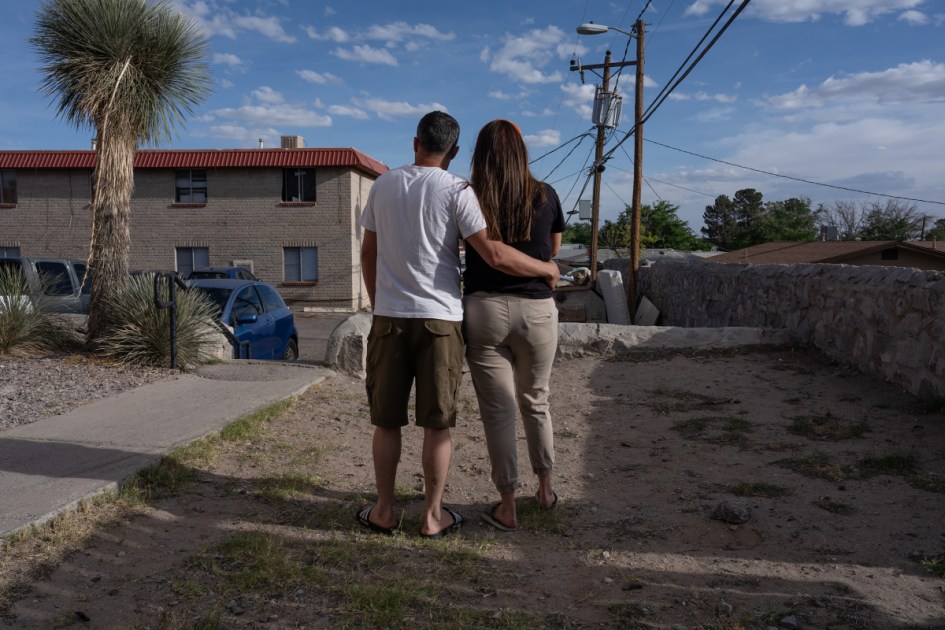
Immigrant Family Faces Court Dismissal and Detention
In the summer of 2025, Jose, his wife Carolina, and their teenage daughter arrived for their first scheduled hearing at an immigration court in downtown El Paso, eager to plead for political asylum after fleeing Venezuela.
More than a year prior, the family had navigated the Biden administration’s entry rules, securing an appointment through the CBP One mobile app, meeting with U.S. Customs and Border Protection officials, and applying for asylum. This process granted them “parole,” allowing them temporary residency and the right to work in the U.S. while their case was pending.
However, during a court hearing in June, a judge abruptly dismissed their case without any testimony, aligning with a controversial Trump-era directive instructing immigration judges to expedite dismissals. This move was intended to facilitate quicker arrests of immigrants. The U.S. Department of Justice later deemed this policy a regrettable error.
Immediately following their court appearance, U.S. Immigration and Customs Enforcement (ICE) detained the family, transporting them to the South Texas Family Residential Center in Dilley. Once there, Carolina’s 14-year-old daughter suffered from severe emotional distress, leading to persistent vomiting over several days, according to family members.
The situation deteriorated for many immigrants when the Trump administration revoked the legal status of over 900,000 individuals, including those who had utilized the CBP One app to enter the country. This revocation mandated that migrants leave or risk arrest, deepening a crisis that weighed heavily on existing immigrant communities.
Legal Challenges and Unsatisfactory Resolutions
Data released last year revealed that El Paso ranked second nationally, after New York City, for the number of arrests occurring in immigration courts. Jose and his family experienced a month in detention, a facility criticized by advocacy groups for inhumane conditions and violations of due process. Upon release, the family was required to report to ICE every three months, with a new court date set for June 2027.
Faced with uncertainty and emotional turmoil, the family made the difficult decision to purchase a one-way ticket back to Venezuela. “It’s hard to reconcile how we can follow all the rules yet be treated this way,” reflected Jose, who preferred to keep his family’s last name undisclosed due to fear of repercussions from the Venezuelan government. “It defies logic to enter the country legally and end up in detention.”
A recent ruling by Massachusetts District Court Judge Alison D. Burroughs declared the Trump administration’s actions unlawful, asserting that individuals who followed the CBP One app’s protocols from May 2023 to January 2025 had their legal statuses revoked improperly. The ruling demanded the rescission of this policy, potentially offering a glimmer of hope for affected immigrants, though for Jose’s family, it arrived too late.
Exodus from Venezuela
In Venezuela, Jose had a modest livelihood as a mechanic, involved in repairing and reselling used vehicles. However, a harrowing incident at a military checkpoint in 2022 stirred fear within his family. Jose’s brothers were threatened by soldiers, prompting a frantic escape. Following this event, the family’s safety concerns intensified, leading them to contemplate leaving their country.
The social and economic collapse in Venezuela resulted in a mass exodus, with over seven million individuals fleeing from 2015 to 2022 due to dire conditions exacerbated by government corruption and widespread persecution. Jose and his family first sought refuge in Brazil before moving through Colombia, ultimately arriving in Mexico in late 2023 after a perilous trek through the Darien Gap.
After three months, they secured their entry into the United States via the CBP One app, settling in Kansas where they both took jobs in a meat processing facility. However, an injury sidelined Jose, leading to a $25,000 payout, which facilitated their relocation to Las Cruces, New Mexico, to be closer to family.
Detention Distress and Self-Deportation Decision
Upon detention, Jose faced a barrage of inquiries about the dismissal of his case. His family reported that while at the facility, the conditions were distressing. Jose’s daughter, struggling to cope, experienced symptoms suggesting not just emotional trauma but also lingering health issues from her confinement.
Despite a lawyer’s assurance that they could not be detained for more than 20 days due to a 1997 legal settlement, the family nonetheless faced a daunting process. During a critical interview with asylum officials, their fears were compounded as their daughter learned the full scope of their perilous journey to escape Venezuela.
Shortly thereafter, the family was released but faced a recurrent cycle of fear due to the presence of ICE and the realities of a legal system that had failed them. The emotional strain came to a head when Carolina, witnessing the arrest of a neighbor, urged her husband to avoid returning home, exacerbating their anxiety.
Ultimately, the cumulative trauma led them to make a significant life decision. Just days ago, the family flew from the U.S. to Miami, then onto Venezuela, declaring their departure an act of self-deportation prompted by desperation to not live in constant fear.
Jose’s text aptly summarized their mixed emotions: “They let us go. Thank God. We are happy but really tired.” The family returned to Venezuela, their dreams of a new life in the United States crushed, reflecting a growing narrative of disillusionment among many seeking safety and stability.
