


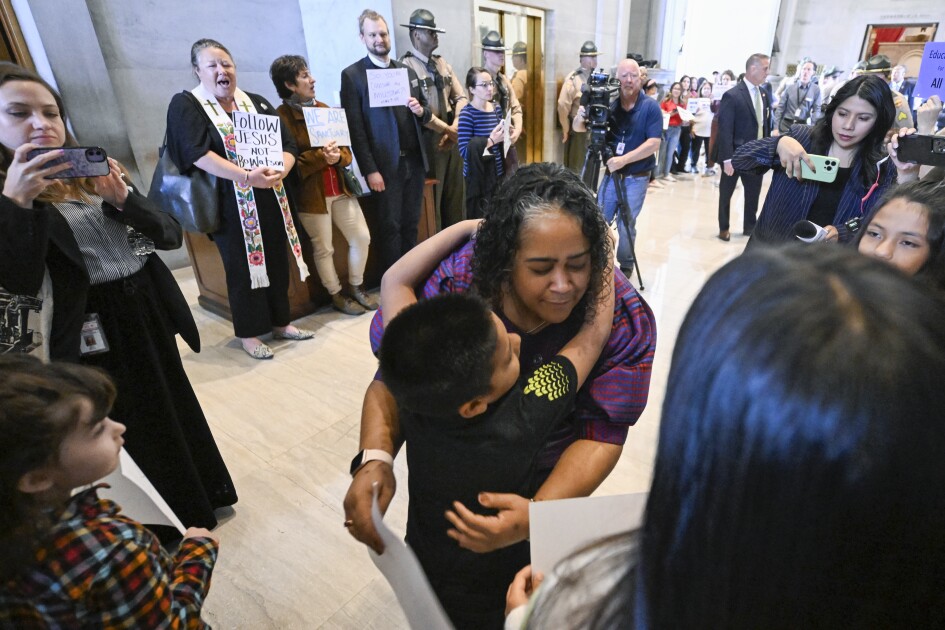
Educators at Eastside Elementary School in Chattanooga, Tennessee, have dedicated years to fostering trusting relationships with immigrant students and their families. However, that trust faced significant challenges last year when concerns about immigration enforcement prompted some families to leave the community, leading to a decline in school enrollment.
Principal Greg Wilkie noted that the potential passage of a new bill by the Tennessee General Assembly could further jeopardize these relationships. The proposed legislation would mandate schools to collect immigration status data from students, directly contravening federal law. Wilkie worries that such measures would discourage open communication from families, further eroding their trust.
Currently, Tennessee stands alongside two other states where lawmakers are questioning the established principles of the 1982 U.S. Supreme Court decision, Plyler v. Doe, which guarantees undocumented students access to public education. Efforts to limit this access have been launched in four additional states but were not successful after President Donald Trump’s re-election. Prominent organizations, including the Heritage Foundation and White House Chief of Staff Stephen Miller, have been instrumental in advocating for challenges to the rights of undocumented students.
These legislative proposals appear amid a broader nationwide tightening of immigration controls, particularly concerning educational institutions. In January 2025, the Trump administration rescinded a policy that previously protected schools from immigration enforcement activities, resulting in increased absenteeism, mental health concerns, and declining student enrollment in schools across the country.
As educators in Tennessee await potential changes to state laws regarding undocumented students, some have started advocating publicly for their rights. This includes the Hamilton County Principals Association, of which Wilkie is a member. He stressed the responsibility of educators to speak out: “If policymakers make these changes and we stay silent, we fail in our duty to support and protect public education.”
Tennessee’s Proposed Law and Its Implications
Previous iterations of the legislation aimed to allow public schools to charge tuition to undocumented students and deny them admission—a practice contradicting federal law established during Plyler’s tenure. The current bill under discussion, however, is narrower, focusing on the collection of immigration status data from all students enrolled or applying to public schools for the 2026-27 academic year. This data would then be reported to the state, although the bill does not clarify which documents would be acceptable for verifying immigration status.
Experts warn that the collection of such data could deter undocumented families from enrolling their children, undermining their right to public education. Moreover, they emphasize that under federal law, student enrollment is not contingent upon immigration status, rendering this information irrelevant. Schools are not prepared for the logistical challenges that would arise from implementing these requirements. Jill Levine, vice president of the Hamilton County School Principals Association, expressed concerns: “With nearly 800 students, I can’t fathom the number of hours it would take to collect this information, especially when we’re lacking the necessary resources.”
There are also apprehensions regarding how all parents, regardless of their immigration status, would meet the proposed documentation requirements. For instance, Wilkie has shared that he no longer possesses his birth certificate, although he is a U.S. citizen. Immigration advocates opposing the bill highlight the training that would be necessary for school officials to accurately interpret various visa and refugee status nuances, a role they argue should not fall on educators. “We’re not immigration officials. Our focus should be on teaching,” stressed Wilkie.
Educators’ Standpoint on Immigration Legislation
Proponents of the bill assert that it will enhance transparency regarding the financial implications of educating undocumented students, a stance supported by organizations like the Heritage Foundation. “Taxpayers deserve insight into their spending on education and related issues, and neglecting to collect this data is irresponsible,” argued Lora Reese, director of the Heritage Foundation’s Center on Border Protection and Immigration.
However, many school administrators, including Levine, counter these arguments by maintaining that education funding is directly linked to enrollment, rather than immigration status. They emphasize that the cost of educating a student remains consistent, regardless of whether they are documented or not. Fear among undocumented families could lead to decreased enrollment, ultimately resulting in funding losses for schools. “We are public educators committed to serving all children, without exception, which is not only our belief but also enshrined in law,” Levine asserted.
In light of the proposed legislation, the Hamilton County Principals Association recently consulted its members on whether they should publicly oppose the bill. The response was overwhelmingly in favor of speaking out. The association has since engaged with state legislators to communicate their concerns regarding the immigration status data collection, urging lawmakers to refrain from advancing such bills this year. With immigration anxieties already impacting students’ daily experiences, educators are particularly concerned about the negative implications of questioning families about their immigration status on student learning and well-being.
Wilkie recalled instances where families were detained during school hours, further complicating students’ emotional states. “It’s incredibly challenging for kids who are trying to focus on their education while worrying about the safety of their loved ones,” he noted. Looking ahead, Wilkie hopes that educators from other states facing similar legislative challenges will reach out to their representatives to voice the potential ramifications on their communities. “It’s vital that principals and educators leverage their voices; we have the power to effect change,” he concluded.
