


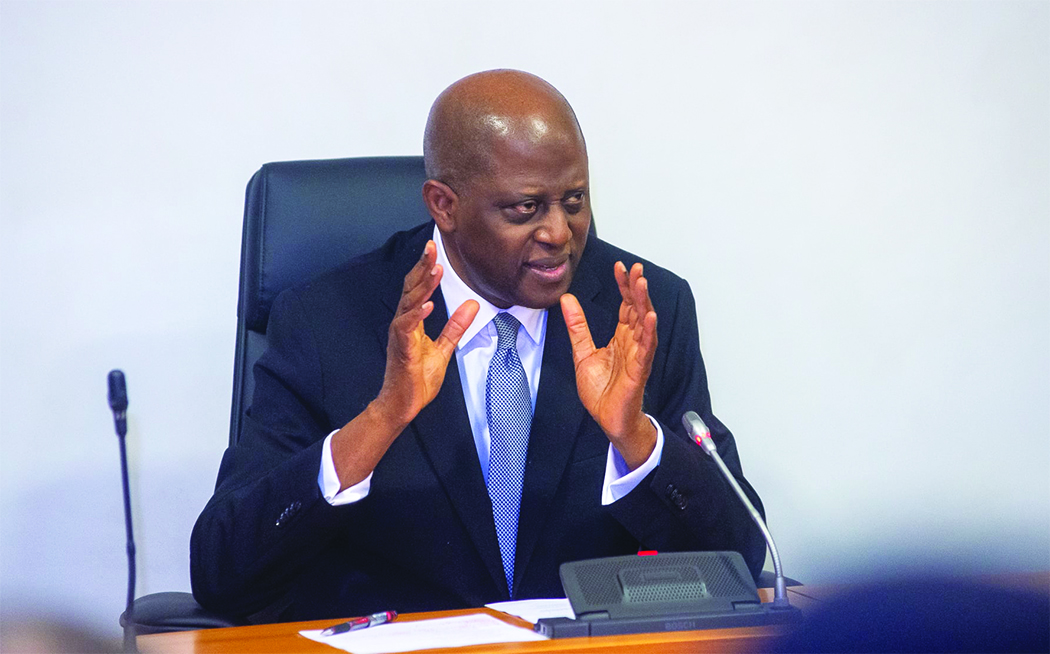
Data-Driven MPC Stance on Interest Rates Justified
Olayemi Cardoso, the Governor of the Central Bank of Nigeria (CBN), has addressed concerns regarding the impact of the Middle East crisis on Nigeria’s economy. He assured that the global turmoil would not impede Nigeria’s resilience or its commitment to maintaining a single-digit inflation target.
Reforms Enhance Nigeria’s Economic Resilience
During discussions at the IMF/World Bank Spring Meetings, Cardoso defended the Monetary Policy Committee’s (MPC) cautious stance on interest rates amid calls for rate cuts in response to declining inflation. He emphasized the committee’s data-driven approach, which he believes justifies their decision to remain vigilant in uncertain times.
Wale Edun, Nigeria’s Minister of Finance and Coordinating Minister for Economic Affairs, echoed these sentiments, highlighting that the country’s reform programs are gaining recognition globally for their reliability and resilience. He pointed out that these reforms have fortified Nigeria’s capacity to navigate external shocks, consequently enhancing investor confidence.
MPC’s Focus on Caution and Data
Throughout the Spring Meetings, Cardoso outlined that the MPC’s resistance to aggressive rate cuts was grounded in a wide array of economic indicators that suggested potential risks. He stated, “While there was an expectation for more substantial rate cuts, MPC members have access to insights that inform their decisions. Our priority is to remain cautious while navigating potential less visible shocks.”
He underscored that the decisions made by the committee were firmly based on data rather than emotions, asserting that previous economic trends warranted their cautious approach. Cardoso reflected, “If we hadn’t implemented decisive policies in the past, we would be facing a far more challenging economic landscape today.”
Central Bank’s Commitment to Economic Stability
Cardoso reiterated the CBN’s commitment to advancing reforms while focusing on achieving price stability amid ongoing global uncertainty. “We will persist in our efforts to bring inflation down to single digits, aligning with the genuine concerns of Nigerians regarding the effects of current events,” he explained.
He acknowledged that economic pressures are beginning to ease, leading to signs of stabilization, and stressed the importance of consolidating the gains from recent reforms. “Our path is clear: the CBN remains dedicated to building on our achievements while enhancing institutional capacity for long-term macroeconomic stability,” he stated.
Positive Outlook for Nigeria’s Economic Future
Edun reinforced the notion that Nigeria is strategically positioned to endure external shocks, particularly those currently affecting the global economy. He detailed that discussions with key international institutions like the IMF and IFC indicate strong support for Nigeria’s priorities, particularly in human capital development, infrastructure, agribusiness, and digital innovation.
Summarizing the discussions, Edun remarked, “The overall outcomes of the Spring Meetings are promising for Nigeria’s economic outlook, showcasing that confidence in our reform trajectory continues to grow.” He emphasized that Nigeria’s story of resilience and investment potential is becoming increasingly recognized on the global stage.
Cardoso and Edun’s commitments to restoring investor confidence and promoting discipline in policy-making are central to Nigeria’s roadmap for sustained economic growth. Their focus on improving living conditions for citizens through inclusive growth remains a top priority as the nation tackles both internal and external challenges.
