


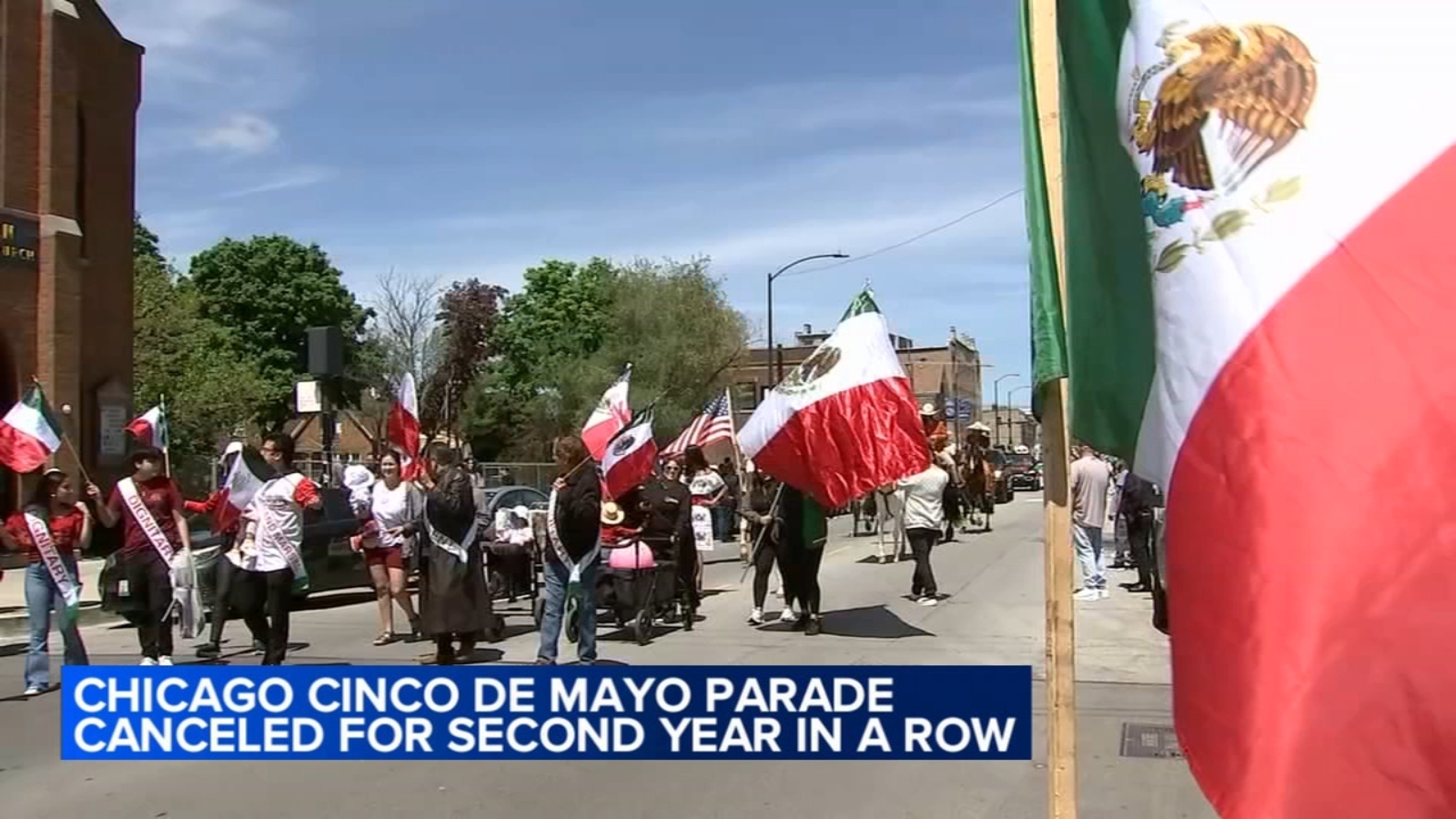
CHICAGO (WLS) — Organizers of Chicago’s Cinco de Mayo festival have announced the cancellation of this year’s event, citing ongoing community concerns about the Trump administration’s immigration enforcement policies.
In a statement released to ABC7 on Sunday, the organizers confirmed that the festival, held annually on the city’s Southwest Side, will not take place this year, mirroring decisions made in the previous year.
The announcement emphasized the importance of safety, noting that the enforcement policies have instilled fear within the community, leading to the difficult choice to cancel the parade.
Celebrating Mexican traditions, Chicago’s historic parade usually occurs in the first week of May. However, the current climate has made it challenging for community members to participate fully in celebrations.
Hector Escobar, president of the Casa Puebla & Cermak Road Chamber of Commerce, voiced his concerns last year, saying, “The people are scared. Look, some of them don’t want to go to work, and some have taken significant risks. There’s not much to celebrate under these circumstances.”
Following the inauguration of President Trump in January 2025, Chicago became one of numerous sanctuary cities targeted by Immigration and Customs Enforcement. This escalation in deportations, particularly affecting neighborhoods like Little Village, has heightened anxiety among local businesses and residents.
This climate of fear has also resulted in the withdrawal of nearly half of the festival’s sponsors by 2025. Escobar mentioned that while financial support is crucial, the priority is ensuring the safety of all involved. “Safety is more important,” he emphasized.
The parade has faced numerous challenges historically, unable to take place from 2018 to 2022 due to the coronavirus pandemic and various disagreements with city officials. Recent conflicts during the parade, described by police as gang violence, have only added to the tension surrounding the event.
As for the future, Escobar expressed uncertainty, stating, “At this point, we don’t know what’s going to happen next year.” While the organizers had hoped to resume the celebrations in 2026, they are now prepared to cancel again if the political climate does not change.
Escobar concluded, “This decision considers the ongoing challenges faced by Mexican communities under the current administration. Many families are experiencing heightened anxiety due to increased immigration enforcement and the looming threat of raids. Given these circumstances, it’s natural for community members to avoid public celebrations. We remain hopeful for a future where we can safely gather to celebrate our culture and traditions.”
