


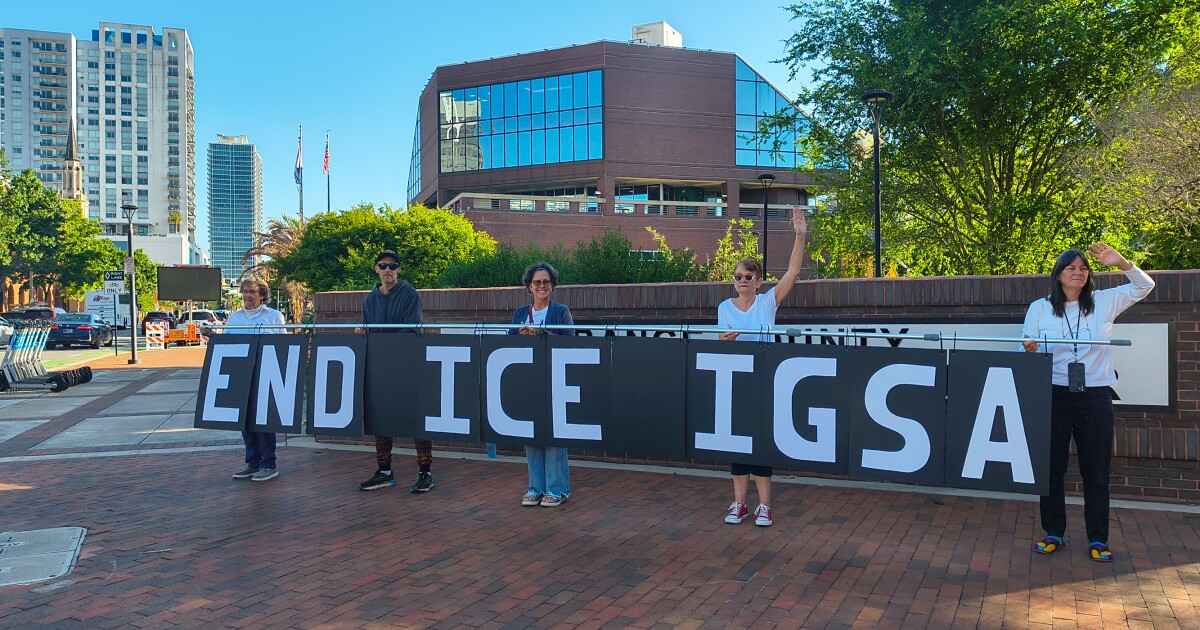
Orange County Terminates Agreement with ICE for Immigrant Detainees
In a significant decision, Orange County commissioners and Mayor Jerry Demings unanimously voted on Tuesday to end the section of the intergovernmental services agreement (IGSA) that pertains to housing immigrant detainees. This move reflects a growing concern over the federal agency’s impact on local resources and community welfare.
While the county’s IGSA will largely remain intact, it will no longer include provisions related to U.S. Immigration and Customs Enforcement (ICE). County jails are still authorized to detain individuals facing federal criminal charges from agencies such as the FBI.
As mandated by state law, Orange County will need to establish temporary housing agreements for individuals detained by ICE. The IGSA was one method of compliance, but the county is now opting to pursue a Basic Order Agreement (BOA) as an alternative.
The BOA allows counties to release immigrant detainees after a detention period of 48 hours, a reduction from the previous 72 hours under ICE guidelines. However, the BOA offers slightly lower reimbursement rates compared to the IGSA.
At present, Orange County receives $88 per inmate per day under the IGSA. Officials are currently in negotiations, with the U.S. Marshals Service proposing an increased rate of $125. However, the actual cost to the county for housing inmates stands at around $180 per day.
The starting reimbursement rate under the BOA is set at $50 per detainee for a maximum of 48 hours. Danny Banks, the county’s Public Safety Deputy Director, mentioned that state funding may help bridge the financial gap, potentially allowing for an average reimbursement rate of $100 per inmate daily.
Concerns and Alternatives Discussed by County Commissioners
During the meeting, county staff presented three options for consideration: the complete termination of the IGSA, a partial termination, or maintaining the agreement in its entirety. Financial considerations played a crucial role in the discussions, yet many commissioners voiced concerns about the implications of continuing the agreement on local resources.
“I don’t view this as merely a financial gain or loss,” remarked District 3 Commissioner Mayra Uribe. “It’s critical that we do what is right, recognizing the flaws in the system.” District 1 Commissioner Nicole Wilson echoed these sentiments, emphasizing the importance of monitoring how conditions imposed by ICE could affect county resources.
In early February, Mayor Demings proposed new limits to ICE’s operations, recommending a cap of 130 total ICE detainees housed at the county jail. According to Louis Quiñones Jr., the County Corrections Director, ICE promptly complied with these new restrictions, resulting in a significant reduction in the number of detainees at the facility.
Uncertainty in Immigration Policies and Community Response
While Banks informed the commissioners that fewer ICE inmates would likely be admitted under the proposed BOA, he cautioned that such predictions remain uncertain. “Even if we transition to the BOA, I cannot control ICE’s logistics or the number of inmates they choose to bring,” Banks stated.
Residents present at the meeting welcomed the decision to replace the ICE component of the IGSA with a BOA. Many had spent the previous year urging county leaders to take a more definitive stance in advocating for the due process rights of individuals caught up in heightened immigration enforcement.
Marine Corps veteran Alex McCoy was among those who actively campaigned against the IGSA. Gathering 620 signatures on an open letter from Florida veterans opposing ICE’s actions, he expressed satisfaction with the commission’s choice. “While we must comply with Florida law, there’s no reason to squander tax dollars on a process that diverts funds from essential public services,” McCoy said.
Community Advocacy for Due Process and Future Considerations
Advocates such as Erika Gomez Tejeda, organizing director for Hope Community Center, hailed the decision as a critical first step for Orange County. “Today marks our intention to step away from being a detention hub for ICE,” she affirmed. “This means fewer individuals will be detained without due process, and it signifies a commitment to uphold the rights of all community members.”
The discussion also touched on the potential for counties to legally challenge Florida’s requirement for local law enforcement to assist in enforcing federal immigration law. Assistant County Attorney Georgiana Holmes emphasized that the term “best efforts” lacks a clear definition in state law, adding another layer to the ongoing dialogue surrounding immigration enforcement.
Mayor Demings indicated that his office continues to engage in discussions with the county attorney regarding possible legal actions in response to this requirement. The ongoing conversation reflects the complex interplay between local governance, state mandates, and federal immigration policies.
