


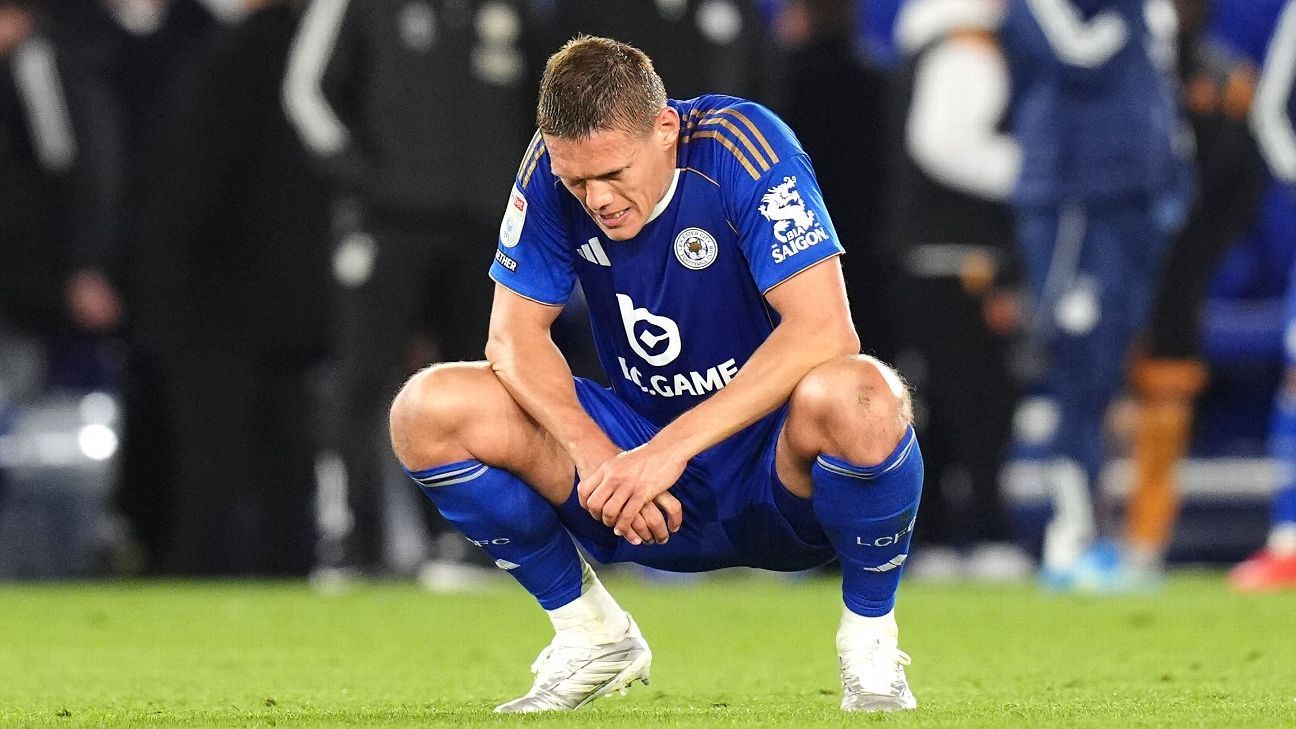
Leicester City Faces Relegation Amid Fan Discontent
LEICESTER — As Leicester City descended into League One, the discontent among fans was palpable, with boos echoing before the match and chants urging the club’s owners to leave. This unfortunate chapter marks a stark contrast to the team’s celebrated 10th anniversary of their remarkable Premier League triumph.
Nearly ten years have passed since Claudio Ranieri’s Leicester, viewed as 5,000-1 outsiders, claimed the Premier League title. It remains one of the most astonishing victories in football history, yet today’s atmosphere around the team is filled with bitterness rather than joy.
Unlike the euphoria of the past, this time there was no celebration—no triumphant music, only the sight of owner Ayawat Srivaddhanaprabha clearly troubled as fans directed their frustrations at the board following a disappointing finale against Hull City.
Gary Rowett, who took over as manager in February after Andy King served as caretaker, acknowledged the gravity of the situation. “Instead of relegation after a few games, we faced it after a full season,” he noted. Rowett emphasized the necessity for the club to learn and adapt, describing this period as a daunting chapter in its journey.
Despite a glorious history, former Foxes winger Matt Piper expressed that the current relegation represents the bleakest moment in the club’s timeline. He emphasized the absence of effective leadership, warning that without it, the club risks further decline.
The reality is harsh. Leicester, relegated after a 2-2 draw against Hull, now shares the grim fate with teams like Swindon Town and Southampton. The once-majestic Foxes will now face matches against clubs like Bromley and local rivals like Mansfield Town and Burton Albion, a far cry from their illustrious past.
The Fall from Glory: What Went Wrong?
Leicester’s dramatic title win in 2016 was not just a one-off miracle; it resulted from astute recruitment strategies aiming to establish the club among the best-managed outside the Premier League’s elite. The championship squad was assembled not with endless financial resources but with savvy investment in players like N’Golo Kante, Jamie Vardy, and Riyad Mahrez, who became pivotal to the club’s success.
Leicester’s clever management transformed these players into assets that garnered substantial transfer fees, creating a successful financial model that once positioned them favorably among their competitors. However, following the tragic death of owner Vichai Srivaddhanaprabha in 2018, the club began to face significant challenges.
As the COVID-19 pandemic severely impacted revenue streams, the King Power duty-free retailer struggled to maintain support for Leicester’s ambitions, leading to costly recruitment errors and accumulated losses. This downward trend ultimately resulted in relegation in 2023.
Enzo Maresca’s brief tenure saw a return to the Premier League; however, subsequent financial breaches and a £201 million loss exposed critical mismanagement. Following their relegation, the EFL imposed a six-point penalty for these transgressions, exacerbating an already dire situation. Leicester’s performance on the pitch, with only two wins out of 19 league matches, further sealed their fate.
Fan Backlash and Leadership Challenges
As the team struggled, frustrations coalesced into vocal opposition against the ownership and management. Following a loss to Portsmouth, fans shouted accusations at players, reflecting their deep dissatisfaction. Notably, Harry Winks faced a tense confrontation with supporters, illustrating the growing rift between the team and its fanbase.
The scene at the King Power Stadium underscores the harsh reality facing the club. With the score level at 2-2, fans made their dissatisfaction known, illustrating an unsettling atmosphere where the budding promise of a new chapter feels more uncertain than ever. Leicester City’s proud history now serves as a haunting reminder of a glory that once was, overshadowed by present challenges.
Owner Srivaddhanaprabha has vowed to alleviate the club’s £124 million debt and rekindle the team’s fortunes, yet the task ahead is monumental. With fans continuing to express their anger outside the stadium, regaining their trust and support will be a critical first step in rebuilding. A decade ago, supporters celebrated triumph; today, they are desperate for change and a return to better times.
