


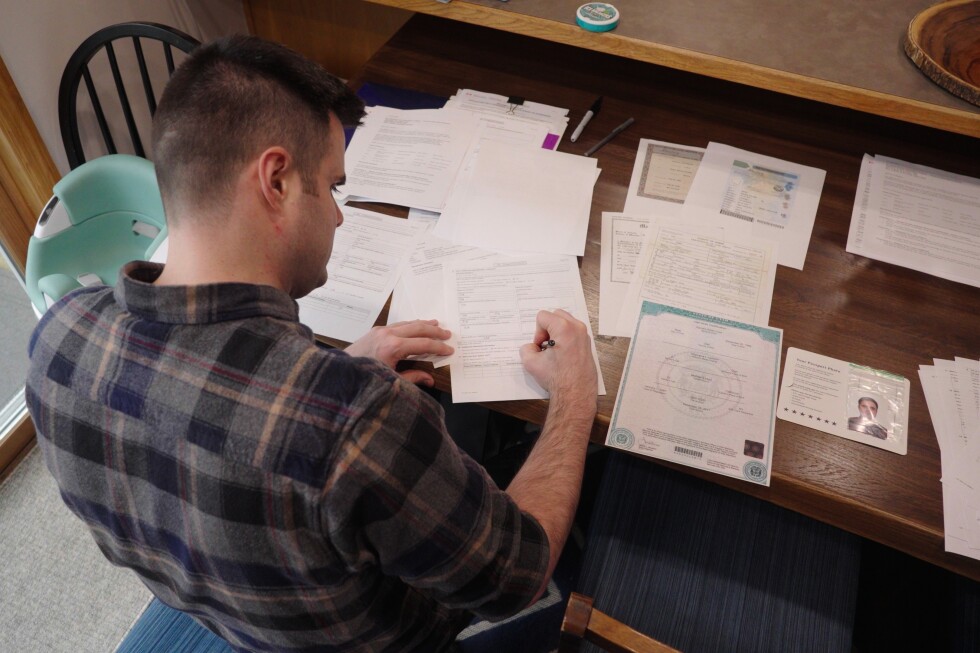
SIOUX FALLS, S.D. (AP) — Millions of Americans may now find it significantly easier to pursue Canadian citizenship, sparking a surge of interest in ancestry research and the dual citizenship application process. For individuals like Zach Loud from Farmington, Minnesota, the revelation that Canada considers him and his brother citizens under this new law came as a pleasant surprise.
“My wife and I were already discussing the possibility of seeking employment abroad, but acquiring Canadian citizenship has now become our top priority,” Loud shared.
Since the law’s implementation on December 15, immigration attorneys in both the U.S. and Canada have been inundated with requests from clients eager to navigate the citizenship application process. Motivated by political landscapes, familial connections, and new job prospects, numerous Americans are assessing whether this is the right moment to pursue dual citizenship through a more accessible channel.
Changes to Citizenship Laws
Canada has been revising its nationality legislation for decades, often to clarify historical interpretations or rectify discriminatory practices. Previously, Canadian citizenship could only be passed from parent to child in a single generation. However, with the enactment of Bill C-3 on December 15, this policy is transformed, allowing anyone born before that date to claim citizenship if they can demonstrate a direct ancestral connection to Canada, including grandparents and even more remote ancestors.
For those born after December 15, eligibility now requires proof that their parents have fulfilled the 1,095-day residency condition. Under the newly established guidelines, descendants of Canadians are automatically recognized as citizens, although they must submit evidence to receive a citizenship certificate. Immigration lawyer Amandeep Hayer estimates that millions of Americans could qualify for this designation.
“You’re essentially a Canadian for life,” said Hayer, a proponent of the recent legislative changes. “What you’re truly seeking is the acknowledgment of rights you already possess.” He emphasized that a newborn in Canada would be considered a Canadian citizen even without holding a birth certificate.
Rising Interest Among Americans
Motivations for American applicants are varied, with many citing the political climate under previous administrations as a significant influence on their decision to pursue dual citizenship. Michelle Cunha from Bedford, Massachusetts, expressed her decision to immigrate to Canada as a culmination of years of political activism, concluding that she had “nothing more to contribute” to the U.S.
“I’ve devoted 30 years to making America the beacon of freedom and equality that it promises to be to the world,” Cunha stated. “But we evidently have not reached that point, and progress seems distant.”
Troy Hicks, whose great-grandfather was born in Canada, described how international travel sparked his interest. “During a recent trip to Australia, I encountered negative sentiments regarding Trump and the U.S. immediately upon arrival,” recounted Hicks, a resident of Pahrump, Nevada. “Securing a Canadian passport now seems not only more feasible but also more appealing.”
Cost of Obtaining Canadian Citizenship
For those equipped with the requisite documents, the application fee for a citizenship certificate is relatively affordable at 75 Canadian dollars (approximately $55). However, engaging legal or genealogical assistance can quickly drive costs upward. Cunha has enlisted a lawyer and expects her expenses to reach around $6,500.
Conversely, Mary Mangan from Somerville, Massachusetts, tackled her application independently based on guidance from an online community. “There are certainly situations where hiring a lawyer is advisable, but I believe that for the majority of applicants, self-filing is feasible,” Mangan remarked.
According to Immigration, Refugees and Citizenship Canada, the processing time for citizenship certificates is around 10 months, with over 56,000 applications currently in the queue. Between December 15 and January 31, the agency confirmed citizenship by descent for 1,480 individuals, not all of whom were American. Last year, approximately 24,500 Americans were granted dual citizenship in Canada.
Canadian Perspectives on Increased Applications
Fenn Hampson, a professor of international affairs at Carleton University in Ottawa, noted that Canadians generally display a welcoming attitude. However, he cautioned that there can be skepticism toward individuals from the U.S. who may seek a passport purely for convenience, without genuine ties to the country.
“While Canadians are generally hospitable, there’s a concern about those who bypass established immigration protocols. People worry that this newfound interest may detract from aiding refugees and asylum seekers trying to escape desperate situations,” Hampson explained. “Canadians prefer to avoid scenarios where applications from non-displaced individuals jeopardize the chances of those in genuine need.”
