


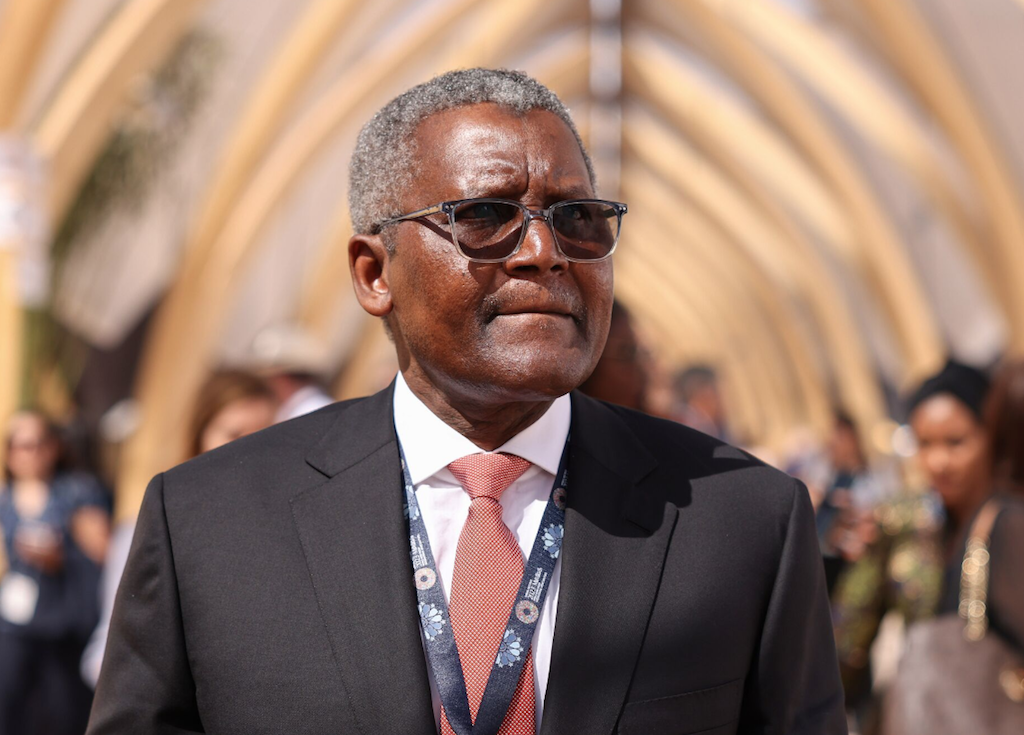
Dangote Plans Major Oil Refinery in Tanzania with Regional Partners
Aliko Dangote, Africa’s wealthiest individual and CEO of the Dangote Group, has revealed intentions to construct a significant oil refinery in Tanzania in collaboration with Kenya and Uganda. This initiative is inspired by his flagship facility in Nigeria, which boasts a capacity of 650,000 barrels per day.
Dangote made this announcement at a conference focused on infrastructure financing in Nairobi, attended by key regional leaders including Kenyan President William Ruto and Ugandan President Yoweri Museveni. He expressed optimism about the project’s potential, contingent on securing political backing from the involved nations.
As he engaged with the heads of state, he remarked on the project’s feasibility, asserting, “If they support a refinery, we will build the same one we have in Nigeria.” His confidence garnered applause from the audience, reflecting a shared enthusiasm for the venture.
This proposed refinery is part of Dangote’s broader ambition to transform Africa’s energy and industrial landscape through locally-driven infrastructure projects. He indicated that initial construction work for his refining vision is already progressing, with plans that could potentially increase capacity to 1.4 million barrels per day, aligning with global standards.
Dangote noted that once operational, the facility would account for approximately 10% of the total refining capacity in the United States, emphasizing its integration with petrochemical production to bolster downstream industries. He underscored the importance of local manufacturing as a means to shield economies from global market fluctuations.
Highlighting the critical nature of polypropylene production, he explained its vital role in industries ranging from cement packaging to food supply chains. He cautioned that without domestic production capabilities, many companies could face existential challenges, especially in light of recent surges in global polypropylene prices.
Encouraging self-sufficiency across Africa, Dangote emphasized the continent’s readiness to undertake large-scale projects, given its improved financial institutions and human capital. Reflecting on his experiences, he recounted how the Dangote Group successfully navigated financing hurdles in the early 2000s, securing a $478 million loan despite soaring domestic interest rates. The timely repayment of this loan was a testament to Africa’s potential, dispelling doubts about its capacity for ambitious projects.
In discussing regional trade policies, he praised Uganda’s stance on restricting raw material exports, arguing that such measures promote value addition within Africa. “Why take out the raw materials and bring back the finished product?” he questioned, highlighting the evolution of the continent’s educational and financial landscape.
If realized, the Tanzania refinery project would mark a significant advancement toward regional energy integration and industrialization, potentially establishing East Africa as a new center for the continent’s petrochemical landscape.
Regional Collaboration on Infrastructure Development
Currently, East Africa relies heavily on importing refined petroleum products, predominantly from the Middle East, which exposes the region to supply disruptions and price volatility, particularly highlighted by recent international conflicts. President Ruto noted the collaborative efforts among East African nations to establish a joint refinery at Tanzania’s Tanga port, emphasizing the collective benefits for the region.
“We are going to establish a joint refinery in Tanga for the benefit of all of us because that refinery will receive oil from the Democratic Republic of Congo, Kenya, South Sudan, and Uganda,” Ruto articulated, underscoring the potential for regional cooperation in developing critical energy infrastructure.
