


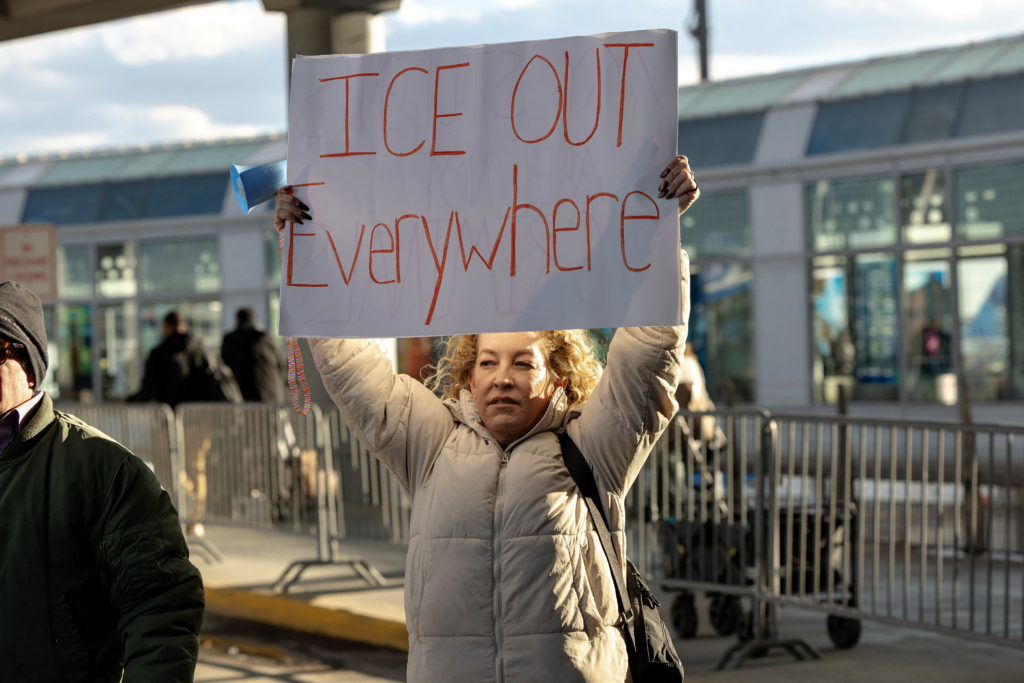
The crackdown on immigration enforcement in the U.S. has reached unprecedented levels, particularly evident in cities like Minneapolis where carloads of masked agents became a common sight. In states like Texas, Florida, and California, weekly arrests soared into the thousands, showcasing a stark national trend in immigration enforcement.
Border Patrol Chief Gen. Gregory Bovino referred to this aggressive approach as “turn and burn,” describing a strategy that involved swift, coordinated raids at restaurant kitchens, bus stops, and hardware store parking lots. According to data released by the Deportation Data Project at the University of California, Berkeley, Immigration and Customs Enforcement (ICE) arrests peaked at nearly 40,000 nationwide in December, maintaining a similar pace into January.
A recent poll indicates that nearly two-thirds of Americans believe ICE is overstepping its bounds in immigration enforcement. This sentiment grew stronger after the tragic killing of two Americans by immigration agents in Minneapolis, which ultimately led to significant changes in immigration leadership. Following this incident, ICE arrests nationwide dropped by almost 12% within weeks.
Regional Discrepancies in ICE Arrest Rates
Following the Minneapolis incident, Gen. Bovino, who had become the public figure of the Trump administration’s crackdown, was removed from his position. Border Patrol Agent Tom Homan was appointed to implement new policies in the Twin Cities. By February 4, Homan announced a reduction in the number of immigration officers operating in the state.
According to an Associated Press analysis of ICE arrest records, the average number of weekly arrests in the five weeks following Homan’s announcement was 7,369, a decline from 8,347 weekly arrests in the preceding five weeks. While these figures remain elevated compared to much of Trump’s second term, they are still significantly higher than during the Biden administration. However, the pattern varied widely across different states.
During this period, certain states such as Kentucky, Indiana, North Carolina, and Florida experienced substantial increases in ICE arrests, with Kentucky alone witnessing a more than doubling in its weekly figures, reaching 86 arrests by early March. These regional spikes were contrasted by notable decreases in states like Minnesota and Texas.
Targeting the Most Dangerous Criminals: A Complex Reality
The Trump administration has often asserted that its immigration enforcement strategy is focused on apprehending the most dangerous criminals, which the president has labeled “the worst of the worst.” While this claim holds some validity, the reality is far more nuanced.
Many individuals classified as violent offenders by ICE were already incarcerated. Conversely, a significant portion of those arrested had no prior criminal history. Data shows that approximately 46% of individuals apprehended by ICE during the five-week period ending February 4 had no criminal charges or convictions—a number that decreased to 41% in the subsequent weeks yet remains above the 35% average recorded since Trump’s second term began. In several states, the share of non-criminal arrests has actually increased post-February 4.
Ongoing Deportation Strategies Amid Legal Challenges
A multitude of federal court filings highlights the complexities of the Trump administration’s immigration tactics that persist at high levels, despite a noticeable slowdown in activity. For instance, a 21-year-old Honduran man with no criminal background recently sought release following his February 22 arrest during a traffic stop in San Diego. As a father to three U.S. citizen children, his case underscores the human impact of these policies.
Similarly, a 33-year-old Venezuelan physician, who served a medically underserved community, was detained alongside her 5-year-old daughter while on the way to her husband’s asylum hearing. She was arrested under suspicion of visa overstaying. Instances like these illustrate the broad implications of current immigration enforcement practices.
Aaron Reichlin-Melnick, a senior fellow at the American Immigration Council, acknowledged a potential shift in enforcement trends, noting a decline in arrests and detentions. However, he cautioned that it remains premature to determine whether these changes are permanent. “The Trump administration insists that there is no slowdown and that immigration enforcement is unchanged, yet it’s evident that they have scaled back some tactics associated with Operation Metro Surge in Minneapolis,” he stated.
Reporters Kessler and Sullivan contributed to this coverage, aided by Associated Press writers Elliot Spagat and Gisela Salomon.
