


Trump Cancels Special Envoy’s Visit to Pakistan, Complicating Iran Negotiations
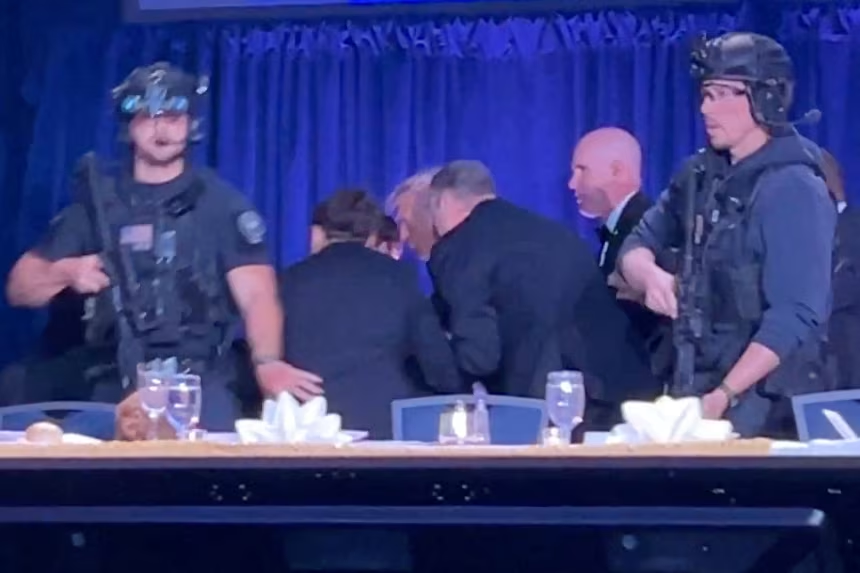
President Donald Trump’s sudden cancellation of a scheduled visit by his special envoy to Pakistan poses significant challenges for diplomatic efforts aimed at negotiating with Iran. This move comes amid heightened tensions in the Middle East and follows a security incident at the White House Correspondents Association (WHCA) annual dinner, where Trump and other top officials were evacuated due to gunfire.
During the WHCA dinner at the Washington Hilton, a suspect was taken into custody after several shots were fired inside the venue. According to the U.S. Secret Service, the situation was quickly managed, with Trump reassuring officials that he was safe and intended to return to the event. He praised the prompt actions of law enforcement and expressed regret that the evening’s festivities would be disrupted.
Wolf Blitzer of CNN reported being just feet away from the gunman when the incident unfolded. “It was a very serious weapon,” he noted, highlighting the gravity of the situation. Agents from the Secret Service, including armed members of the Counter Assault Team (CAT), quickly took control of the area, ensuring the safety of senior officials attending the dinner.
President Trump, along with other high-profile attendees, was swiftly escorted from the premises, as sounds of gunshots reverberated throughout the hotel. Images captured showed Secret Service agents evacuating key figures like Secretary of Health and Human Services Robert F. Kennedy Jr. The swift actions taken by security reflected the seriousness of the security breach during this high-profile gathering.
Initially, many attendees remained indoors, anxiously waiting for guidance from law enforcement. Jiang Weijia, president of the Correspondents Association, later addressed the crowd, assuring them that the program would resume shortly while emphasizing the need for patience as details surrounding the incident were gathered.
US-Iran Talks Halted by Envoy’s Trip Cancellation
Meanwhile, the cancellation of the envoy’s visit to Pakistan further complicates the already strained negotiations with Iran. The White House had previously announced plans for U.S. Special Envoy Steve Witkoff and Jared Kushner to engage in direct talks with Iranian officials, a development many viewed as a potential turning point in diplomatic relations.
Trump’s decision to call off the trip was definitive; he stated, “We have all the cards. They can call us anytime if they want, but we’re not going to sit around and do another 18-hour flight without talking.” Despite cancelling the engagement, the President reassured that this did not indicate a shift toward hostility, asserting that he had yet to contemplate the next steps.
In a notable development preceding this cancellation, Iranian Foreign Minister Abbas Araghchi arrived in Islamabad for meetings, marking a rare moment of direct engagement. He was received by top Pakistani officials, and a five-hour overnight discussion took place, indicating a willingness to explore diplomatic avenues, though it remained far from the nuclear negotiations on which much of the international community is focused.
Though Iranian officials downplayed the significance of Araghchi’s visit, asserting that it was not connected to nuclear talks, the talks in Islamabad were described as crucial by both Iranian and Pakistani leaders. Pakistan’s Deputy Prime Minister emphasized the country’s support for ongoing discussions between the U.S. and Iran, aiming for stability in the region.
As President Trump and Congress face mounting pressures under the War Powers Resolution, the future of U.S. military operations against Iran remains uncertain. The recent whirlwind of events highlights the complexities of international diplomacy and the challenges of navigating a rapidly evolving geopolitical landscape.
