


April 25, 2026, 8:02 PM MT
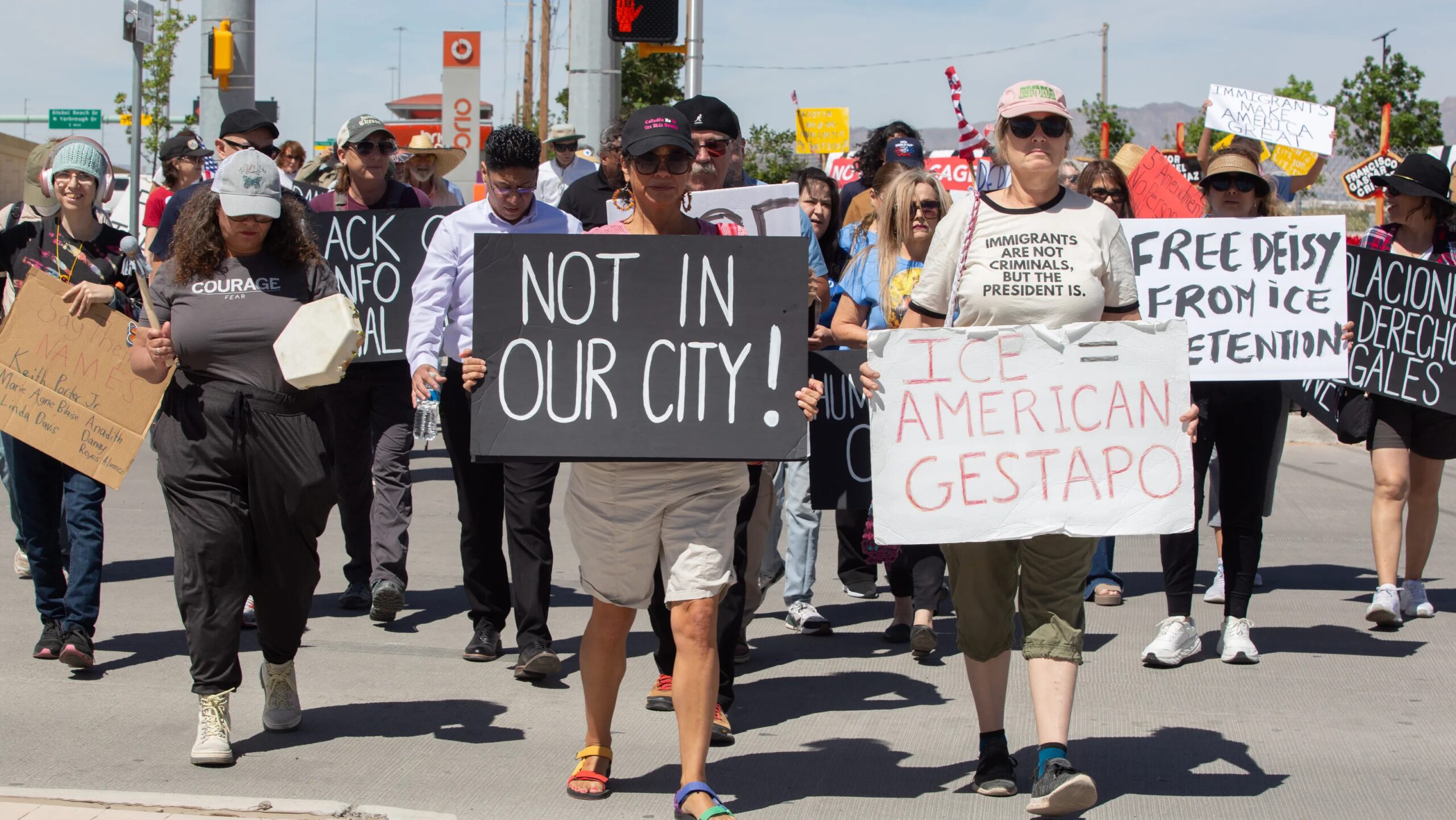
Dozens of residents in El Paso gathered outside ICE’s Camp East Montana on the East Side to voice their opposition to the Trump administration’s immigration detention policies. This protest was part of a national demonstration known as “Cage Not Community Day of Action,” held on Saturday, April 25, to challenge the administration’s plans for expanding ICE detention centers.
The El Paso event was organized by the local chapter of Indivisible, in collaboration with religious leaders and activists from Casa Carmelita, aiming to raise awareness against plans to enlarge the Camp East Montana facility and other detention centers in the region. Protesters marched from San Metro Brio Park and Ride down Montana Avenue to the Enforcement and Removal Operations/Homeland Security Investigations (ERO/HSI) office, wielding placards and sounding whistles to denounce the systemic detention of migrants. Supportive honks from passing vehicles further energized the demonstration, which attracted around 50 attendees.
Personal Stories Highlighting Immigration Struggles
The impacts of the Trump administration’s immigration policy were made painfully personal for many at the protest, particularly for U.S. Army Sgt. Jose Serrano Alosio and his wife, Daisy Rivera Ortega, who is currently detained at ICE’s processing center just down the road from Camp East Montana. Friends of the couple joined Serrano Alosio in a show of solidarity, calling for her release.
As he addressed fellow demonstrators, Serrano Alosio appealed to the Department of Homeland Security, expressing his desperation for his wife’s return. “I’m here, a soldier stationed at Fort Bliss. I can’t leave—any appointment my wife attends, I want to be there with her.” Rivera Ortega entered the U.S. from El Salvador in 2016 and has fought against her deportation, benefiting from a judicial decision blocking her removal.
El Paso Emerges as the Epicenter of Immigration Detention
The nationwide demonstrations culminated in over 200 protests across the country, with El Paso emerging as a focal point for immigrant detention issues. Currently, the city is equipped with approximately 7,000 beds across federal facilities, including Camp East Montana, which alone houses 5,000 detainees. The Trump administration’s proposal to transform three warehouses in nearby Socorro into additional detention centers could expand capacity by another 8,500 inmates.
Activist organizations such as the Human Rights Border Network, Las Americas Immigrant Advocacy Center, and the ACLU of Texas coordinated a car caravan through Socorro to further protest the proposed expansions. Concerned about the strain these detention centers could place on local resources, especially water and wastewater services, community leaders and city officials are contemplating actions to prevent this transformation.
Controversies Surrounding Detention Centers
Camp East Montana has faced significant scrutiny, with reports of three migrant deaths since December—one ruled a homicide—and allegations of poor living conditions and human rights violations. Amid rising discontent, Representative Veronica Escobar and other Democratic lawmakers are advocating for the closure of large-scale detention facilities across the nation.
For many community members attending the protests, the ongoing expansion plans are disheartening. Maite Lapiedra, a 55-year-old immigrant from Peru who has called El Paso home for 22 years, voiced her outrage, stating, “I don’t want this in my city or our country. There’s nothing beneficial about these detention centers, where people are suffering unjustly. They are not criminals; they are imprisoned without cause.”
As the dialogue around immigration continues to evolve, the voices of those affected by detention policies are gaining prominence, emphasizing a collective call for change and compassion in immigration practices.
