


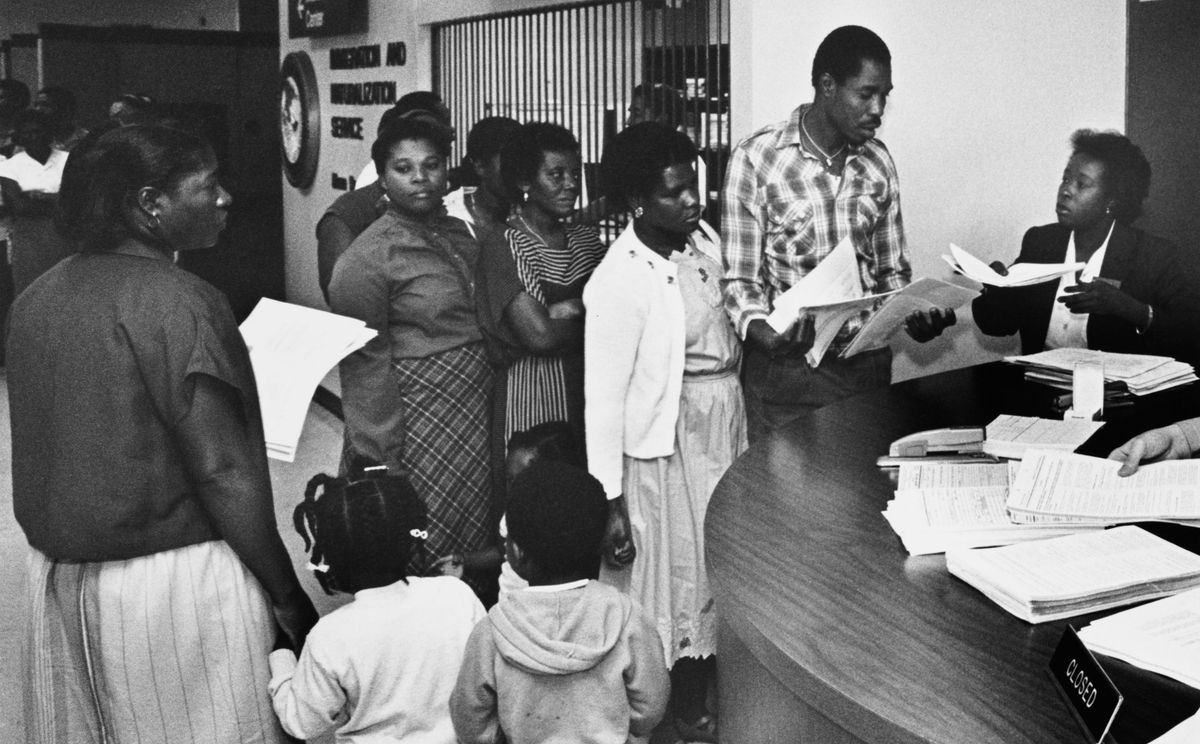
Supreme Court to Review Status of Haitian and Syrian Immigrants
The U.S. Supreme Court is slated to hear arguments on Wednesday regarding the legality of the Trump administration’s decision to terminate the temporary protected status (TPS) of over 350,000 Haitians and more than 6,000 Syrians living in the United States.
Background of the Case
This legal challenge arises from lawsuits filed by Haitian and Syrian nationals who have been granted TPS, which allows them to reside in the U.S. while conditions in their home countries improve. A February ruling by an appeals judge underscored the historical context of discrimination faced by Haitians, suggesting that their treatment has been markedly different from that of other immigrant groups.
Rationale Behind TPS and Recent Policies
TPS has been in effect for nearly 40 years, enabling individuals from certain countries to remain in the U.S. temporarily due to extraordinary conditions. President Trump expressed a desire to revoke TPS for Haitians during his 2024 campaign, a promise his administration acted on shortly after he took office in 2021.
Judicial Criticism of Immigration Policies
U.S. District Judge Ana C. Reyes criticized the previous administration’s move to terminate TPS for Haitians, citing that the decision was informed “at least in part on racial animus.” This precedent-setting ruling has set the stage for an important oral argument at the Supreme Court, where government attorneys argue that the judge overstepped her authority in restricting the president’s power to terminate TPS.
Historical Context of Haitian Immigration
Supporters of the TPS holders argue that the ongoing legal battle illustrates deeper issues of anti-Haitian sentiment, with roots extending back to the Haitian Revolution of 1804, which led to Haiti becoming the first independent black nation in the Western Hemisphere. Haitian-American writer Georges Foulon notes the historical affront this represented to white supremacy in the U.S.
Disparities in Immigration Policy
The Haitian Bar Association recently submitted a brief to the Supreme Court highlighting the stark contrasts in how Haitian immigrants have been treated compared to their Caribbean counterparts. In the 1970s alone, approximately 50,000 Haitians sought asylum, yet only 100 requests were approved, showcasing a systemic barrier to entry that differs significantly from the treatment of Cuban migrants. The association argues this inconsistency reflects a broader pattern of discrimination within immigration policies.
Community Responses and Implications
The potential end of TPS could have dire consequences for 1.4 million individuals from 17 countries holding similar legal status. Marjorie Wentworth, a former poet laureate who has advocated for immigrants’ rights, recalls how she witnessed the stark disparities in treatment faced by Haitian refugees compared to other immigrant groups. Her ongoing work with the Haitian community aims to bolster local support as the Supreme Court hearing approaches.
Looking Ahead
As the Supreme Court prepares to hear the case, the Trump administration denies that race played a role in its decision to end TPS, urging the court to dismiss arguments based on previous statements from Trump and his administration. A ruling is not expected until the summer, leaving many in uncertainty as they await the court’s decision on a matter that could have profound implications for immigration policy and racial equity in the United States.
