


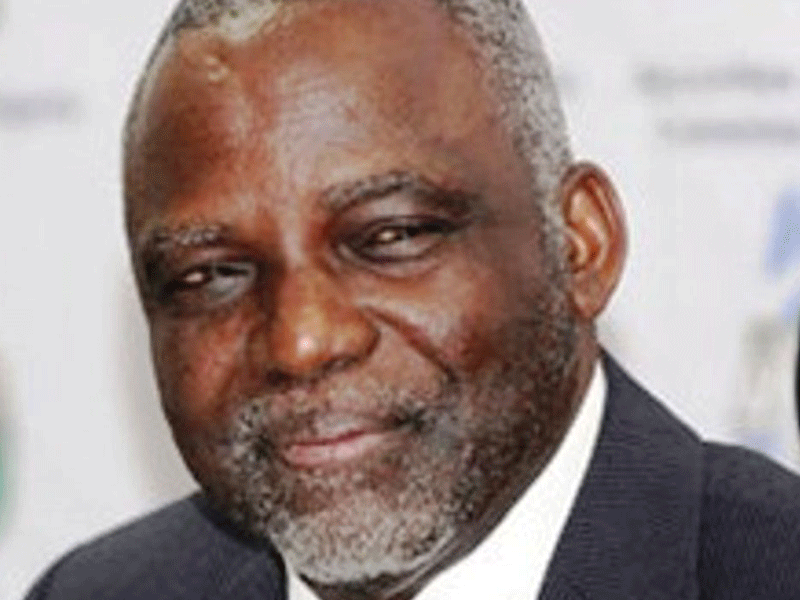
Geometric Power Chairman Attributes Project Delays to Policy Changes
Professor Basu Naji, Chairman of Geometric Power Group, has expressed concern over the deteriorating state of Nigeria’s power sector, pointing out that the nation has not financed a major power plant in over a decade. This lapse follows the government’s elimination of essential risk guarantees that previously attracted international investment in the energy sector.
Call for Gas to Drive Industrialization
Speaking at the 19th Annual Conference of the Nigerian Association of Energy Economics (NAEE) held in Lagos, Naji highlighted the theme “Evolving the Future Energy Mix in Africa: The Role of Technology, Economics, and Public Policy.” Drawing from his experience as a former Minister of Electricity, he identified policy inconsistency as a critical obstacle hindering the growth of electricity generation in Nigeria.
Successful Initiatives Under Previous Administration
Reflecting on his time in office, Naji noted that he, along with former Minister of Finance Dr. Ngozi Okonjo-Iweala, successfully established a partial risk guarantee instrument to finance power projects, leading to the construction of the Azura Edo power plant. He lamented that these guarantee instruments were abandoned with the change of administration, resulting in a significant gap in financing for major power plants over the past 11 years.
The Urgency for Policy Changes
Naji emphasized that government policy is crucial for unlocking Nigeria’s extensive energy resources. With over 210 trillion cubic feet of proven gas reserves, he criticized the lack of extraction initiatives that could significantly aid the country’s development. Additionally, he revealed that inadequate infrastructure has hampered efforts to utilize these abundant gas resources effectively.
Impact of Global Energy Trends
Highlighting the broader implications of the ongoing Russia-Ukraine conflict, Naji pointed to the pressure on Nigeria and the African continent to transition from fossil fuels towards renewable energy. He observed that while Europe has advocated for renewable sources, it reverted to coal during the energy crisis, demonstrating a double standard in the global energy dialogue.
The Future of Energy in Nigeria
Naji reiterated that natural gas remains a practical pathway for Nigeria, stressing the importance of focusing on cleaner fossil fuel options. He forecasted that Nigeria’s economy will increasingly depend on various forms of natural gas over the next two decades, although he acknowledged the challenges posed by coal-fired power plants, which are costly and difficult to finance.
Long-Term Energy Solutions and Cross-Border Cooperation
While acknowledging that certain projects, such as the Mambilla hydropower initiative, have faced extensive delays, Naji remained hopeful about their potential. He cited the Congo’s Inga Dam, which could generate 100,000 megawatts of electricity, and noted the feasibility of a 1,000-kilometer transmission line to Calabar. He encouraged collaborative efforts across the continent, stating, “If we’re going to talk about the continent, we can share power…we just don’t think about it.”
To revitalize the power sector, Naji outlined additional priorities including the implementation of cost-reflective tariffs, support for power purchase agreements, legislation against energy theft, and improved management of methane emissions. He concluded that it is vital for Nigerians to make the most of their available resources.
