


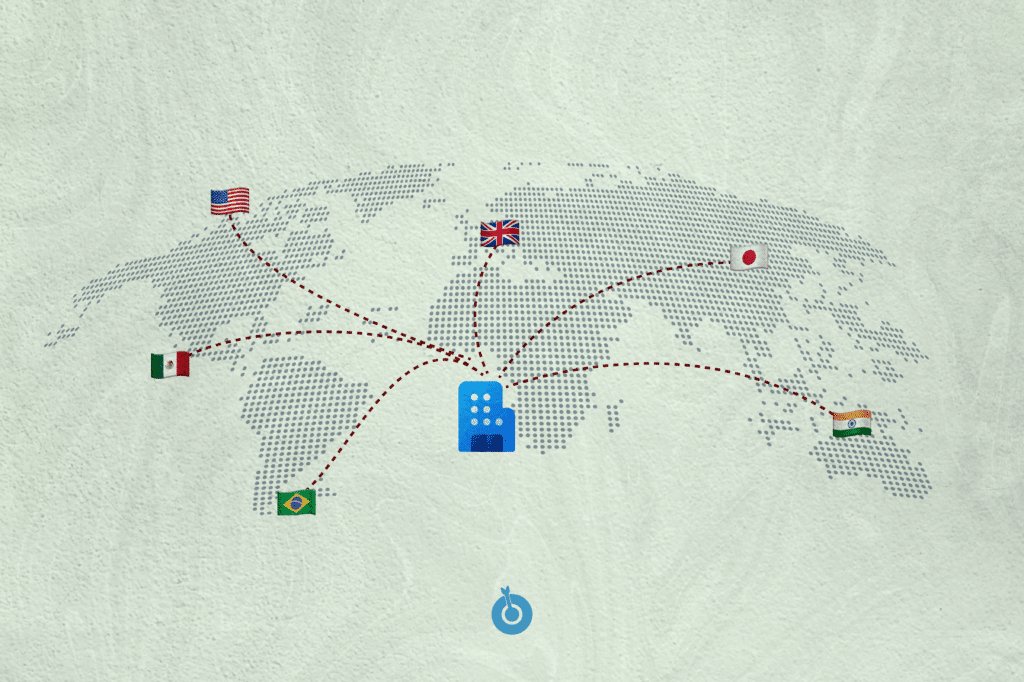
Africa has long been considered a prime growth hub for global technology companies, thanks to its expansive population of over 1.5 billion and a youthful, tech-savvy demographic. The continent undeniably presents a significant market opportunity.
However, the allure of Africa often contrasts with the complexities that come with doing business there. Entrepreneurs frequently encounter hurdles, ranging from stringent regulations to fluctuating currency issues, which can hinder expansion efforts for global tech firms.
Fortunately, the landscape is shifting. The days of waiting years to navigate bureaucratic processes to open a single office in Africa are fading. Enter digital special economic zones (DSEZs), designed to simplify and expedite the expansion of technology companies throughout the continent.
Recently, I spoke with Mayowa Olugbile, CEO and co-founder of Itana, one of Africa’s pioneering DSEZs. Our discussion revolved around the report titled “How to Expand to Africa: New Operating Strategies,” developed in partnership with Intelpoint. We explored global companies’ expansion strategies and the crucial role these digital zones play in easing market entry.
Understanding Digital Special Economic Zones
While many are aware of traditional special economic zones—which offer tax incentives and deregulated environments—digital special economic zones represent a modern evolution of this concept. Essentially, DSEZs enable companies to operate in a cloud-based business environment.
Zones like Itana utilize existing free zone regulations to create environments where businesses can thrive with stable and predictable digital governance. Firms can incorporate from anywhere worldwide, whether in Germany or the United States, even without a physical presence in the country.
DSEZs eliminate the need for physical offices and extensive bureaucratic procedures. Companies are connected to a fully digital ecosystem that streamlines company formation, compliance, regulatory processes, and access to banking and talent.
As Olugbile points out, Itana facilitates the establishment of digital jurisdictions, allowing businesses to operate without the immediate necessity of physical infrastructure. This flexibility helps technology companies to build teams and test their offerings before making substantial financial commitments.
In addition to its digital framework, there is also a tangible infrastructure element. Developments like Araro City in Lagos provide essential resources for tech firms, including reliable electricity, high-speed internet, and co-living spaces for entrepreneurs.
Revised Strategies for African Expansion
The traditional approach of “expanding” into Africa often leads global companies to impose Western business models on diverse local markets. The evolving strategy now emphasizes expanding “with” Africa.
By integrating into a digital SEZ, international firms become part of a carefully curated ecosystem comprising local entrepreneurs, developers, and regulatory bodies.
Orgbir notes that many companies focus solely on scale, equating it to capital investment. While funding and technology streamline operations, the true driver of scalability lies in shared insights and collaboration among all market stakeholders.
The Intelpoint-Itana report highlights that Africa’s unique landscape does not fit into the conventional expansion frameworks applicable in Europe, North America, or even parts of Asia. Rather than a monolithic market, Africa is a mosaic of distinct economies, each governed by its own set of rules.
These differences foster friction; for instance, a firm seeking to hire employees across various African nations may face legal complexities in each jurisdiction. Establishing a local corporation can take considerable time, and cross-border payments may introduce unpredictability.
This scenario is described as a “market entry problem,” indicating not a lack of opportunity, but rather an outdated system that hasn’t evolved to meet current demands. Digital special economic zones are specifically designed to alleviate these barriers, making it easier for companies to enter the African market.
The Transformational Potential of Digital SEZs
A key takeaway from our discussions is the need for speed. Global technology companies thrive on swift actions; delays in entering African markets often push them to prioritize elsewhere.
Digital SEZs change this narrative by offering expedited setups, standardized procedures, and reliable compliance frameworks. They not only simplify operations but also enhance Africa’s competitiveness in the global technology landscape.
Beyond mere market size, Africa’s strongest asset is its skilled workforce. A burgeoning community of developers, designers, and innovators is emerging across the continent, yet global companies often struggle to tap into this talent efficiently.
Digital SEZs act as a bridge, facilitating seamless hiring across borders, ensuring consistent payment for talent, and enabling operations without the need for multiple local subsidiaries. This allows human resources to function within a broader, interconnected network.
For years, global firms have engaged with Africa through outsourcing; now, digital zones pave the way for deeper, more meaningful market engagement without significant obstacles.
Companies can assemble teams, innovate locally, and scale gradually without the burden of hefty upfront investments. One pressing concern for investors has been the repatriation of profits, particularly in volatile markets like Nigeria.
DSEZs like Itana address this by providing hedging strategies, permitting firms to trade in various currencies and ensuring that earnings can be reliably transferred to headquarters. This adaptability positions DSEZs not only as a local solution but as a part of a global model for expansion.
The possible implications extend beyond Africa, suggesting a shift in how businesses may approach global growth. We may witness a transition toward expansion through networks, standardized digital jurisdictions, and integrated cross-border operations, with Africa at the forefront of this evolution.
The timing couldn’t be more crucial. As Africa’s digital economy accelerates, and with global companies seeking new avenues for growth amid the rise of remote work, DSEZs are perfectly aligned with these trends.
Africa has consistently been an attractive market; what has evolved is the framework through which trade is conducted and value is harnessed. With the right strategies in place, opportunity in Africa is on the verge of thriving.
