


Controversy Surrounds ICE Detainer Requests in Boston
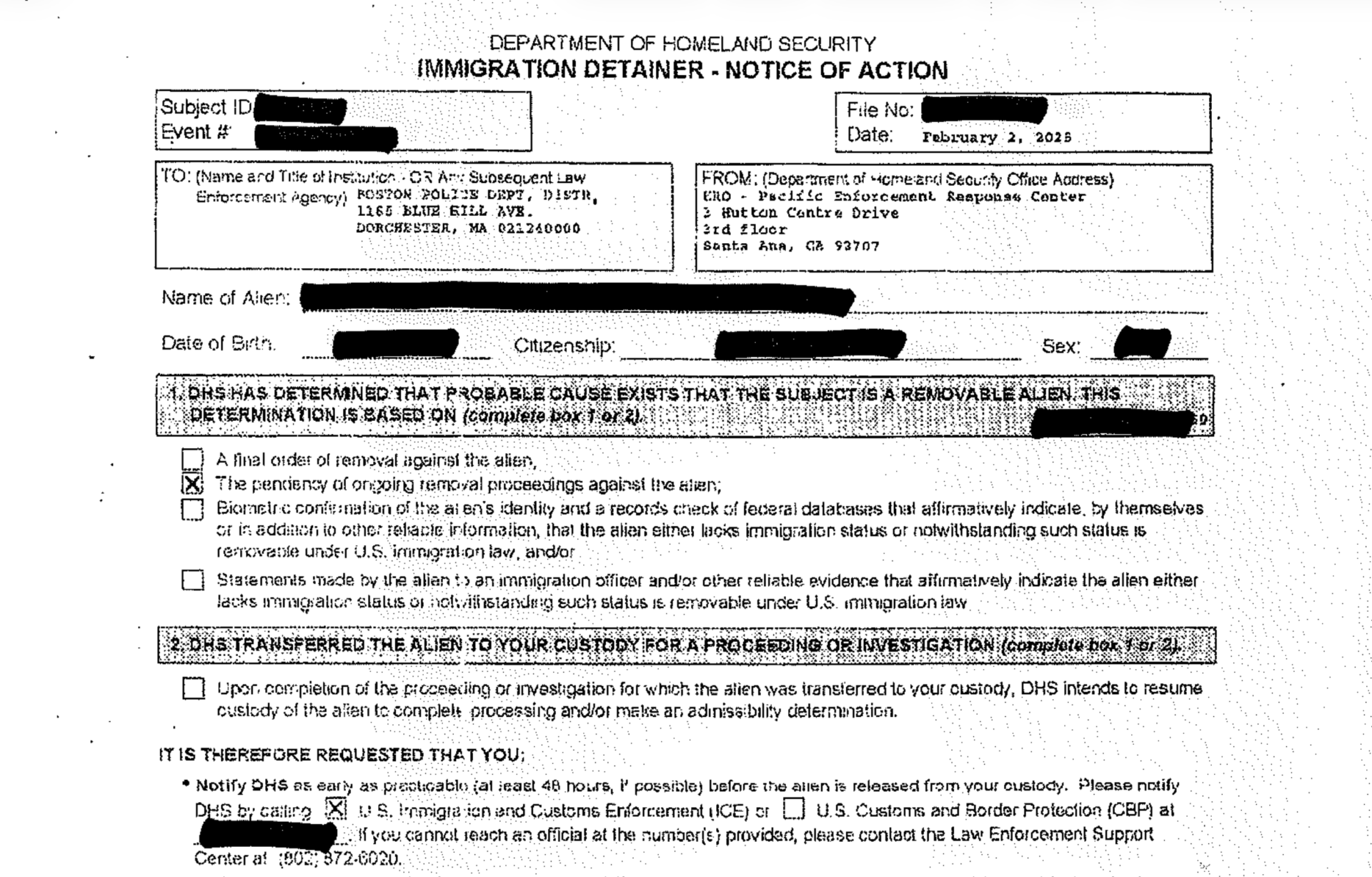
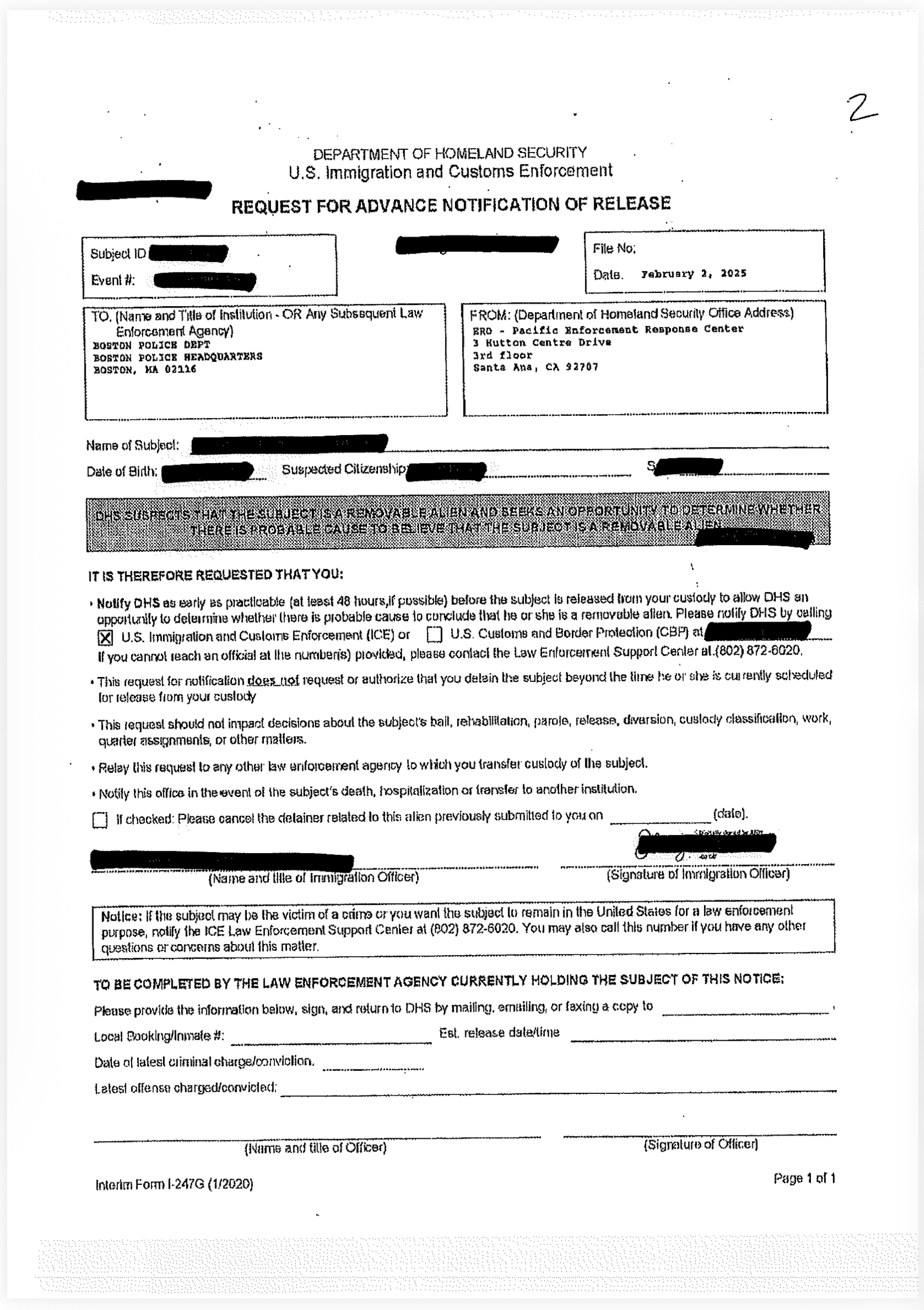
In the early hours of March 30 last year, the Boston Police Department’s Back Bay Precinct received a fax from U.S. Immigration and Customs Enforcement (ICE). The communication sought information on the release timeline of an individual in police custody.
This ICE message urged Boston police to notify them “as soon as possible (at least 48 hours if possible)” to assess whether the individual was a removable alien.
This notice was one of 57 total detainer requests directed at Boston police, most of which originated from ICE’s Burlington office, with additional requests coming from California. Documents obtained by WBUR through a public records request indicate significant discrepancies in the reported figures.
ICE asserts that it sent approximately 167 detainer requests to the Boston Police Department last year, a number that far exceeds what the department has acknowledged. However, ICE has consistently failed to provide adequate documentation to support this claim, instead referencing a list of ten individuals, alleging that “Boston Police Department has refused to hand them over to us.”
ICE Acting Director Todd Lyons remarked that this situation illustrates a politically motivated approach among local law enforcement leaders, who, according to him, “would rather release criminals than work with ICE,” ultimately endangering public safety. Notably, Lyons, a Boston native, previously led the Boston ICE field office before his promotion to a national role last year. He announced his resignation earlier this month after a contentious year marked by strict immigration enforcement.
Discrepancies between the figures reported by ICE and those from Boston police have fueled ongoing tension between the local law enforcement agency and the federal government. The lack of transparency from ICE about its detainer requests continues to raise questions on the feasibility and motivations behind these requests. Boston police, in turn, have been cautious in their disclosures regarding interactions with ICE, often limiting this information to annual reports.
In a report from January signed by Boston Police Chief Michael Cox, the department noted 57 ICE detention requests, affirming that no individuals had been detained or transferred due to ICE’s requests. Initially, the Boston police declined to provide copies of ICE detainer records until WBUR appealed to the state’s records inspector general, leading to the release of around 300 pages of documents, albeit with much of the identifying information redacted.
Responding to ICE’s allegations, Boston police spokesperson Maryellen Burns stated that the department can only act on requests they receive, emphasizing their dedicated fax line for such detainee requests, which reflected the 57 requests recorded in 2025.
Similar discrepancies surfaced in 2024 when ICE claimed it submitted 198 detainer requests, while Boston police reported receiving only 15. Speculation within law enforcement circles suggested these differences might arise from where ICE sends requests, as the Boston Police Department has consistently directed federal officials to utilize their designated fax line rather than other communication methods.
Understanding the Basis for ICE Detainer Requests
ICE has utilized a shared fingerprint database to identify individuals in police custody, checking probable cause in 29 cases based on biometric verification. However, the agency’s issuance of 41 administrative arrest warrants, originating from within the Department of Homeland Security rather than a federal court, has stirred controversy regarding their validity.
The circumstances surrounding ten individuals indicated as facing final deportation orders have also raised questions, specifically concerning the non-compliance by Boston police. Documentation reveals that 23 individuals in police custody were in ongoing removal proceedings, with some providing statements that suggested they were either inadmissible or ineligible under U.S. immigration law.
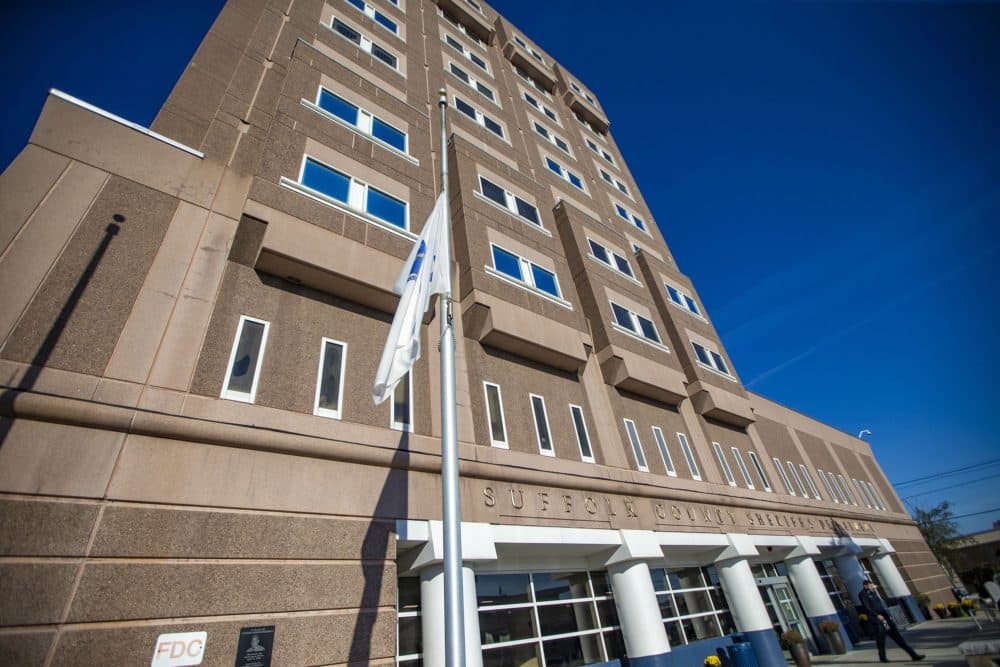
Additional records indicate that nine detainees were requested for pick-up from district courthouses across the city, while 13 detainees were located at the Nashua Street Jail operated by the Suffolk County Sheriff’s Department, which has a longstanding agreement with Boston police for managing large numbers of arrests, including those involving immigrants.
Peter Van Delft, a spokesperson for the sheriff’s department, asserted that once an individual is officially booked, they fall under the custody of the Suffolk County Sheriff’s Department. Until that process is complete, he mentioned that if ICE arrives to pick someone up, they could potentially be released from Boston police custody directly.
The Boston Police Department operates under the Ran decision, which prohibits local law enforcement from detaining individuals solely based on civil immigration detainers, coupled with city trust laws that restrict such actions further. However, in situations involving serious crimes — such as human trafficking or drug offenses — police can collaborate with federal immigration officials. ICE can detain individuals only when equipped with a criminal warrant signed by a judge.
While the detainee records reviewed by WBUR do not specify particular charges, at least 17 cases involved individuals marked by ICE as falling under the Laken-Riley Act, which authorizes ICE to detain and deport those without legal status charged with a range of offenses. However, the Boston Police Department has consistently maintained non-compliance with these requests, asserting their operations are confined to civil matters.
As tensions between local policing agencies and ICE continue to evolve, the nature of these detainer requests raises pivotal questions about the intersection of local law enforcement and federal immigration policy, influencing public safety and community trust.
