


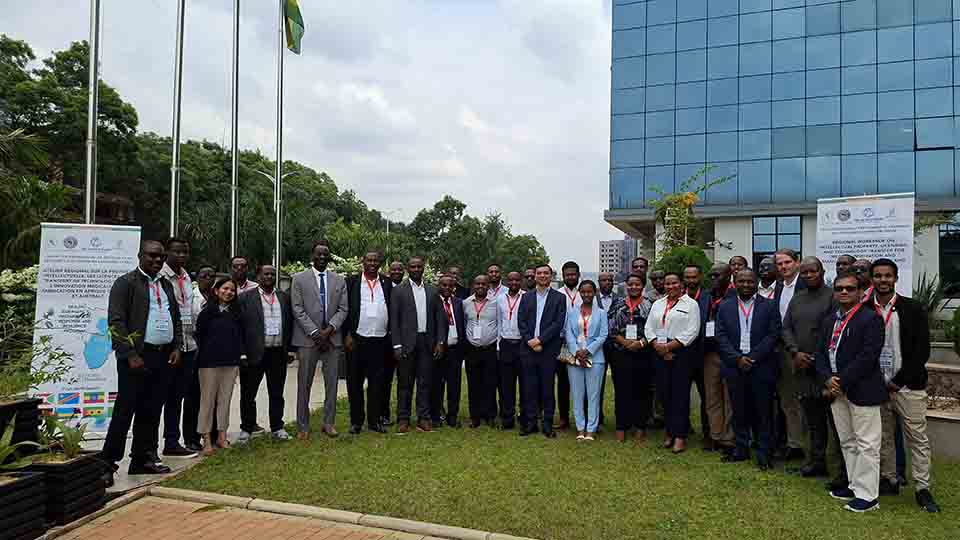
The World Intellectual Property Organization (WIPO), the Intergovernmental Authority on East African Development (IGAD), the World Bank, and the Pharmaceutical Patent Pool (MPP) recently held a two-day regional training workshop focused on intellectual property (IP), technology transfer, and health licensing. Taking place in Kigali, Rwanda, from October 7-8, the event aimed to enhance local expertise in medical manufacturing and innovation, gathering 30 participants from six IGAD member nations.
The workshop saw participation from representatives of health ministries, medical research institutions, IP offices, regulatory bodies, and local pharmaceutical manufacturers across Burundi, the Democratic Republic of the Congo, Ethiopia, Kenya, Malawi, Rwanda, and São Tomé and Príncipe. The sessions combined lectures, interactive discussions, and hands-on exercises designed to strengthen participants’ skills in intellectual property management, technology transfer, and the regulatory aspects of medical technology.
Encouraging African Innovation through Intellectual Property
Inaugurated by senior officials from the Rwandan Ministry of Health, IGAD, WIPO, the World Bank, and its member organization, the International Finance Corporation, the workshop emphasized the vital role of IP systems in recognizing, protecting, and commercializing African innovations. Dr. Muhamed Semakula, Permanent Secretary of Rwanda’s Ministry of Health, stressed the need for a robust intellectual property framework to promote local manufacturing and ensure that African medical technologies gain international recognition.
This initiative stems from two interlinked projects spearheaded by WIPO and IGAD. The Health Emergency Preparedness, Response, and Resilience (HEPRR) project under IGAD, part of the World Bank’s broader strategy for Eastern and Southern Africa, aims to bolster local vaccine and medicine production. Meanwhile, WIPO’s IP Center of Excellence for Medical Innovation and Manufacturing is focused on building IP capacity through training, mentorship, and policy development for medical innovation.
Building on a virtual session held in April 2025, this workshop sought to further cooperation between these organizations by providing stakeholders with practical tools to manage intellectual property and facilitate technology transfers effectively.
Engaging Sessions and Hands-On Learning
The first day featured presentations from leading industry experts, including Ike James, Director of Technology Transfer at MPP, and Dr. MacLean Sibanda, an IP and innovation specialist from South Africa. Siddhartha Prakash, Head of WIPO’s Global Health Unit, delivered an informative overview of various forms of intellectual property—such as patents, trade secrets, trademarks, and industrial designs—and their relevance to the medical technology sector. James offered an in-depth look at technology transfer and licensing, outlining strategies for successful collaboration between innovators and manufacturers. Dr. Sibanda shared best practices from across Africa, examining the legal frameworks that support local manufacturing, including regulatory, data privacy, and trade policies.
A panel discussion included insights from industry leaders such as Professor Emile Bienvenue from the Rwanda Food and Drug Authority and other notable figures in African pharmaceutical manufacturing. The discussion delved into both the challenges and opportunities associated with technology transfer and licensing on the continent. Noteworthy initiatives include the establishment of the University for Global Health Equity and the East Africa Biodesign Program, as well as advancements in Kenya’s institutional policies geared towards promoting medical research, licensing, and technology transfer.
Experiential Learning through Simulation
The second day of the workshop shifted focus to skill development through simulated technology transfer and licensing negotiations. Participants assumed roles as innovators and local manufacturers, negotiating key licensing terms. This exercise not only provided insight into various interests but also imparted practical experience in negotiating essential elements such as royalties and geographic scope.
Attendees also shared their organizational initiatives, highlighting the diverse contributions to Africa’s evolving medical manufacturing landscape. Presentations by Dr. Labella Kenyanya of the Kenya Biovacs Institute and Keren Tuinamatsiko from the Rwanda Development Authority detailed how vaccine production, technology transfer, and intellectual property interplay to bolster regional manufacturing capacity. These discussions emphasized the importance of aligning licensing strategies with operational challenges to enhance local production capabilities.
Setting Priorities for the Future
The workshop concluded with group sessions where participants identified national priorities and crafted preliminary action plans to enhance intellectual property and technology transfer frameworks within their respective countries. Participants highlighted areas needing further technical assistance, setting the stage for ongoing collaboration with WIPO and IGAD.
Advancing African Pharmaceutical Manufacturing
Over the course of the event, participants collaborated to pinpoint key operational challenges in the technology transfer landscape and shared actionable solutions. The MPP played a crucial role in offering guidance to help local manufacturers scale production of vital health technologies effectively.
The collaborative effort by WIPO, IGAD, the World Bank, and MPP marks a significant step toward establishing a sustainable medical innovation ecosystem in Africa, empowering countries to independently produce their medical technologies while promoting growth through innovation and knowledge-sharing.
Explore Global Health and Intellectual Property
WIPO’s Global Health Unit is dedicated to raising awareness about the critical links between global health, innovation, and access to medical technology. For further insights, please visit our website.
